Backup Generator for Sump Pump: A Complete How-To Guide
Learn how to select, install, and maintain a backup generator for your sump pump to protect your basement during power outages. This guide covers sizing, transfer switches, fuel options, safety, and maintenance with practical steps for homeowners.


Learn how to choose and install a backup generator for your sump pump, ensuring flood protection during power outages. This guide covers sizing, fuel options, transfer switches, wiring safety, startup testing, and maintenance. According to Sump Pump Check, a properly chosen and tested generator dramatically reduces flood risk and delivers dependable operation when you need it most.
Why a backup generator for sump pump matters
Flooded basements are a homeowner nightmare, but power outages during storms are a common cause. A backup generator for your sump pump ensures the pump can run when the grid goes down, keeping water out of living spaces. This is especially important in areas prone to heavy rain, rapid snowmelt, or prolonged outages. The right generator can kick in automatically or with a quick manual start, so you don't have to rush to relocate valuables or risk electric shock. According to Sump Pump Check, many homeowners underestimate the value of a reliable backup power source for their sump pump, assuming temporary failure is unlikely. In reality, even a brief outage can lead to basement flooding and costly repairs. In this section, we'll outline the core benefits: consistent water removal, peace of mind during storms, and improved resale value of the home when the system is properly integrated with safe, code-compliant wiring.
How a backup generator works with a sump pump
Most sump pumps run on 120-volt circuits. A backup generator either powers the sump pump directly via a dedicated outlet or via a transfer switch that isolates the sump pump circuit from the rest of the house. An automatic transfer switch (ATS) senses a power loss and starts the generator, switching the load in seconds. A manual transfer switch requires you to start the generator and flip a switch. You'll also want to plan whether you use portable generators or standby units that sit permanently outside. In all cases, ensure the generator has enough amperage rating to handle the sump pump's startup surge, and consider future expansion for additional basement outlets.
Sizing your backup generator: key factors
Sizing a backup generator for a sump pump hinges on understanding the pump’s start-up surge, the number of pumps, and potential future needs. Start by noting the pump’s horsepower and any secondary devices you might power during an outage (lighting, a dehumidifier, or a small sump pit sensor). The goal is to choose a unit that can handle the sum of these loads without tripping breakers or starving the system. Climate and seasonal patterns influence how often you’ll rely on backup power, and while precise numbers aren’t necessary, a rough sense of peak demand helps prevent undersizing. Sump Pump Check analysis suggests that homeowners who plan ahead with a sensible load estimate experience fewer last‑minute electrical challenges when outages strike.
Fuel options and reliability in outages
Your fuel choice strongly affects reliability and run time during an outage. Gasoline is common and inexpensive but can deteriorate without stabilizers; propane offers a longer shelf life and easier storage, while natural gas can provide continuous feed if your utility supply remains active in emergencies. Each option has trade-offs: gasoline requires regular topping up and maintenance, propane needs tank management, and natural gas depends on an existing gas line and pressure. Regardless of fuel type, keep a safe, accessible supply and have a plan for refueling or switching tanks during extended outages. Regular maintenance helps prevent fuel-related failures when you need power most.
Automatic transfer switches vs manual operation
An automatic transfer switch (ATS) detects a power outage and starts the generator without manual intervention, then transfers the load to the standby unit. This minimizes downtime and is ideal for sump pumps, where seconds without power can lead to standing water. A manual transfer switch requires you to start the generator and switch the circuit yourself, which can be safer for hobbyists but increases the risk of forgetting to switch back after an outage. When possible, choose an ATS for worry-free operation and consistent protection.
Installation prerequisites and space considerations
Place the generator outdoors on a stable, level surface with clearances for airflow and maintenance access. Ensure the installation area is protected from flooding and has adequate ventilation to prevent exhaust buildup near living spaces. Plan a dedicated fuel supply or a hard-wired connection for natural gas. Check local codes and obtain any necessary permits; improper placement can invalidate warranties or create safety hazards. Label the sump-pump circuit clearly so service personnel understand what the generator powers during a power outage.
Wiring basics and safety
Electrical work should follow national and local codes. Use a properly rated transfer switch and weatherproof wiring methods, with conduit that protects conductors from moisture and physical damage. Never attempt to bypass safety switches or connect a generator directly to household circuits without a transfer mechanism. Install a carbon monoxide alarm near any space where exhaust could migrate into living areas, and keep fuel away from ignition sources. Always wear protective gear and, if in doubt, hire a licensed electrician to perform critical connections.
Maintenance and testing routine
Regular testing is essential for reliability. Run the generator at least monthly, allowing it to reach operating temperature and confirm the sump pump engages when commanded. Change oil and filters according to the manufacturer’s recommendations and replace air filters to maintain airflow and cooling. Check for fuel leaks, battery health (for emergency start), and the integrity of electrical connections. Keep a log of tests and maintenance tasks so you know when the next service is due. Consistency here saves headaches during a real outage.
Cost, budgeting, and long-term value
Investing in a backup generator is never a one-time expense. Beyond the upfront price, factor in installation costs, transfer switch selection, fuel type, and ongoing maintenance. Costs vary with generator size, features, and whether you choose a portable or standby model. While exact pricing can fluctuate, a thoughtful plan that accounts for load, future needs, and local labor rates typically delivers strong long-term value by preventing flood damage and reducing stress during storms.
Quick-start checklist before purchase
Before you buy, list your sump-pump load, planned transfer switch type, preferred fuel, and outdoor installation constraints. Confirm you have a safe, code-compliant electrical path from the generator to the sump-pump circuit, and plan for automatic startup if desired. Check local permits and arrange for a professional inspection if you’re unsure about wiring or mounting. A clear plan now prevents costly mistakes later.
Tools & Materials
- Generator (standby or portable)(Rated to handle sump-pump startup surge; match voltage and phase with local circuit)
- Automatic transfer switch (ATS)(Auto-start models recommended for seamless power during outages)
- Manual transfer switch (optional)(Use if you choose a non-ATS setup with a portable generator)
- Weatherproof outdoor enclosure(Ventilate properly; install on a stable, level pad away from doors and windows)
- Conduit, wiring, and protective fittings(Follow NEC guidelines; use appropriate gauge wiring for sump-pump load)
- Dedicated sump-pump circuit wiring(Keep on a protected circuit; avoid overloading other devices on the same line)
- Fuel supply and storage(Propane tank or gasoline with stabilizer; secure storage away from heat sources)
- Safety gear and tools(Gloves, eye protection, insulated tools; include a grounding strap)
- CO detector and alarm(Place near living spaces to monitor exhaust risk)
Steps
Estimated time: 4-8 hours
- 1
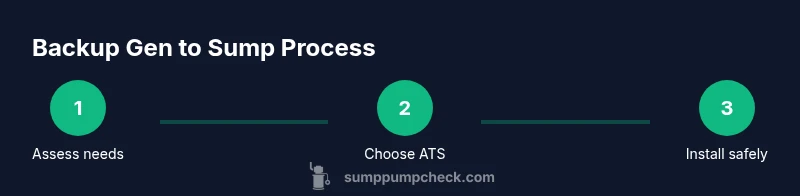
Assess power needs and generator type
Calculate the sump pump load and determine whether a standby (always ready) or portable generator best fits your home. Consider potential future additions like a dehumidifier or extra outlets. A clear plan helps avoid undersizing or overpaying.
Tip: Consult a licensed electrician early to verify load estimates against local codes. - 2
Decide on ATS versus manual transfer
Choose an automatic transfer switch for seamless operation during outages, or a manual switch if you prefer lower upfront costs and more hands-on control. This decision drives how you wire the sump-pump circuit and the generator.
Tip: An ATS reduces risk of human error during storms. - 3
Select installation location and clearance
Pick an outdoor, well-ventilated location with stable footing and away from doors or windows to prevent exhaust intrusion. Ensure there is access for service and routine maintenance, and plan a path for fuel or gas supply.
Tip: Avoid areas prone to flooding and ensure drainage around the pad is adequate. - 4
Prepare wiring plan and permits
Draft a wiring layout that isolates the sump-pump circuit through the transfer switch. Check with local authorities about permits and inspections to ensure compliance with safety codes.
Tip: If uncertain, hire a professional for the electrical plans. - 5
Install transfer switch and conduit
Mount the ATS in a dry, accessible area and route conduit from the generator to the sump-pump circuit. Seal all penetrations to protect against moisture.
Tip: Label circuits clearly to simplify future maintenance. - 6
Connect generator to fuel supply
Connect your generator to the chosen fuel source (gasoline, propane, or natural gas) using safe, code-compliant fittings. Install fuel shutoffs and test fuel flow before full operation.
Tip: Never place fuel storage indoors; store away from ignition sources. - 7
Wire sump-pump circuit and test
Route the sump-pump circuit through the ATS and verify the pump runs when the generator starts. Do a soft start test to ensure the pump engages without tripping breakers.
Tip: Confirm there is no backfeed risk to the main service. - 8
Perform safety and exhaust considerations
Install CO detectors near living areas and ensure proper exhaust venting. Keep a fire extinguisher accessible and check for gas leaks with approved detectors.
Tip: Never run a generator indoors or in an attached garage. - 9
Run a full outage test
Simulate a power outage to observe ATS operation, generator startup, and sump-pump performance. Let it run long enough to assess fuel and cooling systems.
Tip: Document results and adjust maintenance schedule if needed. - 10
Set up maintenance and schedule
Create a maintenance calendar for oil changes, filter replacements, battery checks, and periodic safety checks. Establish a routine to run and test the system monthly or quarterly.
Tip: Keep a log and set reminders so maintenance never slips.
FAQ
Do I need a backup generator for my sump pump?
In flood-prone areas, a backup generator helps prevent basement flooding by keeping the sump pump running during outages. While not mandatory, it’s highly recommended for reliable protection.
If your area experiences outages during storms, a backup generator is a smart safeguard to protect your basement.
Can I install a backup generator myself?
Installing a generator and transfer switch involves electrical work and safety concerns. If you’re not trained in electrical systems, hire a licensed electrician to ensure code compliance and safe operation.
This is one project where professional help is wise to ensure safety and code compliance.
What is the difference between standby and portable generators for sump pumps?
Standby generators stay connected and can start automatically, offering immediate power. Portable generators require manual setup and manual transfer, but can be more affordable upfront.
Standby units start automatically; portable ones you control during outages.
How do I size a generator for a sump pump?
Size depends on the sump pump’s startup surge and any additional loads you want to back up. Plan for auto-start and potential future needs rather than only the current pump.
Size by considering startup demand and any extra devices you want powered.
How often should I test and maintain the system?
Test the system regularly—ideally monthly or quarterly—and perform routine maintenance per the manufacturer’s guidance. Keep a maintenance log.
Test it often and keep notes so you know when service is due.
Do I need permits or inspections for installation?
Most areas require electrical permits and inspections for generator installations. Check local codes and arrange inspections as part of your project plan.
Yes—check with your local authority about permits and inspections.
Watch Video
Top Takeaways
- Choose the right generator type for your needs
- Use an automatic transfer switch for seamless outages
- Place equipment with proper ventilation and clearances
- Follow safety codes and hire professionals when needed
- Test regularly and maintain a written schedule