Sump Pump to Downspout: Safe Routing Guide
Learn how to safely route a sump pump discharge to a downspout with code-compliant steps, fittings, and maintenance tips from Sump Pump Check. Practical guidance for homeowners and DIYers.


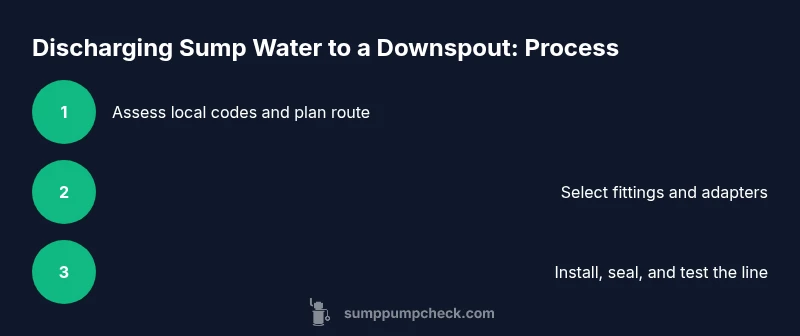
You can route a sump pump discharge to a downspout by planning a code-aware route, selecting compatible fittings, and testing the system before regular use. This approach requires careful checks for backflow, proper slope, and outdoor drainage compatibility to protect your foundation.
Why homeowners consider routing sump pump discharge to a downspout
Routing sump pump discharge to a downspout can be a practical solution in homes with legacy drainage or limited exterior space. It consolidates drainage paths, reduces yard clutter, and ensures water is directed away from the foundation during heavy rain. The Sump Pump Check team notes that in many neighborhoods this approach helps prevent repeated yard flooding by delivering water directly to a controlled discharge area. However, this method isn’t universally suitable. It requires careful planning to avoid backflow, clogging, or violating local codes. Always evaluate your downspout condition, check valve placement, and the potential for backflow into the sump discharge during freezing temperatures. In areas with frequent storms, sharing a discharge path can be efficient if properly designed and maintained.
As with any drainage modification, the goal is to keep water away from the foundation, prevent basement flooding, and minimize erosion around the discharge point. A well-designed connection reduces moisture exposure near your home’s base and can help keep sidewalks and landscaping intact. According to Sump Pump Check analysis, many homeowners find that a properly engineered discharge to a downspout balances safety, cost, and effectiveness when done with the right fittings and a clear plan.
Safety, legality, and code considerations
Before you start, verify that routing to a downspout is allowed by local codes and your HOA guidelines. Some municipalities prohibit discharging stormwater into the sanitary sewer or require permits for modifying drainage paths. Even when permitted, ensure that backflow prevention is in place so downstream sump water cannot flow back into the pump during heavy rain or power outages. Use a properly rated check valve and confirm that the selected downspout area will drain away from the foundation and walkways. Weatherproof exterior connections to resist freezing and ice buildup in winter, and ensure that the discharge does not cause slippery surfaces or electrical hazards near the home.
Working within code not only avoids fines but also protects your family and property. Sump Pump Check’s guidance emphasizes documenting any changes and keeping receipts for permitted work, in case you need to demonstrate compliance during home inspections.
Assessing your current setup and the downspout compatibility
Begin by inspecting the existing sump pump outlet and downspout. Check the diameter of the pump outlet and the downspout to determine compatibility; common pump outlets are 1-1/2 inch or 2 inches, while downspouts vary in size. Plan for a direct or indirect connection, and assess whether you need adapters to bridge mismatched sizes. Look for signs of prior drainage modifications, cracks in the downspout, or areas where water pools near the foundation. Confirm that the downspout portion you plan to use drains away from the home and does not lead into a shallow pit or a non-permeable surface. A test run with a bucket of water can help visualize flow and identify potential bottlenecks before you cut any pipe.
Design options: direct routing vs. indirect drainage
Direct routing means running a dedicated discharge line from the sump pump outlet directly to a connection at or near the downspout, ideally with a slope away from the building. Indirect drainage uses an intermediate path—like a buried drain line, a yard drainage channel, or an inline rainwater diverter—to move water to a safer exterior area. Each option has pros and cons: direct routing is simpler and often cheaper but may require longer run lengths; indirect drainage can reduce the risk of freezing and improve distribution but adds complexity and potential maintenance. Choose based on your climate, landscape, and the downspout’s proximity to the foundation. Ensure all runs are sloped slightly downward (about 1/8 inch per foot) to encourage drainage and prevent standing water.
Sizing, fittings, and essential components
A safe connection typically uses a rigid pipe run from the sump pump to a downspout adapter, with a check valve to prevent backflow. End fittings should be weather-rated for exterior use, and you may need elbows and couplings to navigate obstacles. When possible, keep the discharge pipe above ground for the final section to simplify inspection and cleaning. If freezing is a concern, consider insulation or a short flexible line to reduce ice buildup. Use clamps or couplings rated for outdoor use, and seal joints with exterior-grade caulk to prevent leaks at the exterior wall penetration. If your local climate experiences heavy freezes, provide an escape route for ice and ensure that the system won’t channel water into entryways or crawl spaces.
Planning and layout considerations
Document the route with measurements and a simple diagram showing pump outlet, any bends, the downspout connection point, and the discharge end. Mark any utility lines or irrigation components to avoid accidental damage. Consider future maintenance: will you need access to the area for cleanouts or filter replacements? Plan for a cleanout point if you anticipate clogging from sediment or debris. Remember that a well-planned route reduces maintenance time and minimizes the risk of leaks. Sump Pump Check recommends verifying that the route maintains proper gravity flow and does not create a new water collection zone near the foundation.
To ensure reliability, test the plan under simulated rainfall scenarios, adjusting lengths, adapters, or slope as needed.
Installation considerations and common pitfalls
Common pitfalls include oversizing or undersizing pipes, misaligning joints, and failing to secure the pipe against movement. Unsecured pipes can vibrate or detach during system operation, leading to leaks or water damage. Avoid using indoor-rated hoses outdoors, which can degrade quickly. Ensure that all exterior joints are sealed and that there is no direct path for sump water to re-enter living spaces. If space is tight, you can opt for a compact angled fitting that keeps the pipe close to the wall while preserving slope. Finally, never connect a sump discharge to a storm drain if local rules prohibit it; always route water to an approved exterior area.
Maintenance, inspection, and seasonal considerations
Schedule regular inspections of the discharge line, especially after heavy storms or freezing weather. Look for cracks, leaks, or bent fittings, and confirm that the check valve remains sealed and functional. In winter, inspect for ice blockage at the discharge end and around any outdoor connections. Clear debris from downspout screens to prevent clogs that could back up into the sump pump. A yearly checklist helps catch issues before they become costly repairs. Sump Pump Check’s guidelines suggest keeping spare adapters and clamps on hand for quick replacements during maintenance windows.
When not to connect to a downspout: alternatives and best practices
If the discharge path would create code violations, backflow risks, or nuisance water near living spaces, consider alternatives such as a dedicated exterior storm drain, a dry well, or a buried trench with a proper outlet away from the foundation. In some designs, a rainwater harvesting or recharge system may be a better long-term solution. If you’re unsure about local regulations, consult a licensed plumber or building official. The goal is to keep water away from your foundation while complying with all codes and avoiding potential code violations.
Tools & Materials
- Sump pump discharge pipe (PVC, 1-1/2" or 2" diameter)(Choose diameter to match pump outlet; consider local code)
- Downspout adapter or coupling(Ensure compatibility with downspout diameter)
- Check valve(Prevents backflow from downspout into the pump)
- Discharge elbows and couplings(For routing around obstacles)
- Discharge hose or flexible tubing(Used if transitioning from rigid pipe to final outlet)
- Hose clamps or band clamps(Secure hose connections)
- Exterior-grade silicone sealant or caulk(Seal exterior pipe penetrations)
- Splash block or splash pad(Distribute water away from foundation when final outlet is near ground)
Steps
Estimated time: 2-5 hours
- 1
Shut off power to the sump pump
For safety, unplug the sump pump or switch off the circuit at the breaker. Confirm there is no power to the unit before handling any connections. This prevents accidental startup during pipe work.
Tip: Test the shutoff by attempting to power the unit after setup to confirm it's safe. - 2
Plan route and mark lengths
Draw a simple sketch of the route from the pump outlet to the downspout. Measure distances and mark where fittings will be placed, ensuring minimum bends and a clear slope away from the house.
Tip: Keep tangling paths minimal to reduce friction and leakage risks. - 3
Dry-fit piping and fittings
Lay out the pipe sections and fittings without gluing or sealing. Verify that all joints fit snugly and that the route will clear obstacles in walls or landscaping. Adjust as needed before final assembly.
Tip: Dry-fit helps you avoid rework and wasted materials. - 4
Assemble discharge path to downspout
Assemble the pipe run with adapters to connect to the downspout. Make sure fittings are tight and oriented to maintain a downward slope. Secure the pipe to the structure at regular intervals to prevent movement during operation.
Tip: Use exterior-rated fittings and verify that there are no sharp bends that could induce blockages. - 5
Seal exterior penetrations
Apply exterior-grade silicone or caulk around pipe penetrations through walls to prevent water intrusion and ice buildup. Ensure a watertight seal that remains flexible in temperature fluctuations.
Tip: Don’t over-tighten clamps; allow some movement to absorb expansion and contraction. - 6
Test the system
Reconnect power and pour water into the sump basin to simulate rainfall. Observe flow, check for leaks, monitor backflow, and confirm that water exits away from the foundation. Make adjustments as needed.
Tip: Check for leaks at every joint and address them immediately. - 7
Finalize and monitor
Install a splash block if needed and perform a final inspection. Schedule routine checks seasonally or after heavy storms to ensure continued safety and performance.
Tip: Keep spare parts on hand for quick fixes during heavy rain events.
FAQ
Is it legal to discharge sump pump water into a downspout?
It depends on local regulations. Many areas allow it if the discharge is directed away from the foundation and does not drain into a sanitary sewer. Always check your city or county codes and HOA rules before proceeding.
It depends on local rules, but it’s often allowed if the water is directed away from your home and you follow the codes.
Do I need a check valve for this setup?
Yes. A check valve prevents water from flowing back into the sump pump when the downspout or drainage path is under pressure, especially during heavy rainfall.
Yes, install a check valve to prevent backflow into the pump.
What if the downspout is blocked or frozen?
Blockages or freezing can back up water into the discharge line. Plan for winter conditions and consider an alternate route or insulated piping in colder climates.
Blocked or frozen downspouts can back up water; plan for winter running and insulation.
Can I reuse existing piping or do I need new parts?
Reusing existing piping is possible if it’s in good condition and compatible in size with the sump outlet and downspout adapter. Replace any cracked elbows or degraded seals to prevent leaks.
Reuse only if in good condition and properly sized; replace damaged parts.
What maintenance is required after installation?
Inspect the connections quarterly, clear debris from the discharge end, and test with a rainfall simulation yearly to ensure the path remains clear and effective.
Check connections and test the system at least once a year.
What are safer alternatives if I can’t connect to a downspout?
Consider a dedicated exterior drainage outlet, a dry well, or an approved stormwater drainage system. These options may offer better long-term reliability and code compliance.
If downspout routing isn’t feasible, use a dedicated drain or a dry well.
Will this affect my warranty or insurance?
Modifications to drainage rarely void warranties if performed according to code and by a qualified person. Check with your installer and insurer for any specifics related to home drainage changes.
Warranties are usually unaffected if you follow code; verify with your insurer.
Watch Video
Top Takeaways
- Plan the route before cutting pipes and choose compatible fittings.
- Verify local codes and use a check valve to prevent backflow.
- Ensure proper slope away from the house to promote drainage.
- Test the system with water to confirm leaks and flow.
- Inspect annually and after heavy rain for continued safety.