Sump Pump French Drain Installation: A Practical DIY Guide
Learn step-by-step how to install a sump pump french drain, with essential tools, trenching, piping, backfill, testing, and maintenance for reliable basement drainage.


With this guide, you’ll complete a sump pump french drain installation to improve basement drainage. You’ll plan the trench layout, assemble a perforated pipe system, and connect it to the sump pump’s discharge. Before you start, gather tools and materials, check local codes, and test the system after installation to ensure proper water removal.
Planning Your Sump Pump French Drain Installation
Planning a sump pump french drain installation starts with defining drainage goals and property layout. A properly planned system collects groundwater, channels it to a sump or discharge, and reduces basement moisture. According to Sump Pump Check, a thoughtful plan improves reliability and minimizes future repairs. The core components include a perforated pipe, gravel bed, geotextile fabric, a trench, a discharge path, and the sump pump itself. Choosing interior versus exterior routing depends on your foundation, soil conditions, and local codes. Before you dig, map the trench with a chalk line, note future lawn grading, and ensure access to electrical power behind a GFCI-protected outlet. Budget for soil removal if your yard requires deep excavation, and consider moisture control around the trench to prevent erosion. For best results, sketch a simple cross-section showing flow from the foundation, through the drain, and toward the discharge point. This helps you communicate with helpers or a contractor and confirms you have the right clearances to satisfy safety standards.
Site Assessment and Permits
Before starting work, assess soil type, slope, and existing drainage patterns. Identify potential utility lines and check local codes to see if a permit is required. Even when a permit is not needed, adhering to drainage guidelines protects the foundation and neighboring properties. Sump Pump Check analysis shows that taking a deliberate approach to routing and sizing improves long term performance. Gather information about groundwater level variations and seasonal rainfall to guide trench depth and discharge location. Plan for a visible, accessible discharge point that won’t erode walkways or damage landscaping. If you plan to hire a pro, use this site assessment to communicate goals and constraints clearly.
Sizing, Materials, and Layout
Understanding sizing is critical for performance. A correctly sized system uses a perforated drainage pipe and a gravel base that provide adequate flow and filtration. In most residential setups, the drain path runs from the foundation to a sump or exterior discharge. Choose durable pipe with solid wall thickness and compatible fittings. Layering geotextile fabric prevents soil and silt from clogging the pipe. Keep the trench layout as straight as possible, with gentle curves rather than abrupt turns to maintain consistent flow. Plan for cleanouts at accessible points to facilitate maintenance. Remember that the trench should follow the foundation line and terminate at a suitable discharge area.
Tools, Safety, and Prep
Gather the right tools and wear protective gear. You will need shovels, a trenching spade, tape measure, level, pre-cut perforated pipe, sock or fabric, gravel, a protective underlayment, PVC cement, and a utility knife. Use eye protection, gloves, and hearing protection when operating trenching tools. Shut off power to the sump pump during installation to avoid electrocution risk. Keep a helper on site in case you need to move heavy pipe sections or backfill. Prepare the work area with a tarp or ground cover to collect debris and minimize soil disturbance. Clear the area of pets and children during excavation.
Excavation and Trench Preparation
Begin by marking the trench route along the foundation line and digging to the depth that accommodates the gravel bed and pipe. Remove loose soil and maintain consistent width to simplify backfilling. Create a flat, compact base for the gravel so the pipe sits evenly. Place a damp, clean fabric wrap around the pipe before laying in the trench to keep sediment out. If soil is clay or rocky, adjust your approach to avoid unnecessary widening. Check the trench slope toward the discharge point so water naturally flows out without standing water. Keep the trench free of sharp objects that could puncture the pipe or fabric.
Installing Drain Pipe, Gravel, and Fabric
Lay a layer of landscape fabric or geotextile at the trench bottom to protect the pipe. Install perforated pipe with the holes facing down or sideways as recommended by the manufacturer. Add a ring of gravel around the pipe to create a stable, porous bed. Place the fabric over the gravel to limit sediment intrusion while still allowing water to pass. Extend the pipe toward the discharge path with gentle grade.
Connecting to Sump Pump and Discharge
Connect the drain line to the sump pump discharge using approved fittings or adapters. Ensure a continuous slope from the trench to the discharge point so water does not pool. If you already have a sump, modify the discharge to route through the new drain. Check for alignment with existing exterior features and avoid crossing the home’s structural elements. Install a check valve if needed to prevent backflow into the drain. Finally, test fittings for leaks prior to covering.
Backfilling, Grading, and Finishing
Return excavated soil in layers, compacting gently to minimize settling. Re-grade the surface to direct water away from the foundation and restore lawn or landscaping as needed. Re-lay sod or replant ground cover to stabilize soil and reduce erosion. Avoid piling soil against the trench and cover with mulch or topsoil. The finishing touches should leave the area visually neat and safe for foot traffic.
Testing, Maintenance, and Troubleshooting
Fill the system with water to test flow and check the discharge location, connections, and backflow prevention. Run the sump to verify that water reaches the discharge and does not back up. Inspect the trench for signs of clogging, sediment buildup, or erosion after heavy rain. Schedule routine inspections and cleanings to maintain performance. If you notice slow drainage or unusual sounds, investigate the discharge path and venting, and adjust as needed. The Sump Pump Check team recommends documenting the test results and scheduling annual checks to maintain reliability.
Tools & Materials
- Sump pump(Select a unit with adequate capacity for your basement area)
- 4-inch perforated drainage pipe with sock(Length should cover trunk line plus discharge reach)
- Geotextile fabric(Wrap around pipe to stop sediment entry)
- Gravel (¾ inch to 2 inch)(Base bed and around pipe for drainage)
- Landscape fabric or ground cover(Used above gravel to filter soil)
- Shovel/trenching spade(For trenching and soil removal)
- Tape measure(Measure trench length and slope)
- Level(Maintain gentle slope toward discharge)
- PVC pipe and fittings(For discharge connections and alignment)
- PVC cement and primer(Secure connections per manufacturer)
- Safety gear (gloves, safety glasses)(Protect hands and eyes during digging)
- Utility locate service (call before you dig)(Identify buried lines to avoid damage)
- Tarp or ground cover(Contain debris and keep work area clean)
- Water source or container for test(Used for functional testing of discharge)
Steps
Estimated time: 4-6 hours
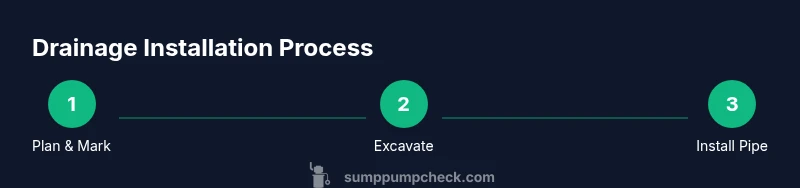
- 1
Plan and mark trench layout
Identify foundation lines and path to discharge. Use a chalk line or markers to ensure a straight route with gentle curves. Align with topography to promote gravity flow and minimize erosion.
Tip: Double-check utilities and markers before digging. - 2
Dig trench and remove soil
Excavate the trench along the planned path, keeping walls relatively vertical to avoid collapse. Clear soil to the sides and maintain a uniform width for easier backfilling.
Tip: Keep the trench clean and free of rocks that could puncture fabric. - 3
Lay base gravel and fabric foundation
Spread a base of clean gravel to create a stable bed for the pipe. Add a layer of geotextile fabric to prevent soil intrusion while allowing drainage.
Tip: Use a straight edge to level the gravel surface. - 4
Install perforated pipe with sock
Place the perforated pipe in the trench with proper orientation for runoff. Ensure joints are snug and avoid kinking.
Tip: Leave slight slack at joints for thermal expansion. - 5
Wrap pipe with fabric and cover with gravel
Wrap the pipe in fabric to trap sediment, then build a gravel surround to promote drainage. Finish with another fabric layer to filter soil ingress.
Tip: Do not over-compress the gravel; keep some porosity. - 6
Route discharge and connect fittings
Connect the pipe to the discharge line with approved fittings and ensure a continuous slope toward the exit. Avoid sharp turns that impede flow.
Tip: Test fit fittings before cementing. - 7
Backfill and restore grade
Backfill the trench in layers, compacting gently to minimize settling. Re-grade soil away from the foundation and restore landscaping.
Tip: Keep final grade 1-3 inches below window wells or doors to avoid pooling. - 8
Test the system
Run water through the system and observe discharge. Check for leaks, backflow, or signs of clogging in the pipe.
Tip: Test after a rain event if possible for realistic results. - 9
Document and plan maintenance
Record the installation details and schedule regular checks for the pump and discharge line. Keep a simple maintenance calendar.
Tip: Inspect annually and after major storms for best reliability.
FAQ
Do I need a permit for sump pump french drain installation?
Permit requirements vary by location. Check with your local building department and follow applicable codes. Even if a permit isn’t required, documenting your plan helps with future maintenance and inspections.
Permit requirements vary by location, so check with your local building department before you start.
Can I install this myself or should I hire a professional?
A DIY approach is feasible for straightforward layouts and common soils. Complex sites, local code constraints, or large structures may benefit from a licensed installer.
You can do it yourself if the site is straightforward; for complex layouts, consider a pro.
What maintenance does this system require?
Regularly inspect the discharge point, check for clogs in the pipe, clean the fabric, and test the sump pump operation. Schedule yearly checks to prevent failures.
Inspect and test regularly, and clean the drainage path to prevent clogs.
Will a french drain work around existing landscaping?
Yes, but plan trench routing to avoid root zones and preserve grading. You may need to adapt trench length or depth around plants and hardscape.
Yes, with careful routing to avoid roots and preserve grading.
How long does installation take?
Most projects take a weekend depending on soil conditions and trench length. Faster if you have pre-printed plans and smaller areas.
Usually a weekend, depending on site conditions.
What are common signs of problems after installation?
Slow drainage, standing water at the discharge, unusual noises, or damp basement walls indicate issues with the drain or pump setup.
Watch for slow drainage, leaks, or damp areas after rain.
Watch Video
Top Takeaways
- Plan before you dig and confirm the gradient.
- Use fabric and gravel to prevent clogging and ensure drainage.
- Test the discharge path thoroughly after installation.
- Check local codes and permits before starting.
- Schedule regular maintenance to keep the system reliable.