Sump Pump Troubleshooting: Water in Basement
When your sump pump runs but water remains in the basement, this guide helps homeowners diagnose common causes, perform quick fixes, and know when to call a professional. Practical, step-by-step instructions for safe, effective resolution.


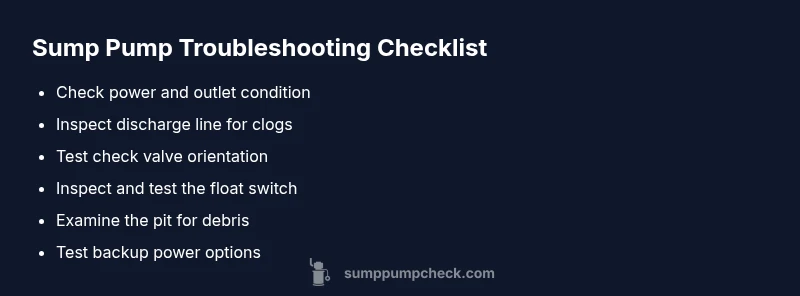
Most likely the discharge path or a faulty float switch is failing. If the sump pump is running but water remains, start with quick checks: confirm power and that the breaker is on; inspect the discharge line and check valve for clogs; then test the float switch and reseat if needed. Clear debris and reassemble.
What the symptom means when the sump pump seems to run but water remains
When you hear the pump cycling but still see water pooling in the basement, you are not imagining the problem. The symptom often indicates an issue beyond motor power. According to Sump Pump Check, most home faults fall into three broad categories: the discharge system (pipes, check valve, or pit), the float switch, or the pump itself. Even a seemingly healthy motor can fail to move water if the discharge path is blocked or the float cannot rise high enough. The key is not to panic, but to diagnose in a systematic order, starting with the simplest checks. This approach keeps you safe and minimizes unnecessary replacements. As you work, keep in mind the keyword sump pump working but water still in basement, which describes the exact situation many homeowners face and helps focus your troubleshooting.
Quick checks you can do before calling a pro
Before you assume you need a new pump, perform a few fast checks. First, verify the unit is powered and the outlet is live; test the outlet with another device to confirm power. Next, inspect the sump discharge line for clogs, kinks, or a frozen section, and ensure the check valve is sealing properly. If you have a battery backup, test it to ensure it’s charging. Finally, observe the float mechanism—if it sticks or sits too low, the pump won’t lift water unless the float is adjusted. These steps are designed to be quick and low-risk, helping you rule out the most common culprits.
Discharge line, check valve, and pit inspection
A blocked discharge line is a frequent reason for persistent basement water. Start by detaching the discharge line at the pump and blowing gently to clear debris (do not force hairline cracks). Inspect the check valve for proper orientation and a tight seal; a faulty valve can allow water to flow back into the pit. Also examine the sump pit for debris buildup that could prevent proper arm movement of the float. If water continues to back up, consider routing the line away from the foundation or upsizing the pipe to improve flow.
Float switch and impeller health
The float switch controls when the pump turns on and off. If the float is jammed by debris or algae, the pump may run continuously or fail to activate at the correct water level. Similarly, a clogged impeller or a worn impeller housing reduces pumping efficiency, leaving water behind. Clean the float housing gently, ensure the float moves freely through its full range, and replace the switch or impeller if you notice wear, cracks, or corrosion. A stuck float is a common root cause of the symptom sump pump working but water still in basement.
Power, breakers, and electrical safety
Electrical issues can masquerade as mechanical problems. Confirm the circuit breaker or GFCI hasn't tripped and that the outlet is properly wired. If the pump uses a dedicated circuit, ensure that no loose connections or moisture intrusion exist near the plug. Never work on live electrical components; turn off power at the main panel before inspecting plugs, wires, or the pump housing. Persistent water issues after power checks indicate a problem beyond electricity—yet safety remains the top priority.
Common missteps that waste time
Rushing to replace parts without testing can lead to unnecessary expenses. Do not assume a new pump fixes the issue if the discharge path is blocked. Avoid using corrosive cleaners in the pit, which can damage seals. Don’t overlook the check valve orientation; a reversed valve looks like a seal but actually blocks proper flow. Document each test so you don’t redo the same steps, and keep a log for maintenance.
When to escalate to professional service
If you have completed all basic troubleshooting and the basement remains damp, it’s time to bring in a professional. A licensed technician can perform a pressure test on the discharge line, verify the pump’s horsepower and head, and assess foundation drainage. In some cases, a faulty seal, pump impeller wear, or a structural issue requires specialized tools and expertise. The Sump Pump Check team recommends seeking professional help when there is persistent water or if you feel unsure about electrical safety.
Preventative maintenance to keep basement dry
Regular maintenance is the best defense against repetitive flooding. Schedule monthly checks during wet seasons and perform an annual full service that includes cleaning the intake screen, testing the float, inspecting the discharge line, and verifying the check valve’s integrity. Install a backup pump if you have heavy rain or power outages, and consider a battery backup with a robust charging circuit. Keeping the system clean and tested dramatically reduces the chance that you’ll confront sump pump issues again.
Steps
Estimated time: 45-75 minutes
- 1
Power check and safety prep
Unplug the pump or switch off the circuit breaker before touching any components. Confirm the outlet is live with a multimeter or a tester. Safety first to prevent shocks when working near water.
Tip: If you’re unsure about electrical work, skip to step 6 and call a pro. - 2
Inspect discharge line for clogs
Disconnect the hose from the pump and direct the line into a bucket. Blow gently to clear debris; look for kinks or crushed sections that reduce flow. Reconnect and test drainage.
Tip: Check outside terminus for ice buildup in winter. - 3
Check valve inspection and orientation
Locate the check valve in the discharge line. Ensure it opens toward the outside and seals properly when water tries to backflow. Replace if damaged or if you hear air bubbles when the system runs.
Tip: Valve orientation is easy to misread—double-check arrows. - 4
Float switch and pit inspection
Inspect the float arm for freedom of movement. Remove debris that may inhibit rising. If the switch sticks, replace it or adjust mounting height so it trips at the correct water level.
Tip: Handle with care; the float mechanism is delicate. - 5
Re-seat and test the pump
With power restored, fill the pit slightly to test the pump. Observe whether the unit starts, runs, and stops at the correct water levels. Listen for unusual grinding or rattling声音.
Tip: If you hear grinding, stop testing and call a professional. - 6
Evaluate electrical safety and extension considerations
Ensure cords are dry, grounded, and away from water sources. If you use a longer extension cord, confirm it’s rated for outdoor use and doesn’t overheat. Water and electricity are a dangerous mix; proceed with caution.
Tip: Never pull the plug by the cord. - 7
Plan for back-up and maintenance
Create a seasonal maintenance plan and invest in a battery backup system for power outages. Regular testing reduces the chances of a sudden flood during storms.
Tip: Set reminders for annual pump service. - 8
Know when to call in professionals
If water persists after all checks, contact a licensed plumber or pump technician for advanced diagnostics (pressure testing, impeller assessment, or foundation drainage evaluation).
Tip: Document symptoms for faster diagnosis.
Diagnosis: Sump pump running but water remains in the basement
Possible Causes
- highDischarge line blocked or check valve failing
- mediumFaulty or stuck float switch
- lowPump itself worn or undersized for the basement
Fixes
- easyClear discharge line and replace or reseat check valve
- mediumTest and replace faulty float switch or impeller as needed
- hardReassess pump capacity or consider professional sizing for the basement
FAQ
Why is my sump pump running but water is still in the basement?
This usually means the discharge line is blocked, the check valve isn’t sealing, or the float switch isn’t triggering correctly. Inspect these components in order to identify the root cause before replacing the pump.
If your sump pump runs but water stays, check the discharge path, the float switch, and the pump itself for failures.
Can a clogged discharge line cause water to back up?
Yes. A blocked discharge line prevents water from leaving the pit, causing water to accumulate even while the pump runs. Clear the clog and test the flow.
A clogged discharge line can back up water; clear it and test the flow.
Should I replace the float switch or impeller?
If tests show the float sticks or the impeller is worn, replacements are usually needed. Start with the float switch as it often fails first.
If the float sticks or the impeller wears out, replace the part.
How often should I perform sump pump maintenance?
Aim for monthly basic checks and an annual professional service to keep performance optimal.
Do monthly checks and yearly service to stay ahead of problems.
Is it safe to inspect the sump pump myself?
Basic inspection is safe if you disconnect power first. Avoid touching electrical components and wear gloves to protect your hands.
Yes, but always disconnect power before inspecting and avoid touching live wiring.
Do I need a backup sump pump?
A backup pump is highly recommended for power outages or severe storms to avoid basement flooding.
Yes—consider a backup pump to protect against outages.
Watch Video
Top Takeaways
- Inspect the discharge path first
- Floating switch is a common failure point
- Regular maintenance prevents floods
- Electrical safety is paramount
- Call a pro if the problem persists
- Choose a backup pump for power outages