Sump Pump Spraying Water from Base: Troubleshooting Guide
Diagnose and fix a sump pump spraying water from the base with a practical, safety-focused troubleshooting guide that covers causes, fixes, and prevention to protect your basement.


Most likely, a loose discharge connection or a failed check valve is causing water to spray from the sump pump base. Before anything else, power off at the breaker and unplug the unit, then inspect the discharge line for cracks or loose fittings. For a fast fix, reseat or tighten connections and replace worn seals.
Understanding the symptom: Sump pump spraying water from base
If you see water spraying from the base of your sump pump, you’re likely dealing with a problem in the discharge system or a worn seal. According to Sump Pump Check, this symptom often points to a loose discharge connection, a faulty check valve, or a damaged seal rather than a full-blown pump failure. The description sump pump spraying water from base captures a spray that originates at the pump housing or base area and can spread quickly, creating a slick area around the unit. Quick action minimizes water damage and reduces the risk of electrical hazards—especially during heavy rainfall. Sump Pump Check's analysis shows that addressing the simplest leak points first is almost always the fastest path to a stable system.
Safety first: Immediate actions to take
Safety must come first when you notice water spraying from the base. Power down the unit at the circuit breaker and unplug the pump. If you can reach the discharge path safely, place a bucket or towels to contain the spray. Check that the area around the pump is dry before handling any parts. If you have a GFCI outlet nearby, verify that it is not tripped. Remember, water and electricity are a dangerous combination; proceed with caution and consider wearing rubber-soled shoes and insulated gloves when handling the unit.
Quick checks you can perform before dismantling
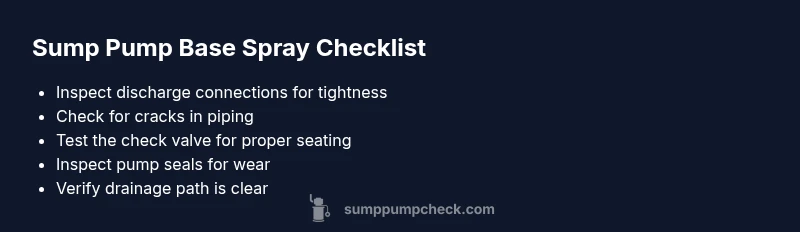
Begin with the simplest checks: confirm the discharge pipe is securely connected and free of cracks; inspect the check valve for proper seating and absence of debris; verify the pump is level and seated on a stable base. If the spray is intermittent, a small crack or loose clamp may be the culprit. Check the basin for cracks or a warped base that could allow water to escape at the joint. Keeping a log of when the spray occurs can help you spot patterns related to rainfall or pump cycling.
Root causes and how they lead to base spray
- Loose or cracked discharge connection: A loose fitting can leak water along the seam and spray from the base; tightening the clamp or replacing a cracked pipe usually stops the spray.
- Faulty or mis-seated check valve: If the check valve doesn’t seal properly, water can backflow and spray out near the base; replacing or reseating the valve often resolves the issue.
- Worn impeller housing or seals: Worn seals allow water to escape through the housing, creating a spray; this is more likely in older pumps and may require component replacement.
- Discharge line obstruction or misrouting: A clogged or poorly routed line can force water to back up and spray out at the base; clearing the line and routing it correctly helps.
Real-world fixes: when to tighten, seal, or replace
Tighten loose clamps and discharge fittings first; this simple step fixes many sprays quickly. If the discharge pipe shows cracks or the clamp won’t hold, replace the pipe or fittings. A mis-seated or failed check valve is another common culprit and is often resolved by reseating or replacing the valve. For worn seals or impeller housing, expect a more involved repair or pump replacement. Always test after each fix to confirm the spray stops and water is directed away from the unit.
Prevention: keeping your sump system dry and reliable
Regular maintenance is your best defense against sump pump spraying water from base. Schedule quarterly inspections of the discharge path, seals, and check valve; ensure the pump sits level; and replace worn components before they fail. Clear debris from the sump pit and discharge line to maintain smooth water flow. Consider installing a backflow preventer or check valve if you don’t already have one, and keep spare clamps and seals on hand for quick field repairs.
Steps
Estimated time: 60-90 minutes
- 1
Power down and secure area
Shut off power at the circuit breaker and unplug the sump pump. Put towels or a bucket to catch spray and keep children and pets away. Ensure the area around the pump is dry before touching any components.
Tip: Use a non-conductive tool if you must handle exposed wires; never pull on cords. - 2
Inspect discharge path for obvious issues
Carefully examine the discharge pipe and fittings for cracks, gaps, or loose clamps. If you find a damaged pipe, replace it or install a new clamp and tighten securely.
Tip: Take photos before removing clamps to help with reassembly. - 3
Check the check valve
Locate the check valve near the discharge outlet and verify it seats properly. Remove debris, reseat, or replace the valve if it shows signs of wear or leakage.
Tip: Test by running water through the valve away from the pump to confirm proper sealing. - 4
Inspect seals and impeller housing
Look for dried mineral buildup, cracks, or worn seals around the impeller housing. Replace the seal kit or housing if you see visible wear or damage.
Tip: Handle components gently to avoid damaging nearby seals. - 5
Reassemble and tighten
Reattach all components, ensuring a snug but not overtightened fit on all threaded connections. Use plumber’s tape or sealant where appropriate on threaded metal joints.
Tip: Over-tightening can crack fittings; avoid forcing parts into place. - 6
Test the system
Plug the pump back in and restore power. Pour a controlled amount of water into the pit to observe the discharge path. Confirm there is no spray at the base and water is directed away from the foundation.
Tip: Run multiple tests to ensure consistency across pump cycles. - 7
Prevent future issues
Schedule a maintenance check every 3-6 months, replace aging seals or valves proactively, and ensure the discharge line is clear of debris.
Tip: Keep spare check valves and clamps on hand for quick fixes. - 8
When to call a professional
If the spray persists after these steps, or you notice electrical smells, overheated components, or corrosion, contact a licensed plumber or sump-pump technician for a thorough inspection.
Tip: Professional evaluation may prevent costly water damage.
Diagnosis: Sump pump spraying water from base
Possible Causes
- highLoose or cracked discharge connection
- highFaulty or mis-seated check valve
- mediumWorn impeller housing or seal
- lowDischarge pipe crack or failed base seal
Fixes
- easyTighten or replace discharge connections; replace cracked piping
- easyReplace or reseat the check valve and test
- hardReplace worn impeller housing or seal; reseal pump base
- mediumClear clogs and ensure proper drainage routing; reseal basin
FAQ
Why is my sump pump spraying water from the base?
Spray from the base usually indicates a leak at the discharge connection, a faulty check valve, or worn seals. Inspect these components first, as they are the most common causes. If the spray persists after basic fixes, it may require valve replacement or a seal kit.
Base spray is usually from a loose discharge connection, a bad check valve, or worn seals. Start with those parts; if it continues, consider replacement.
Is it safe to run the sump pump while spraying occurs?
Electrical safety is the priority. If there is any sign of moisture around wiring, avoid running the pump and disconnect power. If the issue is minor and the area is dry, you can test after addressing the probable leak points.
Safety comes first. If you see moisture near wiring, don’t run the pump and get help.
What are warning signs that require professional service?
Persistent spraying after fixes, burning smells, buzzing, or overheating indicate a higher risk and warrant professional inspection. A professional can assess electrical risks and ensure proper installation.
If you still spray after fixes or smell burning, call a pro for safety and proper repair.
Can a clogged discharge cause spraying from the base?
Yes. A blockage can force water to back up and spray from the base. Clear the line and ensure it drains freely to resolve the issue.
A clog can back up water and cause spraying; clear it and test again.
How often should I maintain my sump pump to prevent this issue?
Perform a basic inspection every 3-6 months, replace aging components as needed, and test the discharge flow after rain events to prevent recurrence.
Inspect every few months and test after rain to prevent repeats.
Watch Video
Top Takeaways
- Identify discharge connections first and secure them.
- Check valve seating is a common spray cause.
- Shut off power before any inspection or disassembly.
- Regular maintenance prevents future base spray issues.