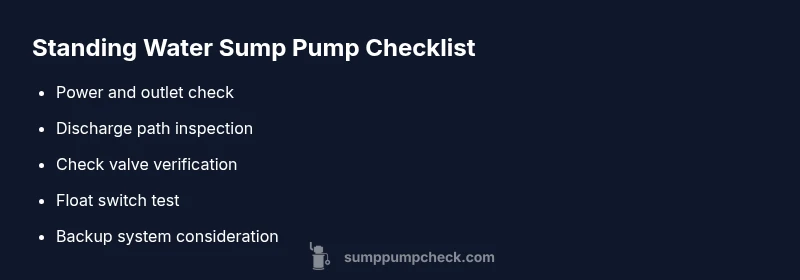
How to Troubleshoot Standing Water in a Sump Pump
Learn practical, steps-based troubleshooting to fix standing water around your sump pump and prevent basement floods with safe fixes and prevention tips.


Standing water around a sump pump is usually caused by a blocked discharge path, a failed check valve, or a float switch that sticks. Start with the basics: verify power, inspect the outlet and breaker, and clear the discharge line. If water remains, perform the diagnostic flow for deeper fixes.
Understanding Standing Water Around Your Sump Pump
Standing water around a sump pump is a visible warning sign that your basement drainage system isn't moving water away as quickly as it should. In most homes, the sump pit sits at the lowest point and uses a float switch to trigger the pump when water enters. If you see water pooling after a rainstorm or after heavy irrigation, the problem could be mechanical or drainage-related. This guide focuses on quick checks you can perform safely, followed by deeper diagnostics if the simple fixes fail. The goal is to restore efficient water removal and prevent basement flooding. Throughout this process, remember that standing water can indicate multiple issues, from a clogged discharge line to an undersized pump or a failure in the check valve. Start by confirming basic power and accessibility, then move to the discharge and valve components, which are the most common culprits for a sump pump that doesn’t drain properly.
Immediate Checks You Can Perform Before Digging In
Before you dive into troubleshooting, take a few quick steps to rule out easy causes. First, confirm the pump is plugged in and that the outlet is live; test with a dry appliance if needed. Check the circuit breaker or GFCI for trips. Inspect the visible discharge line for kinks, blockages, or ice; clear debris from the line and ensure it runs freely to the exterior. Make sure the sump lid is properly seated so no debris falls into the pit. Finally, gently lift the float switch by hand to see if the pump starts; if it does not, note the symptom for the diagnostic flow.
Common Causes of Standing Water in Sump Pumps
Several common issues can lead to standing water around the sump pump. A clogged or blocked discharge pipe prevents water from leaving the pit. A faulty check valve can allow water to flow back from the discharge line. A float switch that sticks or is misadjusted may fail to trigger the pump at the correct water level. An undersized or aging pump may struggle with large water loads, especially during heavy rain. Power issues, such as a worn cord or a tripped breaker, can also leave the system idle. Finally, improper venting or leaks around the pit can contribute to pooling water and odor.
Diagnostic Flow: Symptom to Diagnosis
Use the diagnostic flow to map your symptom to a likely cause and a fix. Start with the simplest checks and move toward more involved solutions only if needed. The symptom of standing water around the sump pit after a heavy rain points to issues with discharge, valve, or float. Verify power first, then test the discharge path, check or replace the check valve, and confirm the float reaches the triggering height. If water remains after these steps, reassess pump capacity or call a professional. This structured approach minimizes guesswork and protects your basement.
Step-By-Step Fix for the Most Common Cause: Discharge Path Blockage
- Turn off power to the sump pump and unplug the unit to ensure safety. 2) Inspect the discharge pipe for clogs, ice, or debris; remove any obstruction with a flexible brush. 3) Use a plumber’s snake or a flexible auger to clear hard-to-reach blockages inside the line. 4) Flush the line with water and listen for a clear flow; make sure there are no kinks or crushed segments. 5) Reconnect the pipe, restore power, and test by pouring water into the pit to confirm proper drainage. Pro tip: never force the line with sharp tools; you can crack fittings or bend the pipe.
Safety Precautions and Common Mistakes
- Always disconnect power before working on the pump to prevent electrocution. - Do not work in standing water; wear rubber boots and gloves. - Avoid using metal tools inside the pit to prevent damage and shock. - Common mistakes include testing with high-pressure water through the discharge line without verifying for leaks or backflow.
Steps
Estimated time: 60-120 minutes
- 1
Power and Safety Check
Begin by turning off and unplugging the sump pump. Inspect the outlet and nearby wiring for signs of wear, moisture, or damage. Use a non-contact voltage tester to confirm the circuit is dead before touching anything. This ensures your safety as you begin the diagnosis.
Tip: Wear rubber-soled shoes and stand on a dry surface; never work when the floor is wet. - 2
Inspect the Discharge Path
Follow the discharge pipe from the sump pump to the exterior. Look for kinks, ice, cracks, or blocks. Clear any debris and ensure the line runs freely without restrictions. If the line exits into a swampy area or a buried trench, verify it isn’t obstructed by soil or vegetation.
Tip: Pour a small amount of water into the pit to observe the flow through the discharge line after reassembly. - 3
Check the Check Valve and Vent
Inspect the check valve for leaks and ensure it’s oriented correctly. A reversed or stuck valve can cause backflow into the pit. Confirm the vent (if present) isn’t blocked and that air can escape as the pump runs.
Tip: If the valve is corroded or cracks are present, replace it rather than attempting a temporary fix. - 4
Test the Float Switch
Manually lift the float to trigger the pump and listen for activation. Lower the float slowly to verify the pump shuts off. If the pump fails to start or runs continuously, the float mechanism may be misadjusted or worn.
Tip: Adjust the float height per manufacturer guidance; a misadjusted float is a common cause of improper cycling. - 5
Evaluate Capacity or Backup
If water continues to pool after the previous steps, assess whether your pump size matches the water load. Consider upgrading to a higher-capacity pump or adding a battery backup to handle power outages during storms.
Tip: Consult a professional if you’re unsure about sizing or backup configurations.
Diagnosis: Standing water around the sump pump after rainfall
Possible Causes
- highBlocked discharge line or kinked piping
- mediumFaulty check valve allowing backflow
- highFloat switch stuck or misadjusted
- lowInsufficient pump capacity for water load
- mediumPower loss or circuit interruption
Fixes
- easyClear and straighten discharge line; remove debris; ensure free-flow path to exterior
- mediumReplace or reseat check valve; test for backflow
- easyInspect and adjust the float switch; clean the sump housing; ensure pump is primed
- hardAssess pump capacity; consider upgrading to a higher-capacity unit or adding a battery backup
- easyVerify power supply; check outlet, GFCI, and circuit breaker; replace faulty cord or switch
FAQ
What does standing water around a sump pump indicate?
Standing water usually signals that the pump isn’t removing water fast enough. Causes can include a blocked discharge, a failing check valve, or a stuck float. Check basic power and then move to the discharge and valve components.
Standing water around the sump pump typically means the pump isn’t removing water quickly enough, often due to a blocked discharge, a faulty valve, or a stuck float. Start with power checks and then inspect the discharge and valve.
How do I know if the float switch is stuck?
You can test the float by manually lifting it to see if the pump activates. If it doesn’t, or if the pump runs continuously, the float might be misadjusted or jammed. Clean the float and adjust height per the manual.
Lift the float to see if the pump starts; if it doesn’t, the float may be stuck or misadjusted.
Can a clogged discharge line cause flooding?
Yes. A clogged discharge line prevents water from exiting the sump pit, causing water to pool around the unit. Clear the line and ensure a free path to the exterior.
A clogged discharge line can definitely cause water to back up and pool around the unit.
Should I upgrade my sump pump for better protection?
If your current pump frequently struggles during heavy rain, upgrading to a higher-capacity unit or adding a backup system is wise. This improves reliability during power outages or extreme conditions.
If your pump keeps struggling in rain, consider upgrading or adding backup power.
When is professional help necessary?
If you’ve performed the basic checks and the problem persists, or if you’re uncomfortable working near electrical components, contact a licensed plumber or sump-pump technician for a thorough inspection and safe repair.
Call a pro if the problem continues after the basic checks, or if you’re unsure about electrical safety.
Watch Video
Top Takeaways
- Start with power and discharge checks.
- Clear the discharge path and test the float.
- Replace faulty valve/float or upgrade capacity if needed.
- Add a backup system to prevent floods during outages.