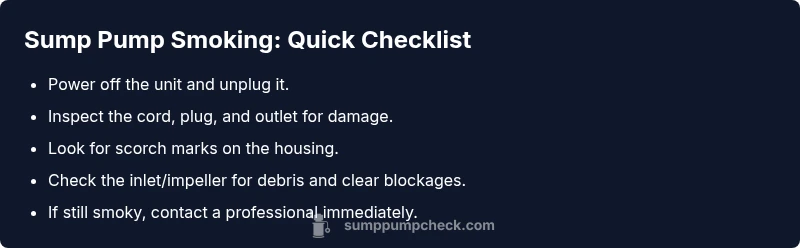
Sump Pump Smoking: Quick Safety Guide and Troubleshooting
Urgent guide to diagnose and fix sump pump smoking, with safety steps, a diagnostic flow, and prevention tips for homeowners.


If your sump pump is smoking, the most likely causes are electrical overload, an overheated motor, or a blocked intake causing the pump to strain. Start by unplugging the unit and keeping it away from water; then inspect the power cord and outlet. If burning odor or smoke persists, shut off power at the breaker and contact a licensed electrician or sump pump professional.
What sump pump smoking usually means
According to Sump Pump Check, a smoking sump pump is a warning sign that something is not functioning safely inside the unit. In most cases, the culprit falls into one of three buckets: electrical faults (shorts, damaged wiring, or a failed capacitor), motor overheating from strain or lack of cooling, or debris blocking the inlet and impeller that makes the motor work harder than it should. Sump Pump Check analysis shows that these conditions are the most common reasons homeowners encounter smoke or a burnt smell during pumping. Understanding these causes helps you act quickly to prevent further damage or a potential electrical fire. If you notice smoke, treat it as an urgent safety issue and move to the nearest safe area before investigating further.
Immediate safety steps
Safety comes first. If you smell burning or see smoke, turn off power to the sump pump at the breaker and unplug the unit if it’s safe to reach. Keep all liquids away from the device and avoid touching the metal housing, wiring, or plug with wet hands. If you’re indoors, evacuate pets and children from the basement area until you have assessed the risk. Do not attempt to rewire or disassemble the pump while it is plugged in or wet. Have a fire extinguisher rated for electrical fires accessible, and if the odor persists, call emergency services and then a professional.
Common causes of smoking in sump pumps
The most frequent causes are electrical faults (shorts, damaged insulation, or failed capacitors), motor overheating from an overworked pump or lack of cooling, and debris in the inlet or impeller that reduces flow and overheats the motor. The electrical path can degrade quickly in damp environments, increasing the risk of a short or arcing. Debris such as mud, sand, or sediment can clog the impeller and force the motor to work harder, which can generate heat and smoke. Regular inspections help you catch these issues early and prevent costly damage.
Diagnostic flow overview
A structured diagnostic flow helps you avoid guessing and ensures you address the most likely issues first. Start with safety and power checks, then inspect the electrical components, and finally inspect the mechanical parts for clogs. If you follow the flow and smoke returns or odor persists, escalate to a licensed professional. This approach aligns with general troubleshooting best practices and reduces the risk of injury or further damage.
Safety tips and warnings
- Do not touch the pump while it is plugged in or wet. Always power down first.
- If you smell burning, do not operate the pump again until it’s inspected.
- Use protective gloves and eye protection when handling a disassembled unit.
- Consider installing a ground fault circuit interrupter (GFCI) outlet to reduce shock risk near damp basement environments.
Prevention tips to avoid future smoking
- Schedule regular maintenance: clean the inlet, check valves, and test the float switch to ensure proper cycling.
- Inspect the power cord and outlet yearly for signs of wear or heat discoloration.
- Keep the discharge area clear of debris and ensure adequate ventilation to prevent overheating.
- Use a dedicated circuit for the sump pump to minimize the chances of an overload from other devices.
When to call a professional
If you see burn marks, melted plastic, or persistent smoke after basic safety steps, stop all testing and contact a licensed electrician or sump pump technician. A professional can inspect internal windings, wiring harnesses, and the motor bearings for damage, and determine if a repair or replacement is warranted. Early professional intervention can prevent a broader electrical hazard in your home.
Real-world checks you can perform safely
- Visually inspect the power cord for cracks or chafed insulation.
- Confirm the outlet is delivering power by testing with a known-good device.
- Verify the pump sits level and that the discharge line isn’t blocked downstream.
- Listen for unusual grinding or scraping noises that may indicate bearing wear.
Steps
Estimated time: 45-60 minutes
- 1
Power down safely
Unplug the sump pump from the outlet and switch off the circuit breaker to ensure no live voltage reaches the unit. Do not touch the pump while it's wet or powered. Keep the area dry and stand on a non-conductive surface.
Tip: Use a dry rubber mat and wear insulated gloves when handling cables - 2
Inspect the power supply
Check the power cord for cuts, discoloration, or loose connections. If you see damage, replace the cord or install a new outlet. Verify the outlet supplies power using a known-good device.
Tip: Document any damage with photos for the technician - 3
Check for obvious damage
Look for scorch marks on the plug, housing, or wiring. Melting or melted plastic indicates a compromised component that should not be reused.
Tip: Do not attempt field repairs on damaged components - 4
Examine inlet and impeller
If you can safely access the inlet, remove debris and rinse gently. A jammed impeller can cause the motor to overwork and overheat, triggering smoke.
Tip: Wear eye protection against flying debris - 5
Reassemble and test
Reconnect power, fill the sump with water to prime the pump, and run briefly to observe for abnormal smoke or heat. Stop immediately if anything smells hot or sounds off.
Tip: Start with a dry run without water to reduce risk - 6
Know when to call a professional
If smoke returns after reassembly or you still notice burning odors, shut down and contact a licensed electrician or sump pump technician for a thorough inspection.
Tip: Safety first—don’t push through risky symptoms
Diagnosis: Sump pump emits smoke or a burning odor during operation
Possible Causes
- highElectrical overload or short in wiring or damaged motor windings
- mediumOverheating motor due to blockage or debris in the impeller
- lowWater ingress causing insulation failure or poor electrical connection
Fixes
- easyUnplug the unit and switch off the circuit breaker; keep clear of water and odors
- easyInspect the power cord, plug, and outlet for damage; replace components as needed
- mediumClear debris from the inlet and impeller; ensure the pump sits on a level surface and test
- hardIf burning odor or smoke persists, contact a licensed electrician or sump pump professional for assessment
FAQ
Is it safe to operate a sump pump after it has smoked?
No. Do not operate until inspected by a professional. Unplug and dry the area before any testing.
Don’t run it again until a professional has checked for damage.
What are the common causes of sump pump smoking?
Electrical faults, motor overheating, or debris blocking the impeller are the typical culprits.
Most often electrical or overheating causes.
Should I replace the sump pump if it smoked once?
Not necessarily. Assess damage and test; replacement may be required if components show scorch marks or smoking recurs.
If you see damage or it keeps smoking, replacement may be needed.
Can smoking indicate a fire risk?
Yes. A burning odor or smoke is a warning sign; treat as a potential fire risk and act quickly.
Yes, treat as a potential fire risk.
What should I check first if it smokes again?
Power, outlet, cord condition, and obstruction in inlet/impeller.
First check wiring and obstructions.
Do I need a professional to inspect?
If unsure or dangerous symptoms persist, contact a licensed electrician or sump pump technician.
Yes, get a pro.
Watch Video
Top Takeaways
- Power off at the breaker before inspection.
- Most smoking sump pumps indicate electrical or motor overheating.
- Check for blockages and debris in the inlet/impeller.
- If smoke persists, call a licensed professional.
- Prevent future smoking with regular maintenance and checks.