Sump Pump Overheating: Troubleshooting Guide for Homeowners
Learn how to diagnose and fix sump pump overheating with a clear, step-by-step guide. Safe checks, common causes, and prevention tips for homeowners seeking quick relief.


Most likely, sump pump overheating stems from excessive running time, a clogged impeller, or a blocked discharge. Start by turning off the pump, inspect the housing for debris, clear the inlet screen, and verify the discharge line is free of kinks. If it continues, upgrade capacity or call a professional.
Understanding sump pump overheating
Sump pump overheating is a warning sign that your system is struggling to move water efficiently. If left unchecked, heat can degrade seals, shorten motor life, and increase electricity use. According to Sump Pump Check, the most common overheating scenarios involve extended run times during heavy rain, debris-laden impellers, or restricted discharge paths. Homeowners should treat overheating as a signal to pause and inspect before more damage occurs. In basements across the country, this issue often appears after a storm or during spring melt, when groundwater levels surge and force pumps to work nonstop. The result is a cycle of heat, friction, and eventual failure. The Sump Pump Check team emphasizes that regular inspections can catch early signs of stress on the motor and bearings, and that addressing small issues quickly saves money and labor in the long run.
Common causes of overheating
Overheating isn't usually the result of a single failure. More often, it's a combination of factors that pile onto the motor. The most frequent culprits include excessive running time during periods of high groundwater, debris or sediment in the inlet or impeller, and a discharge line that is kinked, clogged, or too short to vent back pressure effectively. An aging motor or worn bearings can also raise heat generation and reduce efficiency. Based on Sump Pump Check analysis, a pump that runs continuously without relief can quickly reach unsafe temperatures, accelerating wear on seals and gaskets. Finally, improper sizing for the home’s drainage load can force a pump to work harder than necessary, creating a self-perpetuating heating cycle.
Quick safety checks you can perform now
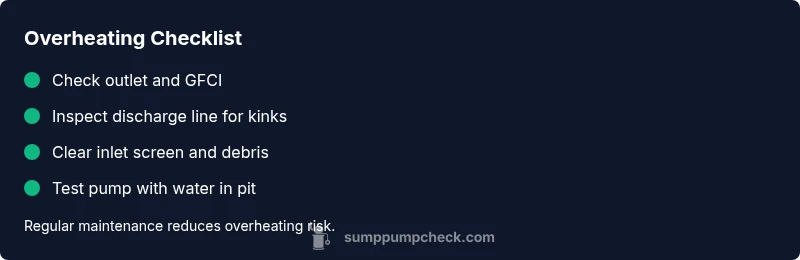
Before you touch the unit, shut off power at the breaker and unplug the pump. Verify that the area around the sump pit is dry and free of standing water. Inspect the discharge line for kinks, clogs, or ice formation in cold weather. Remove visible debris from the inlet screen and around the impeller. If you can safely access the impeller housing, spin the impeller by hand to feel for unusual resistance. Never operate the unit with exposed wiring or a damaged power cord. If you smell burning insulation, hear grinding noises, or see smoke, stop and contact a professional right away.
How to diagnose the root cause with a flowchart
A simple symptom-to-solution flow helps avoid random fixes. Start with: Is the pump overheating after a heavy rain or melt? If yes, check for a clogged inlet or debris on the impeller. If the discharge line is clear but heat persists, the problem is likely overwork due to groundwater volume or wrong pump size. If the discharge is blocked, remove the obstruction and re-test. If overheating continues after cleaning and clearing the discharge, consider motor wear or a failing capacitor. The goal is to map symptom → likely cause → concrete fix, then re-test to confirm the cure. Sump Pump Check recommends documenting each step to share with a technician if professional help is needed.
Best-practice repairs and prevention
Most overheating incidents resolve with straightforward maintenance: clean the inlet, ensure the impeller moves freely, and verify a clear discharge path. Replacing worn seals or bearings may be required if heat persists. Use a pump with an appropriate capacity for the home’s groundwater load and install a back-up system to share the load during peak times. Regular testing, at least twice a year, helps catch issues before they trigger overheating. For homeowners, annual checks combine with seasonal cleanups to minimize risk and extend pump life.
When to call a professional
If overheating recurs after completing all basic maintenance, or if any electrical signs (tripping breakers, exposed wiring, buzzing, or burning smell) appear, stop using the unit and consult a licensed technician. A professional can test the motor’s winding insulation, capacitor health, and switch timing, and can assess whether a replacement pump is more cost-effective than a repair. In some cases, upgrading to a high-efficiency or backup system provides a safer, more reliable solution for long-term basements drainage.
Steps
Estimated time: 45-60 minutes
- 1
Power down and safety check
Begin by turning off the breaker and unplugging the pump. Confirm the sump area is dry, and wear protective gloves. This first step reduces the risk of electric shock while you inspect components.
Tip: Use a non-contact voltage tester to ensure the outlet is de-energized before touching any wires. - 2
Inspect discharge line
Trace the discharge line from the pump to the exterior. Look for kinks, blockages, frost, or ice. Clear any obstruction and ensure the line slopes away from the pit so water can freely exit the system.
Tip: Test with a small amount of water to observe smooth flow through the line. - 3
Check inlet and impeller
Remove any debris from the inlet screen and gently rotate the impeller by hand to ensure it spins freely. Clear buildup with a soft brush; avoid forcing parts that may bend or jam.
Tip: Do not use metal tools that could scratch or damage the impeller. - 4
Test float switch and wiring
Make sure the float switch can rise and fall without obstruction. Inspect wires for cracks or loose connections. A sticky or misaligned float can cause the pump to run too long.
Tip: Replace damaged wiring and ensure the switch moves smoothly along its track. - 5
Run a controlled test
Reconnect power and run a controlled test with a small amount of water in the pit. Observe temperature rise and overall performance for 2-3 minutes. If overheating recurs, proceed to a professional assessment.
Tip: Document temperature changes and noise; this helps a technician diagnose faster. - 6
Decide on replacement or upgrade
If overheating continues despite maintenance, evaluate pump age and efficiency. Compare replacement costs with prospective energy savings of modern units or backups. A tailored upgrade can prevent future overheating and basement floods.
Tip: Keep spare parts on hand or schedule maintenance windows to avoid downtime during storms.
Diagnosis: Sump pump overheats after long runs or several minutes of operation
Possible Causes
- highExcessive running time due to high groundwater or poor drainage
- mediumDebris in the inlet or impeller causing strain
- highBlocked or restricted discharge line
- lowWorn motor or failing bearings
Fixes
- easyReduce load by improving drainage or using a dewatering pump to share the load
- easyClear debris from inlet and impeller
- easyUnclog or replace discharge line; check for kinks or poor slope
- mediumReplace motor or pump assembly; consult a pro if uncertain
FAQ
What causes sump pump overheating?
Overheating is commonly caused by excessive running time during heavy groundwater, debris blocking the impeller, or a restricted discharge line. A worn motor can contribute as well. Identifying the dominant cause helps target the fix.
Overheating is usually due to running too long, a clog, or a blocked discharge. Finding the main culprit lets you fix it quickly.
Is overheating dangerous for my home?
Yes. Prolonged overheating can damage motor windings, seals, and electrical components, increasing the risk of failure and basement flooding. Addressing overheating promptly reduces safety risks and repair costs.
Yes, it’s risky and can lead to big problems if not addressed quickly.
Can a clogged inlet cause overheating?
Absolutely. A clogged inlet or impeller makes the pump work harder, generating more heat and accelerating wear. Clearing obstructions usually resolves the overheating quickly.
A clogged inlet can definitely cause overheating by making the pump work harder.
When should I replace instead of repair my sump pump?
If the pump is old, repeatedly overheats, or repair costs approach replacement cost, upgrading to a new, efficient model or backup system is often wiser and more reliable.
If the pump is old or keeps overheating despite fixes, replacement is often best.
How can I prevent sump pump overheating long-term?
Regular maintenance, clear discharge paths, proper sizing, and a backup pump are key to preventing overheating. Schedule seasonal checks and keep the pit clean to reduce risk.
Keep up with maintenance and backups to prevent overheating over time.
Should I call a professional for overheating issues?
If you’re uncertain about electrical safety, the cause remains unclear after basic checks, or the basement floods repeatedly, professional diagnosis and service is recommended.
If you’re unsure or it keeps happening, it’s time to call a professional.
Watch Video
Top Takeaways
- Shut off power before inspecting any sump pump components
- Keep discharge path clear and properly sloped
- Clean inlet and check impeller for debris
- Consider a backup pump to reduce overheating risk