Sump Pump Broken: Troubleshooting Guide for Homeowners
If your sump pump is broken, this guide shows a practical, step-by-step troubleshooting flow, common causes, safety tips, and when to call a professional. Learn how to diagnose, fix, and prevent repeat failures.


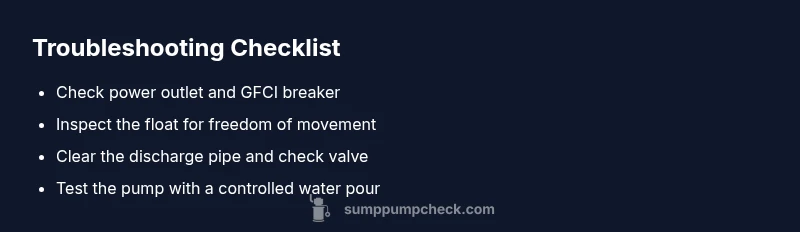
Most likely, a sump pump broken issue stems from power, float switch, or a blocked discharge line. Start with these quick steps: 1) verify the outlet is live and reset any GFCI or breaker; 2) check the float switch for freedom of movement; 3) inspect the discharge pipe for clogs and clear debris; 4) test by pouring water to trigger the float.
Why a Sump Pump Broken Is a Problem
When a sump pump fails, your basement is suddenly vulnerable to flooding, dampness, and mold growth. A broken unit can allow water to back up during heavy rain, thaw, or groundwater pressure, leading to expensive damage and potential safety hazards. According to Sump Pump Check, the most common causes of a sump pump broken scenario are simple power issues, a float switch that sticks, or debris obstructing the intake or discharge pathways. Recognizing these failures early helps you act with speed and confidence. This section outlines why a broken sump pump matters, what normal operation looks like, and how to prioritize fixes to protect your home. Expect a mix of quick checks and longer-term fixes that reduce the odds of a repeat occurrence.
Tip: Keep a basic sump pump toolkit on hand—gloves, flashlight, wrench, and a small bucket—to make inspections safer and faster.
Be mindful of electrical safety when working near a sump pit; never work on the device with the power on in wet conditions.
Common Causes and Symptoms
A sump pump that fails to operate typically shows one or more of these symptoms: no noise or hum, the float not rising, water accumulating around the pit, or the pump running continuously. The most frequent causes include a tripped circuit or blown fuse, a dead outlet, a stuck float switch, a clogged intake screen, or a blocked discharge line. In some cases, a failing pressure switch or a worn impeller can reduce pumping efficiency. Detecting the exact cause early is essential to prevent further basement water issues.
Symptoms to watch for:
- No power at the outlet or a tripped GFCI
- Float that stays down or refuses to rise
- Water pooling in the sump pit or around the pump
- Strange noises like grinding or rattling
Quick check list:
- Inspect the power cord and outlet; test with a known-working device
- Check the breaker panel and GFCI outlets serving the pump location
- Examine the float for obstruction or sticking points
Quick Home Checks You Can Do Safely
Many sump pump problems can be diagnosed and corrected without professional help, as long as you observe safety rules. Begin with these safe checks:
- Confirm the pump is plugged in and the outlet is live by testing a small lamp or radio nearby.
- Reset GFCI outlets and circuit breakers if the pump’s circuit is tripped.
- Inspect the sump pit for standing water, debris, or mud that could block the inlet.
- Remove obvious obstructions from the float arm and ensure it moves freely through its full range.
- Inspect the discharge line for kinks, clogs, or air gaps that prevent water from leaving the pit.
- Pour a small amount of water into the pit to see if the float rises and the pump activates.
If any of these checks fail to restore operation, it’s time to move to diagnostic steps or call a professional. Safety note: never handle electrical components with wet hands or while standing in water.
Diagnostic Flow: Symptom to Solution Overview
This flow helps you narrow down the issue by symptom:
- Symptom: Pump won’t start or runs continuously
- Diagnosis: Power issue or flood control device (GFCI, breaker) tripped
- Solution: Restore power, reset GFCI/breaker, re-test
- Symptom: No water being pumped despite power
- Diagnosis: Float switch stuck or clogged impeller
- Solution: Free the float, clean intake, test again
- Symptom: Water returns after pumping
- Diagnosis: Discharge line blockage or air gap
- Solution: Clear line, ensure proper elevation or install check valve if needed
Always verify the fix by triggering a controlled test (pour water) and watching the pump cycle safely. If the symptom persists after these checks, professional help is advised.
Step-by-Step Fix for the Most Common Cause
This section focuses on the most common failure mode—power or float issues—and walks you through a safe, practical fix.
- Power verification: unplug the pump, inspect the outlet, and reset any GFCI or breaker. Reinsert and test with a known-good device before re-plugging the pump. Pro-tip: use a non-contact voltage tester to confirm live power without touching wires.
- Float inspection: lift the float arm slowly to ensure it rises, falls, and clicks as designed. If it sticks, clean the linkage and remove any debris around the arm.
- Drainage path check: inspect the discharge line for blockages or kinks; straighten, flush, and remove obstructions to restore water flow. Pro-tip: run a small amount of water to observe the flow visually.
- Reassembly and test: plug the pump back in, pour water into the pit, and observe the pump cycle. Ensure the outlet discharge doesn’t back up and that the float responds correctly.
- Post-test inspection: check the sump pit for new debris and confirm the check valve (if present) seals properly to prevent backflow. Pro-tip: consider installing a simple anti-backflow device if your setup lacks one.
- Document and monitor: note the date of the fix and any recurring patterns (seasonal rains, groundwater changes), and plan a maintenance check every 6–12 months. Pro-tip: keep a log nearby for quick reference during storms.
Safety Tips & Warnings for Sump Pump Troubleshooting
- Always power down before opening the sump pit to reduce electric shock risk.
- Wear rubber-soled shoes and use insulated tools when inspecting live electrical components.
- If you smell burning insulation or see melted cords, stop immediately and call a professional.
- Never enter a wet sump pit without another person nearby and a plan to exit safely.
- If your pump is old or repeatedly failing, replacement might be safer and more cost-effective than constant repairs.
Prevention Tips to Avoid Future Breakdowns
- Schedule regular maintenance checks every 6–12 months, including the float, impeller, and seals.
- Keep the discharge line clear of debris and snow buildup; ensure proper slope away from foundation.
- Install a battery backup or water-powered backup pump to protect against power outages.
- Install audible and visual alarms to detect failures early and notify you promptly.
- Consider a professional inspection after major storms to verify the system’s readiness.
Steps
Estimated time: 30-45 minutes
- 1
Power down and prepare
Unplug the sump pump and remove any standing water around the pit. Put on rubber-soled shoes and use dry hands. Verify there is no risk of shock before touching wires.
Tip: Use a flashlight to inspect the plug and outlet for visible damage. - 2
Test the outlet
Plug a known-good device into the outlet to confirm it’s live. If not, reset GFCI and test again; if it still fails, replace the outlet or call an electrician.
Tip: Avoid using adapters that could overload a circuit. - 3
Inspect the float
Remove debris around the float and ensure it moves freely through its range. A stuck float will keep the pump from starting or cause intermittent pumping.
Tip: Do not force the float; work debris out gently. - 4
Check the discharge line
Follow the discharge pipe from the pump to where it exits the house. Look for kinks, clogs, or ice buildup. Remove obstructions and flush with water.
Tip: Watch for leaks or loose fittings as you test. - 5
Re-test with water
Pour water into the sump pit slowly to trigger the float and watch the pump cycle. Confirm water is being expelled away from the foundation.
Tip: Do a controlled test to avoid splashing electrical components. - 6
Inspect for backflow and backups
If you have a check valve, verify it seals properly. Confirm there is no backflow that would defeat the pump’s purpose.
Tip: A missing or faulty check valve is a common culprit.
Diagnosis: Sump pump won't start or fails to remove water
Possible Causes
- highPower issue (outlet, GFCI, or breaker)
- mediumStuck or blocked float switch
- lowDischarge line blockage or air gap
Fixes
- easyReset breaker/GFCI and verify outlet live; replace or relocate outlet if faulty
- easyFree the float mechanism and clear any debris from the pit; ensure smooth movement
- mediumClear discharge path, straighten line, and ensure proper slope away from house; install a check valve if needed
FAQ
Why is my sump pump not turning on?
Typical causes are a tripped breaker, a dead outlet, or a stuck float. Start by checking power and the float, then inspect the discharge line for obstructions. If power and float are fine but the pump still won’t start, the motor may be worn and require replacement.
Usually a power issue or a stuck float—check power first, then the float and discharge path.
What should I check first if water isn’t pumped away?
Check that the pump is powered, the float moves freely, and the discharge line isn’t blocked. Clear debris from the inlet screen and verify the line exits outside without kinks.
Power, float movement, and a clear discharge line are the first things to verify.
How do I test my sump pump safely?
Power down, inspect the pit, ensure the outlet is live, then pour water into the pit to trigger the float and watch the pump operate. Always stay out of standing water during testing.
Turn off power, test trigger, and observe the pumping cycle.
Can a faulty float switch cause a beeping alarm?
Yes. A beeping alarm often indicates a fail-safe in the sump pump system, commonly triggered by float or power issues. Check the float, wiring, and any alarm panel for proper operation.
Beeping usually means a float or power problem; inspect those areas first.
When should I call a professional for a broken sump pump?
If you’ve exhausted power, float, and discharge checks, or if the pump motor shows signs of wear, noise, or overheating, it’s wise to consult a licensed technician. Replacing an old unit may be more cost-effective in the long run.
If repeats happen after checks, or the motor seems worn, seek a professional.
Is a backup pump worth it for prevention?
A backup pump provides protection during power outages or primary pump failures. Combine with a battery back-up or water-powered unit and regular testing to improve resilience.
Yes—backup pumps add crucial protection during outages.
What maintenance reduces future problems?
Regular inspection of the float, impeller, seals, and discharge line, plus annual testing, helps catch wear before failures occur. Keep debris out of the pit and monitor for unusual noises.
Routine checks lessen surprises and keep the pump reliable.
What is the role of a check valve?
A check valve prevents backflow into the pit after pumping. If you notice backflow or water near the pit, inspect or replace the valve as part of your maintenance.
Check valves stop backflow and are important for efficiency.
Watch Video
Top Takeaways
- Inspect power first; it’s the most common cause of failure.
- Float and discharge blockages are frequent culprits.
- Test after fixes to confirm proper operation.
- Safety comes first—shut off power before touching wiring.