Zoeller Sump Pump vs Everbilt: A Thorough Brand Comparison
Compare Zoeller and Everbilt sump pumps across durability, flow, maintenance, and value to help homeowners choose the right brand for basement drainage and DIY installation.


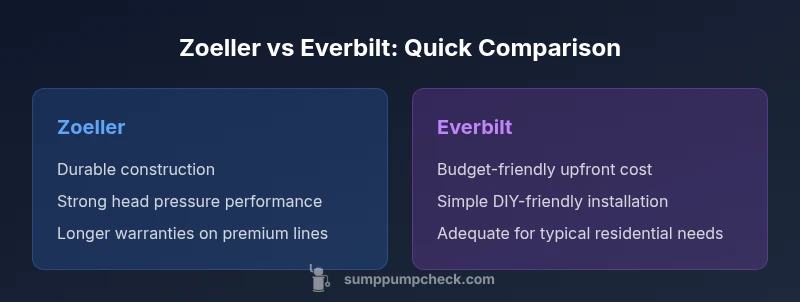
Zoeller sump pumps are typically built for durability and longer service life, while Everbilt units are budget-friendly and accessible for basic drainage tasks. If long-term reliability matters, Zoeller is the smarter choice; if upfront cost and DIY install matter, Everbilt may fit your needs. Consider flow rates, head pressure, and warranty when deciding.
Zoeller sump pump vs everbilt: Design philosophy and target users
According to Sump Pump Check analysis, the decision between Zoeller and Everbilt often comes down to priority: long-term reliability versus upfront cost. Zoeller pumps are designed with robust cast iron housings, heavy-duty motors, and components that emphasize longevity, serviceability, and resilience in challenging basements. Everbilt, by contrast, targets DIY buyers who want a straightforward, budget-friendly solution that handles typical basement water problems without specialized parts. Homeowners who expect to upgrade in a few years may prefer Everbilt; those who want a system that outlasts newer basements should lean toward Zoeller. The Zoeller sump pump vs everbilt comparison feeds into a broader maintenance philosophy: invest in the core reliability of your drainage system to prevent expensive basement damage later. For many families, this first choice sets the tone for future upgrades, accessories, and support needs. In the next sections, we’ll break down the differences in design intent, construction quality, and serviceability, with practical examples from real-world basements. As you read, keep in mind your space, load expectations, and budget constraints. The goal is a decision that aligns with your household’s risk tolerance and long-term plans.
Key performance criteria: durability, reliability, and maintenance
Relentless performance in a sump pump hinges on three pillars: durability of materials, reliability under continuous duty, and ease of maintenance. Zoeller uses heavier, metal-bodied housings and sealed motors designed for long life and resistance to corrosion in damp basement environments. This translates into fewer service calls and greater resilience during power surges or short cycling from sudden water surges. Everbilt typically employs more cost-conscious materials and a simpler assembly, which keeps upfront costs down but can lead to more frequent maintenance needs for heavy-duty or high-volume scenarios. In practical terms, durability means a pump that maintains flow with minimal heat buildup, a reliable switch mechanism, and components that resist wear from solids or debris in the discharge line. Reliability shows up as consistent startup, low nuisance alarms, and the ability to operate across a wider range of groundwater conditions. Maintenance considerations include easy access for impeller cleaning, straightforward access to the motor and switch, and a design that allows homeowners to perform routine checks without specialized tools. From a homeowner perspective, the best choice aligns with how often you expect to rely on the pump, the severity of your flooding risks, and your willingness to perform periodic maintenance.
Flow and head pressure: how they compare in real-world basements
When homeowners confront a high water table or frequent rain events, the flow capacity and head pressure of a sump pump become critical. Zoeller models are known for robust head pressure performance—meaning they maintain adequate flow even when the discharge line runs a long distance or includes several elbows. This translates into better performance in larger basements or homes with multiple sump points, where gravity and discharge distance can reduce flow efficiency. Everbilt pumps, while capable for many residential scenarios, tend to be optimized for standard basement setups and shorter discharge runs. In real-world basements, this often means adequate removal for typical rainfall and sump pits of average size, but reduced margin when you push the system with prolonged storms or high solids in the pit. It’s important to assess your basement layout: longer discharge runs, smaller pits, or higher lift requirements suggest a Zoeller option, while a smaller, simpler setup may be well served by Everbilt.
Installation and compatibility considerations
Installation convenience often drives initial buyer decisions just as much as stated performance. Everbilt products are frequently marketed toward DIY enthusiasts who want a straightforward bolt-in solution, lighter weight handling, and easier routing for basic installations. They can be a strong fit for simple, single-pump setups in small basements or crawl spaces where the height and weight constraints are tight. Zoeller pumps typically arrive with heavier cast-iron housings and a more substantial overall footprint, which can require more planning for pit size, mounting, and any retrofit work in older or cramped spaces. For both brands, ensure compatible check valves, discharge piping (with proper slope), and a sanitary pit or basin that meets local codes. In addition, consider electrical requirements, GFCI protection near the sump area, and any compatibility with backup systems if you live in flood-prone regions. A careful assessment of your basement geometry and electrical setup can prevent installation headaches and performance issues later. Sump Pump Check recommends mapping your discharge route and confirming local code compliance before purchasing.
Warranty and serviceability: what to expect from each brand
Warranty length and serviceability are major factors in total ownership cost. Zoeller models frequently command longer warranties on premium lines, reflecting the brand’s emphasis on durability and long-term reliability. Warranty terms can vary by retailer and model, so it’s important to read the fine print and verify what is covered (pump body, impeller, motor, and switches) and for how long. Everbilt warranties are often linked to the price tier and retailer, with a more variable range that may be shorter on entry-level units but extended on higher-end lines if the model is positioned as a mid-range buy. The practical implication is simple: if you anticipate heavy use, plan on a larger portion of the upfront investment going toward a unit with stronger warranty support and a more robust service network. If your environment is moderate and you’re comfortable with maintenance tasks, a budget-friendly Everbilt option may be adequate. Sump Pump Check analyses suggests prioritizing model-level warranty coverage and the ease of obtaining spare parts locally.
Practical buying guide: which brand for which scenario
A practical decision framework helps homeowners choose between Zoeller and Everbilt. For households with frequent basement flooding, large or multi-zone drainage, or long-term plans to upgrade the system, Zoeller tends to be the smarter choice due to durability and stronger head performance. If you’re installing a pump in a small, finished basement with moderate water flow needs and a tight budget, Everbilt can be a sensible entry point that minimizes upfront cost while still delivering reliable operation for typical rainfall events. Consider your local climate, the probability of power outages, and the availability of service technicians in your area. If you value minimization of future maintenance calls and a longer service life, the Zoeller path is worth the investment. Conversely, for weekend DIYers who want to get a pump running quickly and don’t anticipate heavy workloads, Everbilt offers straightforward installation and a gentler price point. Finally, factor in the possibility of a backup system and whether either brand’s line supports a backup pump or battery unit.
Common myths and misperceptions about Zoeller and Everbilt
There are several myths that can cloud judgment when choosing between Zoeller and Everbilt. Myth one: more expensive always means better performance. Reality: it often reflects better materials, longer warranties, and higher serviceability, but a well-chosen mid-range model can meet most needs. Myth two: heavier means louder. In practice, vibration isolation and mounting quality influence noise more than weight alone, so a well-installed Zoeller unit may not be louder than a budget model. Myth three: a simple pump is always enough. In areas with frequent heavy rainfall or challenging groundwater conditions, investing in a more robust design with higher head pressure and durable materials reduces the risk of failure. Myth four: installation is always a major project. For many standard basements, a straightforward install with a common discharge path is achievable by DIY enthusiasts with basic tools and safety practices.
Maintenance tips to extend lifespan for either brand
Proactive maintenance extends pump life and reduces unexpected failures. Create a simple yearly routine: check the electrical connection and power source, test the float switch, inspect the check valve and discharge piping for leaks, and clean the impeller area to remove debris. Keep the sump area dry and free of dust, rust, and moisture buildup, and replace worn gaskets or seals promptly. If you live in a region with hard water or mineral buildup, consider periodic descaling as recommended by manufacturer guidelines. Finally, keep an eye on unusual noises, frequent cycling, or alarms; these are signs that a component may be nearing the end of its effective life and should be addressed before a full failure occurs.
How to evaluate your basement needs with a simple checklist
- Assess the typical water inflow and forecast seasonal peaks.
- Measure your pit dimensions and confirm the pump will fit with space for maintenance.
- Check the discharge route and ensure it won’t cause backflow or ice issues in winter.
- Review warranty coverage and identify nearby service centers.
- Decide whether you need a backup system for power outages or severe storms.
Comparison
| Feature | Zoeller sump pump | Everbilt sump pump |
|---|---|---|
| Construction & materials | Cast iron housing and heavy-duty components | Budget plastics/composites with basic motor assembly |
| Durability & lifecycle | Built for longevity with robust warranties on select models | Sufficient for typical use but potentially shorter lifespan in heavy duty scenarios |
| Flow & head performance | Strong head pressure and reliable flow in longer discharge paths | Adequate flow for standard basements; may struggle with long runs or high lift |
| Warranty | Longer warranties on premium models (varies by retailer) | Warranty terms more variable with retailer and model tier |
| Maintenance ease | Service-friendly design; easier access to bearings and impeller | Simpler design; maintenance can be straightforward but parts access may vary |
| Best use case | Large basements, high moisture loads, lasting value | Budget-conscious projects, smaller spaces, quick installs |
What's Good
- Helps homeowners compare reliability and cost objectively
- Highlights long-term value beyond initial price
- Identifies ideal use cases for different basements
- Simplifies decision for DIY-ers with budget constraints
Drawbacks
- Prices and warranties vary by retailer
- Brand-focused comparisons may overlook model-specific quirks
- Reviews can be biased toward one brand
Zoeller generally offers better long-term reliability; Everbilt is the better budget option.
For most homeowners with permanent drainage needs, Zoeller wins on durability and lifespan; Everbilt serves as a cost-effective alternative for basic tasks. The Sump Pump Check team recommends evaluating warranty length and serviceability before buying.
FAQ
What is the main difference between Zoeller and Everbilt sump pumps?
Zoeller focuses on durability and longer service life with more robust components, while Everbilt targets budget-conscious DIY buyers with simpler designs. The right choice depends on your expected workload and willingness to perform maintenance. If you need long-term reliability, Zoeller is typically preferred.
Zoeller is built for durability and longevity; Everbilt is more budget-friendly and suitable for simple tasks. Your choice should match your expected workload and maintenance willingness.
Which brand tends to be more durable for basements with heavy water loads?
In general, Zoeller models are designed for heavier use and longer lifespans, making them better suited for frequent flooding or large basements. Everbilt can handle typical residential use but may require more frequent attention under heavy conditions. Evaluate your flood risk and load expectations when deciding.
Zoeller typically offers greater durability for heavy loads; Everbilt is fine for common, lighter use.
Are Zoeller pumps more expensive than Everbilt?
On average, Zoeller pumps are positioned higher in price due to materials and build quality, but price varies by model and retailer. Everbilt generally offers lower upfront costs, which can be appealing for budget-minded projects.
Zoeller usually costs more upfront, but offers longer life; Everbilt is cheaper and adequate for basic needs.
What maintenance do these pumps require?
Both brands benefit from a regular maintenance routine: check the power source, test the float switch, clean the impeller area, and inspect discharge piping and the check valve. Keep the sump area dry and replace worn parts as needed. Regular checks reduce the risk of unexpected failures.
Inspect power, test the switch, clean the impeller, and check the discharge path regularly.
Can I install either brand myself?
Yes, both Zoeller and Everbilt pumps are commonly installed by DIY homeowners, provided you follow safety guidelines and local codes. The complexity largely depends on your basement layout and electrical setup. If unsure, consult a licensed professional for a quick verification.
DIY installation is possible for both, but follow safety rules and check local codes. If unsure, get a pro to verify.
Top Takeaways
- Prioritize long-term reliability for heavy workloads.
- Calculate total cost of ownership, not just upfront price.
- Check warranty coverage and local service options.
- Choose Everbilt for small, budget-friendly setups with modest demands.