Sump Pump Cast Iron vs Stainless Steel: Which Material Wins?
A practical comparison of sump pump cast iron vs stainless steel, focusing on durability, corrosion resistance, noise, installation, and maintenance to help homeowners decide.


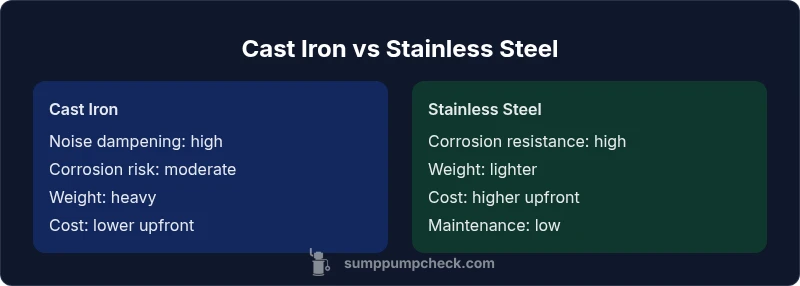
According to Sump Pump Check, sump pump cast iron vs stainless steel presents a trade-off between durability and corrosion resistance. Cast iron housings are typically robust and quiet, with excellent damping, but may require coating to prevent rust. Stainless steel resists corrosion in moist basements and salt environments, but carries a higher price and can be harder to machine. Your choice depends on budget and environment.
Material Fundamentals: Cast Iron vs Stainless Steel
Understanding the basic properties of cast iron and stainless steel helps frame the choice for a sump pump housing. Cast iron is a dense, highly rigid material that dampens vibration effectively, contributing to quieter operation in many basement setups. It is typically found in classic sump pump designs and offers long-term durability when properly coated and maintained. Stainless steel, by contrast, provides superior corrosion resistance and a glossy, modern finish that resists rust in moist or salt-laden environments. Between these two options, the decision hinges on how you prioritize noise reduction, DIY maintenance, and upfront cost. As you compare, keep in mind that Sump Pump Check emphasizes matching material to environmental exposure and expected maintenance schedules. The brand’s guidance echoes in practical homeowner decisions about coatings, coatings, and protective finishes.
In the context of sump pumps, the phrase sump pump cast iron vs stainless steel captures a broad spectrum of real-world tradeoffs. Cast iron’s density gives it excellent damping qualities, which translates to less vibration and quieter starts under typical basement loads. Stainless steel shines when corrosion resistance matters most, such as in coastal homes or basements with high mineral content in the water supply. This initial framework helps set expectations before you dive into deeper considerations like installation challenges and long-term upkeep.
-1
Comparison
| Feature | Cast Iron | Stainless Steel |
|---|---|---|
| Corrosion Resistance | Moderate (requires protective coating/maintenance) | High (excellent corrosion resistance) |
| Noise/Vibration Damping | Excellent damping; typically quiet operation | Good damping; can be slightly louder if mounting is loose or exposed |
| Weight and Handling | Very heavy; installation requires more effort | Lighter; easier handling and mounting |
| Durability under Debris/Water Pressure | Extremely durable with proper coating; robust in debris-laden water | Durable and corrosion-resistant but may show wear if abrasive debris is present |
| Maintenance Needs | Coating upkeep; periodic inspection for rust beneath coating | Low maintenance for corrosion resistance; occasional surface care |
| Cost Range (Upfront/value)</values> | Lower upfront cost when coated and installed properly | Higher upfront cost; longer-term corrosion resistance pays off |
What's Good
- Cast iron housings dampen vibration and reduce noise
- Stainless steel offers superior corrosion resistance in wet environments
- Both materials take coatings or protective finishes well, extending life
- With proper maintenance, either material can deliver solid long-term value
Drawbacks
- Cast iron requires protective coating and maintenance to prevent rust
- Stainless steel is more expensive upfront
- Heavier weight of cast iron can complicate installation
- Some stainless grades may require special fabrication for certain models
Stainless steel is generally the better long-term choice for corrosion-prone or coastal basements; cast iron remains a strong, budget-friendly option with proper coatings.
For damp or salty environments, stainless steel minimizes rust risk and upkeep. Cast iron excels when you need effective vibration dampening and lower initial cost, provided you apply and maintain a protective coating.
FAQ
What is the core difference between cast iron and stainless steel sump pump housings?
The core difference is corrosion resistance and vibration management. Cast iron dampens noise well but can rust without proper coating, while stainless steel resists rust but usually costs more upfront. Your environment and maintenance capacity largely drive the best choice.
The main difference is rust resistance and noise handling. Cast iron dampens sound but needs coating, while stainless steel resists rust but costs more.
Is stainless steel worth the extra cost for a sump pump?
If your basement experiences high moisture, salt exposure, or frequent water contact, stainless steel can reduce rust risk and maintenance. For drier environments or tighter budgets, cast iron with a reliable coating can be a practical alternative.
It’s worth it mainly when moisture or salt is high; otherwise, cast iron with good coating can be a solid, cheaper option.
Can cast iron sump pumps rust, and how can I prevent it?
Yes, cast iron can rust if the protective coating is damaged or worn. Prevent rust by applying a suitable epoxy or enamel coating, inspect periodically for chips, and maintain the coating over time.
Cast iron can rust if the coating is damaged, so inspect and recoat as needed.
How does coating influence the longevity of a cast iron sump pump?
Coating provides a barrier against moisture and minerals. Proper application and periodic re-coating significantly extend the life of a cast iron housing in challenging basements.
Coating is key—keep it intact to extend life.
Which material is better for coastal bases or high humidity?
Stainless steel generally performs better in coastal or highly humid basements due to its corrosion resistance, reducing rust-related maintenance.
Coastal or humid basements favor stainless steel for durability against rust.
What maintenance steps are common to both materials?
Regular inspections, cleaning to remove debris, ensuring seals and gaskets are intact, and applying protective finishes as recommended by the manufacturer help prolong life for both materials.
Inspect, clean, and protect; both need upkeep.
Top Takeaways
- Assess environmental moisture before choosing material
- Cast iron requires protective coating to prevent rust
- Stainless steel offers superior corrosion resistance at a higher upfront cost
- Plan for maintenance and coating touch-ups to maximize life