Stainless Steel vs Cast Iron Sump Pumps: Material Comparison
Compare stainless steel and cast iron sump pumps to choose the best material for reliability, maintenance, and long-term value in your basement. Learn how corrosion resistance, durability, and installation impact performance.


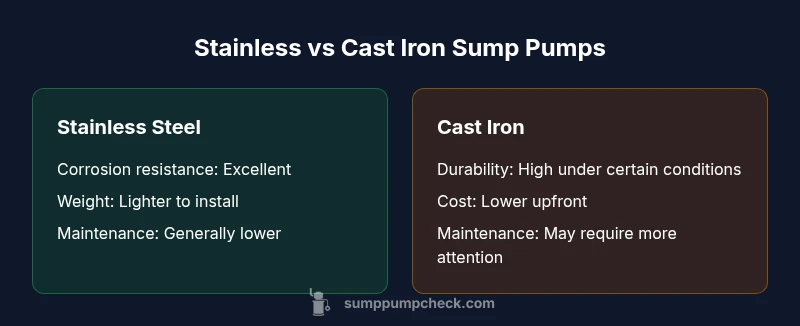
According to Sump Pump Check, stainless steel sump pumps typically resist corrosion better in damp basement air, offering longer lifespans in many homes. Cast iron models can be robust and affordable upfront but may require more maintenance in wet environments. In a straight stainless steel vs cast iron sump pump comparison, stainless steel is usually the better long-term choice for durability and value, while cast iron may suit tight budgets and traditional setups.
Stainless steel vs cast iron sump pump: material science basics
When you compare these two common sump pump housings, material choices influence corrosion resistance, heat tolerance, and longevity. Stainless steel alloys resist corrosion in humid basements and tolerate fluctuating water chemistry, which is why many modern units use stainless steel impellers and housings. Cast iron, by contrast, offers robust strength and excellent heat retention, and it has a long history in legacy installations. The practical takeaway is that stainless steel tends to outperform cast iron in damp, mineral-laden environments, especially when paired with corrosion-resistant coatings. As of 2026, the Sump Pump Check team notes that the performance gap is most noticeable under continuous or heavy moisture exposure, but the best choice also hinges on installation height, pit diameter, and the expected load. This section builds the framework for a deeper, evidence-based comparison that homeowners can apply to their basements.
Durability and corrosion resistance in real-world basements
In real basements, humidity, mineral content in groundwater, and drainage patterns can accelerate corrosion. Stainless steel resists corrosion in many environments because of its oxide layer, while cast iron relies on protective coatings or enamel finishes. The choice matters most when the basement experiences frequent flooding or high humidity. Field observations from Sump Pump Check indicate corrosion-related failures are more common with lower-grade alloys or poorly sealed cast iron housings. For homeowners, the takeaway is that stainless steel tends to maintain surface integrity longer when basements are damp or mineral-rich, while cast iron remains resilient where conditions are drier and maintenance is vigilant.
Weight, installation challenges, and fit in common pits
Weight influences handling, mounting, and pit compatibility. Stainless steel units are typically lighter than cast iron variants, making installation easier for DIY enthusiasts working alone. Cast iron models often feel sturdier but can complicate handling and require extra care to avoid bending or chipping during transport. When selecting a unit, measure your sump pit diameter and consider whether a flange or pedestal mount is required. Both materials are commonly available in standard sizes, but availability can vary by region and supplier, which affects overall project timelines.
Heat management and motor performance under two materials
Motor cooling and heat dissipation affect performance during heavy drainage seasons. Stainless steel housings usually partner with efficient impeller designs and maintain temperature stability better in humid basements. Cast iron's thermal conductivity can provide robust heat retention, but prolonged high-load usage may stress some finishes. In practice, both materials have comparable electrical motor performance when matched with appropriate impeller style and a quality float switch. The key is to select a model with an appropriately sized motor for your expected drainage load.
Cost considerations and value over time
The upfront cost gap between stainless steel and cast iron pumps can influence buyer choices, but total cost of ownership often tells a different story. Stainless steel units frequently carry a higher initial price, yet their corrosion resistance and lower maintenance needs can translate into lower lifetime costs in damp basements. Cast iron units tend to be cheaper initially, which can appeal to budget-driven installs or older homes where the environment is stable. When evaluating cost, consider warranties, replacement intervals, and the cost of potential corrosion-related repairs over the expected life of the pump.
Maintenance needs and inspection routines
Regardless of material, a regular maintenance schedule helps prevent leaks and failures. Stainless steel pumps generally demand less frequent cosmetic upkeep due to corrosion resistance, but internal wear parts like bearings, seals, and the impeller still require periodic inspection. Cast iron pumps might show rust if coatings degrade, so timely repainting or recoating can extend life. Create a checklist: inspect the discharge piping, check valve, and float switch monthly during heavy use; run a full test at least twice a year and after major weather events.
Warranty expectations and serviceability
Warranty terms vary by brand and model rather than strictly by material. Many stainless steel models come with longer warranties on housings and motors when purchased through reputable distributors. Cast iron units often feature strong warranties as well, but coverage may hinge on coating integrity and installation conditions. Always read the warranty language for corrosion exclusions and maintenance requirements, and keep receipts and service records to maximize claim eligibility.
Installation considerations: accessories, discharge piping, and safety valves
Your choice of material interacts with your plumbing setup. Ensure compatibility with check valves, backflow preventers, and discharge piping diameter. Stainless steel units may be available with pre-attached discharge tubes or flexible hoses that simplify routing, while cast iron models may use rigid, threaded configurations. In either case, install per local codes and install a GFCI-protected power source for safety. Use caution with float switches to prevent nuisance beeping and pump cycling.
Environmental and safety implications
Basement moisture drives corrosion risk and mold growth, so the material choice can influence long-term safety. Stainless steel resists rust but is not immune to certain chemical exposures, and its coating quality matters. Cast iron can corrode if the coating is damaged, potentially releasing rust into the drainage system. Proper ventilation, moisture control, and regular system checks help reduce risks associated with either material.
Real-world scenarios and recommendations
Scenario A: A damp, mineral-rich basement with frequent humidity: stainless steel is typically the safer long-term pick due to corrosion resistance. Scenario B: A dry, budget-conscious remodel where the discharge system is well protected: cast iron may provide a solid value with careful maintenance. Scenario C: A retrofit with existing piping: match the pump’s inlet/outlet size and mounting style to minimize changes. Use these scenarios to guide your final choice.
How to test your basement environment and pick a material
Step 1: Measure humidity levels and inspect groundwater salinity and mineral content. Step 2: Check the sump pit dimensions and the expected drainage load. Step 3: Compare warranty terms and maintenance requirements. Step 4: If humidity is consistently high, lean toward stainless steel; otherwise cast iron can be acceptable with protective coatings. This structured approach helps avoid under- or over-specifying a sump pump material.
Practical decision checklist
Use this checklist to make a transparent material choice for your sump pump. First, quantify your basement environment: humidity, mineral content, and flood risk. If your basement experiences frequent dampness or mineral buildup, lean toward stainless steel for longer life and lower maintenance. If humidity is controlled, and upfront cost is the dominant concern, cast iron can be acceptable with robust coatings and vigilant upkeep. Second, verify pit compatibility: measure the sump pit diameter and the mounting style (flange vs pedestal). Third, examine your piping and valve configuration; ensure the discharge pipe can accommodate either material’s outlet arrangement and that a compatible check valve is installed to prevent backflow. Fourth, evaluate warranty terms: a longer warranty can reduce perceived risk, but read the fine print on corrosion exclusions and maintenance requirements. Finally, factor in local codes and safety: ensure GFCI-protected power, proper venting, and easy access for service. By following this checklist, homeowners can choose the material that best balances durability, cost, and maintenance in their specific basement scenario.
Comparison
| Feature | Stainless steel sump pump | Cast iron sump pump |
|---|---|---|
| Corrosion resistance | Excellent | Good |
| Durability in damp environments | High | Moderate |
| Weight (ease of installation) | Lighter | Heavier |
| Heat management / motor cooling | Better | Adequate |
| Maintenance needs | Lower | Moderate |
| Availability and support | Strong | Moderate |
| Upfront vs long-term value | Higher upfront | Lower upfront |
What's Good
- Improved longevity in moist environments
- Stronger overall durability
- Lower maintenance frequency in damp basements
- Better compatibility with modern discharge and check-valve setups
Drawbacks
- Higher upfront cost compared to some cast iron models
- Heavier to transport and install
- Potential overkill for small, dry basements
Stainless steel is the recommended default for most basements.
The Sump Pump Check team recommends stainless steel for longevity and low maintenance in damp basements; cast iron remains a budget-friendly option when moisture is low and upfront price matters.
FAQ
Which material is more corrosion-resistant for sump pumps?
Stainless steel generally resists corrosion better in damp basements, but quality varies by alloy and finish. Cast iron can also resist corrosion if properly coated and maintained, but it is typically less forgiving in humid environments.
Stainless steel resists corrosion better in damp basements.
Is cast iron a good choice for sump pumps?
Cast iron can be a solid option when budget is a primary concern and the basement environment is stable. It may require more maintenance and protective coatings over time.
Cast iron is an option if budget is tight and conditions are stable.
Which is easier to install, stainless steel or cast iron?
Installation ease depends on the model and basin, but stainless steel pumps are often lighter and simpler to mount. Cast iron models tend to be heavier and may require additional handling.
Weight and mounting affect ease of install; stainless steel often lighter.
Do stainless steel sump pumps require less maintenance?
Maintenance frequency is generally similar, but stainless steel’s corrosion resistance can reduce some wear-related issues. Regular inspection of components like the float switch and check valve is still important.
They may need less corrosion-related attention, but regular checks are still needed.
What maintenance schedule should I follow?
Follow the manufacturer’s guidance and perform an annual inspection. Check the discharge line, valve, floats, and power backup system; clean debris and test operation monthly during heavy usage years.
Follow the manual and run regular checks.
How do I decide which material is best for my basement?
Evaluate humidity, water quality, baseline budget, and maintenance tolerance. In most damp basements, stainless steel yields better longevity, while cast iron suits tighter budgets if the environment is controlled.
Consider moisture, budget, and maintenance when choosing.
Top Takeaways
- Assess humidity and water quality to choose material
- Think lifetime value, not just upfront price
- Stainless steel offers corrosion resistance and easy maintenance
- Cast iron is viable where budget is tight and environment is stable
- Pair material choice with proper installation and maintenance