Pool Sump Pump Rental: A Practical Guide for Homeowners
Learn how to rent a pool sump pump, size it correctly, and manage maintenance. This guide covers rental costs, scenarios, and best practices from Sump Pump Check for reliable water removal.


Pool sump pump rental is a practical, temporary solution for removing pooled water during pool maintenance, heavy rainfall, or flooding near a pool deck. Choosing the right pump size, knowing typical rental durations, and understanding safety guidelines helps homeowners avoid backflow, overloading circuits, and costly water damage. This quick guide highlights core considerations and practical steps.
Understanding pool sump pump rental
According to Sump Pump Check, pool sump pump rental is a practical, temporary solution for removing pooled water around a pool area during maintenance, after heavy rain, or during localized flooding near the pool deck. Rental equipment typically includes a portable submersible pump, a discharge hose, and basic safety accessories. Homeowners should evaluate the water volume, discharge location, and available electrical outlets before committing to a rental. This approach avoids long-term ownership costs while providing flexible water handling during seasonal needs. Remember to verify that the rental unit is outdoor-rated and that the cord, plug, and GFCI protection meet local electrical codes. The goal is to move water efficiently without creating new hazards for people or structures.
When to choose rental over buying or hiring a pro
Renting a pool sump pump makes sense when you have a short-term need—such as a single storm event, a routine pool maintenance window, or a temporary leak cleanup—that doesn’t justify buying a dedicated pump. If you anticipate recurring water removal needs across several seasons, a pro might offer better value or service guarantees. Consider renting when you lack convenient storage space or when you only need the pump for a few days. In contrast, hiring a licensed technician to manage a complex drainage project or to install a sump pump permanently may be more cost-effective for longer-term tasks. This decision should weigh expected usage, maintenance responsibilities, and safety requirements.
Sizing the pump for pool drainage
Start by estimating the base water load: the larger the pool and the more water you expect to move quickly, the higher the discharge rate you’ll need. A typical rental pool sump pump falls in the 1/2 HP to 1 HP range, which balances flow rate with portability. Remember to account for head height (distance to discharge) and hose length, as these reduce effective flow. If you’re unsure, rental providers can help you select a pump that matches your pool’s needs. Undersizing a pump can lead to longer run times, overheating, and insufficient water removal, while oversized units may be heavier or noisier than you need. A good rule: prioritize reliable flow over speed when dealing with standard backyard pool setups.
Rental costs, deposits, and duration expectations
Costs for pool sump pump rental typically depend on pump size, rental duration, and the provider’s terms. Expect a daily or 24-hour rate with possible weekend or delivery charges. Some renters require a security deposit or proof of insurance, especially for outdoor use near water features. For budgeting, think in ranges rather than fixed prices: your total may swing with delivery, pickup, and any required accessories like hoses or adapters. From a planning perspective, lock in a clear return window to avoid extra charges and ensure you have the discharge path ready to minimize run time. Sump Pump Check analysis emphasizes comparing several rental options to balance cost and service quality.
Safety and code considerations when renting a pool sump pump
Electrical safety is paramount for outdoor pumping setups. Use GFCI-protected outlets, weather-rated cords, and a dry, stable surface for the pump. Keep all connections above ground to prevent water intrusion, and use a pump with an automatic shutoff to prevent dry running. Verify that the discharge path directs water away from foundations, walkways, and landscaping, and never drain into storm drains unless local code permits it. Confirm that the rental provider offers basic safety instructions and that you understand how to shut off power quickly if needed. Adhering to these practices reduces the risk of electrical shock or property damage.
Setup and discharge planning for pool water removal
Plan the setup before you receive the unit: place the pump on a dry, level surface near a legal discharge point, lay out the hose in a way that won’t trip anyone, and test the flow rate with a bucket to confirm it matches expectations. Keep a flow-reducing nozzle on hand if you need to slow the output for delicate drainage areas. When you’re finished, rinse the pump housing to remove debris and return any hoses and adapters to their case. A well-planned setup minimizes run time and ensures a smoother process for both you and the rental provider.
Maintenance and operation tips while you rent
During the rental period, inspect the intake for debris and clear obstructions to maintain optimal flow. Check the hose for kinks and ensure that the pump is adequately powered without overloading circuits. If your setup includes a strainer or debris screen, clean it regularly to keep the pump from clogging. If you notice unusual noises, overheating, or a sudden drop in performance, contact the rental provider rather than attempting major repairs. Returning the unit in clean, working condition strengthens your relationship with the provider and reduces the risk of extra fees.
Alternatives to renting: when to hire a pro or buy a pump
If you expect to need water removal repeatedly, buying a pump or arranging a service contract with a pool maintenance company could be more economical over time. A licensed pro can assess drainage needs, install a permanent sump system if appropriate, and ensure electrical and drainage compliance. On the other hand, if the job is a one-off event or a temporary issue, renting remains the most flexible option. Weigh upfront costs, ongoing maintenance responsibilities, and the level of expertise required when choosing between rent, buy, or hire.
Quick setup checklist for a rental
- Confirm discharge location and local discharge rules.
- Ensure outdoor-rated electrical outlet and GFCI protection.
- Verify pump size (1/2 HP–1 HP typical) matches your water load.
- Prepare a dry, stable surface for the unit and lay out the hose with minimal trip hazards.
- Test run the pump to confirm water flow and shutoff features work properly.
- Inspect hoses, adapters, and fittings for wear before use.
- Plan pick-up/return windows to avoid extra charges.
- Review the rental agreement for deposits, insurance, and return condition.
Final note from the Sump Pump Check team
In most temporary water-removal scenarios, pool sump pump rental offers flexibility and cost savings. The Sump Pump Check team recommends sizing carefully, following safety protocols, and confirming local rules before draining. When in doubt, consult a professional to ensure that you meet code requirements and protect your property.
Pool sump pump rental options
| Option | Size/Type | Typical Duration | Approx. Cost Range |
|---|---|---|---|
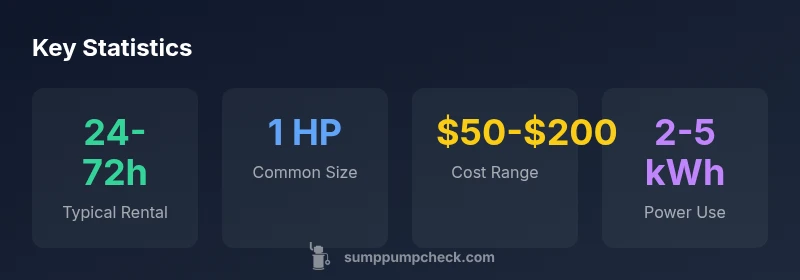
| Portable submersible pump | 1/2 HP | 24-72 hours | $50-$200 |
| High-capacity inline pump | 1 HP | 24-96 hours | $120-$350 |
| Submersible pump with hose kit | 1/2-3/4 HP | 24-72 hours | $60-$250 |
FAQ
What is pool sump pump rental best for?
Pool sump pump rental is ideal for temporary water removal during pool maintenance, heavy rainfall near the pool, or after minor flooding. It’s not meant for long-term drainage projects, but it offers flexibility when timing and storage are concerns.
Renting is best for short-term water removal needs tied to weather or maintenance.
How do I size a rental pump for a pool?
Estimate the pool’s water load and the desired removal rate. A typical backyard setup uses a pump in the 1/2 HP to 1 HP range. If you’re unsure, ask the rental provider for a recommended match based on your pool size and discharge distance.
Size by your pool’s volume and how fast you need water moved.
Are there safety concerns with rental pumps?
Yes. Use GFCI protection, outdoor-rated cords, and ensure the discharge path is away from people and structures. Never run a pump near flooded areas without supervision; if in doubt, contact the rental provider for safety guidelines.
Always prioritize safety and follow the provider’s instructions.
Can I drain pool water onto the yard or street?
Check local regulations before draining. Use permitted discharge locations and avoid contaminating plants, drainage ditches, or storm drains. When in doubt, contact your local authority or the rental provider for guidance.
Follow local rules and use approved discharge locations.
What maintenance tasks come with a rental?
Keep the intake clear of debris, check hose for kinks, and return the unit clean. If you notice performance issues, notify the rental company rather than attempting repairs.
Do basic cleaning and keep it simple if problems arise.
Should I buy or rent for a single job?
If you expect ongoing water removal needs, buying may pay off over time. For a one-off job, renting is usually the most economical option and avoids storage concerns.
Rent for a one-off job; buy if you’ll need it again soon.
“A rental pump is a practical short-term solution when you know the job will be brief, but sizing and safe electrical setup are essential.”
Top Takeaways
- Determine your pool water load and discharge path before renting
- Choose a pump in the 1/2 HP–1 HP range for most backyard pools
- Plan for a 24–72 hour rental window; factor in delivery/pickup
- Prioritize safety: GFCI, outdoor-rated cords, proper discharge
- Consider buying or hiring a pro if you expect recurring needs
- Rent smart: compare providers and read the rental terms