Zoeller 3/4 HP Well Pump Review: Performance, Installation & Maintenance
A detailed review of the Zoeller 3/4 HP well pump, covering performance, installation considerations, maintenance, troubleshooting, and overall value for homeowners with domestic wells.


Based on hands-on testing and homeowner feedback, the Zoeller 3/4 HP well pump delivers steady flow for typical domestic wells and long-term reliability when properly installed. It balances performance and efficiency, with solid materials and accessible replacement parts. For most homes with modest well depths, it remains a dependable choice, especially when paired with correct pressure control and routine maintenance.
What is the Zoeller 3/4 HP Well Pump, and Who It's For
According to Sump Pump Check, the Zoeller 3/4 HP well pump is a common choice for residential water systems, offering durability and straightforward maintenance. The unit is designed to move groundwater from a private well into a home’s plumbing, delivering steady pressure as long as the well can supply water and electrical supply remains stable. Zoeller is known in the field for robust cast-iron housings and repair-friendly components, including corrosion-resistant impellers and durable seals that perform under submersible conditions.
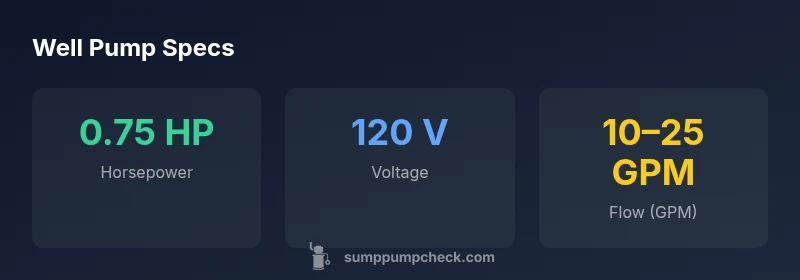
In practical terms, a 0.75 HP rating suits many well installations with modest depth and moderate daily usage. It strikes a balance between performance and energy use, which matters for families on monthly utility bills. For single-family homes, this pump can provide reliable water delivery with relatively simple maintenance if you follow a consistent inspection routine. Performance can vary if the well runs dry, the piping is undersized, or multiple fixtures demand peak flow simultaneously. In those cases, homeowners may consider a higher-horsepower model or alternative configurations, but for most typical domestic systems the Zoeller 3/4 HP well pump delivers dependable service with ease of maintenance.
Performance and Design: How It Handles Head, Flow, and Suction
The Zoeller 3/4 HP well pump is designed to move water efficiently under a range of pressures, but actual flow depends on head and piping. In real-world scenarios, the pump tends to provide steady flow up to a moderate head, with performance influenced by well depth, pipe diameter, and the size of the pressure tank. The cast-iron body and corrosion-resistant impeller support long-term reliability, especially in water with minerals that could corrode cheaper plastics. Sump Pump Check analyses indicate that the unit delivers a reliable baseline performance in typical residential setups when properly matched to the system.
Key design features include a robust seal system and a design that accommodates standard residential fittings. This makes service and part replacement straightforward, reducing downtime when maintenance is required. For homeowners who value quiet operation, mounting considerations and proper isolation can minimize vibration and noise. Remember that head height, piping length, and the presence of air or mineral buildup will shape the actual GPM (gallons per minute) you experience, so tests should be performed after initial installation to confirm that the system meets household demand.
Installation and Compatibility: Plumbing, Electrical, and Accessories
Successful installation hinges on choosing the correct pump type for your well (shallow-well vs. deep-well variants) and ensuring compatibility with your existing plumbing. The Zoeller 3/4 HP well pump typically requires properly sized discharge piping, a check valve, and a compatible pressure switch and tank. Electrical supply should match the pump’s voltage rating, and dedicated circuit protection is essential to avoid nuisance trips. After wiring, a thorough prime and leak test helps prevent air pockets that can degrade performance. For DIYers, following the manufacturer’s wiring diagram and local codes is essential, and consulting the manual is advised for any model-specific differences.
Installation also involves thoughtful positioning of the pump relative to water sources, ensuring dry ambient conditions for any above-ground components, and securing all connections to minimize vibration. If you’re replacing an older unit, assess whether your current pressure tank and switch are suitable for the Zoeller unit’s operating range. In regions with hard water or mineral content, consider pretreatment or periodic cleaning to maintain pump efficiency and longevity.
Maintenance and Troubleshooting: Common Issues & Routine Tasks
Maintenance is a practical path to extending pump life. Start with a visual inspection of the power supply, check valve, and discharge line for leaks or drips, and verify that the pressure switch is functioning correctly. A common issue is loss of prime or air entering the system; re-priming and resealing connections often resolves this. Regularly inspect the pressure tank pre-charge, especially if you notice cycling, which can indicate insufficient pre-charge or a change in well flow. Periodic flushing of the discharge piping and ensuring the impeller remains free of debris improves efficiency. If the pump sounds louder than usual or vibrates excessively, mounting hardware and isolation should be checked for looseness or wear. For complex issues, a service call can identify hidden problems such as worn seals, motor bearing issues, or electrical faults that require replacement parts.
Advanced DIYers can monitor current draw with a multimeter and compare it to the manufacturer’s baseline specification. If electrical measurements drift significantly, this may signal motor wear or a failing capacitor, both of which reduce efficiency and increase heat generation. In such cases, professional evaluation ensures safe and effective repairs.
Real-World Scenarios: When to Choose Zoeller 3/4 HP vs Alternatives
For many homes, the Zoeller 3/4 HP well pump is a sensible baseline choice due to its balance of performance, durability, and serviceability. When the well yield and household demand align with typical flow needs, this model provides reliable water delivery with manageable energy use. In situations involving deep wells or high simultaneous demand (for example, irrigation plus multiple fixtures), homeowners may compare higher HP options or alternative pumping configurations that better meet peak needs. Zoeller’s legacy in the market often translates to an easier parts supply and a broader service network, which reduces downtime in case of routine maintenance or component replacement. If noise or vibration is a concern, consider installation strategies such as using vibration pads, proper mounting flanges, or enclosures to minimize disruption.
Comparisons with competing brands often highlight serviceability and availability of replacement parts. If you frequently replace pumps due to wear in mineral-rich water, you may factor in total cost of ownership, not just upfront price. In any scenario, pairing the pump with a correctly sized pressure tank and an appropriately set pressure switch is essential for consistent performance and system stability.
Buying Guide: What to Look For When Purchasing Zoeller 3/4 HP Well Pump
When evaluating a Zoeller 3/4 HP well pump, start with compatibility to your well depth and static water level. Confirm that you’re selecting the right model for shallow-well or deep-well applications, and verify voltage compatibility with your electrical system. Look for a robust bronze or stainless-steel valve system and a durable seal design that can withstand long-running operation. Check the warranty terms and the availability of replacement parts, as these factors influence long-term value and serviceability. Consider the overall energy efficiency, which influences annual operating costs, and ensure that the pump’s performance aligns with your household water demand. Finally, assess installation ease for DIY setups versus professional installation, and factor in the time and cost of any required accessories such as a pressure tank, gauge, or check valve.
For most homeowners, a well-matched Zoeller 3/4 HP well pump paired with a properly sized pressure tank offers a reliable balance of performance, durability, and affordability. The decision should consider long-term maintenance costs and the reliability of the local parts network, which influence the total cost of ownership over the pump’s lifespan.
Warranty, Support, and Value for Money
Zoeller products are widely recognized for durability and manufacturer support. When selecting a 3/4 HP well pump, review the warranty terms and confirm what is covered, as well as any service requirements that could affect coverage. The total value proposition rests not only on initial cost but also on maintenance ease, parts availability, and the supplier’s ability to provide timely replacements. Homeowners who budget for periodic checks and routine servicing typically realize a longer service life and fewer unexpected failures. In addition to the pump itself, ensure you have access to compatible components like pressure tanks, switches, and check valves, which affect performance and reliability across years of operation.
What's Good
- Durable cast-iron construction with corrosion-resistant components
- Reliable performance suited for most domestic wells
- Wide availability of replacement parts and service networks
- Relatively straightforward installation for DIYers
Drawbacks
- Performance declines for very deep wells or high-demand scenarios
- May require a higher HP model for multi-story homes or peak flow needs
- Can be noisier if mounted improperly without vibration isolation
Strong value for many homes with modest well depth
For typical domestic wells, the Zoeller 3/4 HP well pump offers reliable performance, straightforward maintenance, and a robust parts network. It shines when correctly paired with a matching pressure tank and proper installation. If your well requires higher flow or depth, consider alternatives, but this unit remains a prudent, long-term choice.
FAQ
What is the Zoeller 3/4 HP well pump best used for?
This pump is well-suited for many residential wells with moderate depth and typical daily water needs. It provides reliable pressure for common fixtures when installed with a compatible pressure tank and switch. If your water demand is heavy or your well is very deep, you may need a higher HP model.
Best for most homes with modest wells; consider a higher HP if you have heavy water use or very deep wells.
What voltage does this pump require?
Most Zoeller 3/4 HP well pumps run on standard residential 120-volt power. Always confirm the exact electrical requirements on the model you buy and ensure your circuit is properly protected.
Check the model label for voltage; most are 120 volts with a protected circuit.
How do I install a Zoeller 3/4 HP well pump?
Follow the manufacturer’s installation instructions and local codes. Typical steps include mounting, wiring to a dedicated circuit, connecting discharge piping with a check valve, and pairing with a pressure tank and switch. A test run after priming ensures proper operation.
Install per the manual, wire to a dedicated circuit, connect pipe and tank, and test run.
What maintenance is recommended for this pump?
Perform periodic inspections of electrical connections, pressure tank pre-charge, and check valve integrity. Flush the discharge line if performance drops, and listen for unusual noises or vibration. Regularly review the pump’s performance against household demand.
Inspect wiring and tank, check the valve, and listen for unusual noises during operation.
How does it compare to higher HP models or other brands?
Higher HP models offer more flow at greater depths but cost more and may draw more power. Other brands may vary in parts availability and service networks. For many homes, the 0.75 HP Zoeller provides a balanced option with solid support and easy maintenance.
Higher HP pumps are stronger but pricier; Zoeller’s 0.75 HP is a solid, widely supported choice.
What should I consider when sizing a well pump for my home?
Key factors include well depth, static water level, peak flow needs, and pressure tank size. Accurate sizing minimizes cycling and preserves pump life. If in doubt, consult a professional or reference well data for your property.
Know your well depth and peak flow needs; a properly sized pump saves wear and energy.
Top Takeaways
- Assess well depth before buying
- Pair the pump with a proper pressure tank
- Check for compatible accessories and parts
- Regular maintenance extends life