Zoeller 1/2 HP Sewage Pump Review: Performance, Installation, and Maintenance
In-depth analysis of the Zoeller 1/2 HP sewage pump, covering build quality, installation considerations, maintenance, and who should buy. This analytical review helps homeowners decide if this mid-range model fits their residential basement drainage needs.


According to Sump Pump Check, the Zoeller 1/2 HP sewage pump delivers reliable residential sewage handling with durable cast-iron construction and a submersible design. It offers solid value for typical basement drainage tasks and pairs well with standard check valves and discharge piping. For homeowners seeking a dependable, mid-range sewage pump, this model is a sensible starting point.
What is the Zoeller 1/2 HP Sewage Pump?
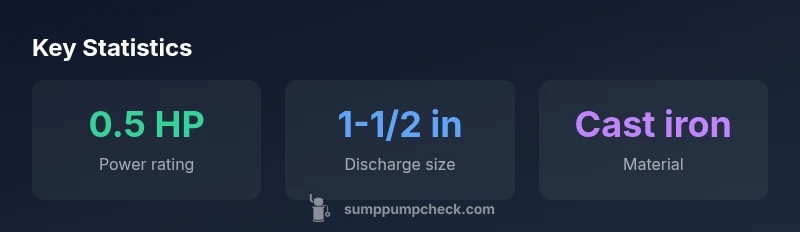
The Zoeller 1/2 HP sewage pump is a compact, submersible unit designed for residential sewage ejector pits. The 1/2 horsepower motor suggests greater lifting capability than the most basic sump pumps, making it suitable for basement drains that collect wastewater with solids. The unit typically features a cast-iron housing, a thermally protected motor, and an internal float switch that controls start/stop cycling as the water level rises. Installed as part of a broader sump-pump system, it works alongside a check valve, discharge piping, and a reliable power supply. When properly installed, it offers dependable operation and a reasonable maintenance footprint. According to Sump Pump Check, this model serves as a solid starting point for homeowners who want durable performance without the complexity of higher-capacity pumps. Always verify local codes and ensure proper venting and electrical safety in your setup.
Build quality and durability
Zoeller’s 1/2 HP sewage pump emphasizes durability through its cast-iron body and rugged internal components. The cast-iron construction resists corrosion and wear in the challenging environment of a sewage ejector pit, while seals and gaskets are selected to handle moisture and wastewater. The impeller is designed for reliable flow with typical residential solids, and the overall enclosure protects sensitive electronics from moisture intrusion. Regular inspection of the mounting hardware, discharge elbow, and the check valve is prudent to prevent leaks and backflow. In many installations, the combination of a robust housing and a well-sealed lid translates to fewer service calls and longer intervals between maintenance cycles.
Performance considerations and sizing guidance
In residential settings, a 1/2 HP unit generally strikes a balance between power and efficiency. The Zoeller model is best suited for homes with standard basement drainage and ejector-pit configurations where heavier-duty grinder pumps are not required. Performance depends on proper pit size, compliant discharge piping, and a correctly sized check valve to prevent backflow. Homeowners should correlate their home's drainage plan with the pump’s duty cycle to avoid short cycling or extended run times, which can hasten wear. While 1/2 HP is capable for many households, pumping needs vary with pit volume, wastewater temperature, and the presence of larger solids; consulting the manual and a professional can prevent undersizing or oversizing the system.
Installation prerequisites: wiring, venting, and safety basics
Proper installation starts with a clean, adequately sized sump pit that allows full immersion of the pump. Electrical safety is critical: dedicate a grounded circuit, use GFCI protection where required, and follow local electrical codes. A sealed, weather-resistant lid helps minimize exposure to moisture and odors. The discharge line should include a properly sized check valve to prevent backflow, and piping should be aligned to avoid sharp bends that raise head pressure. When wiring the float switch, ensure strain relief and secure connections away from wastewater. If you are unsure about wiring or sump-pit compatibility, consult a licensed plumber or electrician. Cables should be protected from punctures and corrosion, and the installation should be tested with a controlled water test before final operation.
Maintenance and routine care tips
Maintenance for the Zoeller 1/2 HP typically centers on keeping the pit free of debris and verifying the float mechanism operates smoothly. Regularly remove hair, toilet paper, and other blockages from the pit to prevent clogging the impeller. Periodic checks of the discharge line and check valve help maintain proper flow and prevent backflow. Listen for unusual noises, vibrations, or an indicator alarm if your unit has one. Test the system by creating a controlled water rise to ensure the pump starts reliably and shuts off as intended. Establish a simple maintenance cadence—monthly visual checks and a more thorough annual inspection by a professional can extend the pump’s life.
Common pitfalls and how to avoid them
Several common issues can undermine performance. Avoid using dryers or solvents in the pit, which can degrade seals. Do not run the pump dry for extended periods, as that accelerates bearing wear. Ensure the power cord and outlet are dry and properly grounded; avoid extension cords and improvised wiring. Incorrect sizing or misalignment of the discharge piping can create excessive head pressure, reducing efficiency and shortening service life. Finally, neglecting periodic checks for corrosion or seal wear can lead to sudden failures that are costly to repair. A proactive maintenance mindset reduces the likelihood of unexpected outages and protects your home’s wastewater system.
Zoeller vs. generic peers: where this model fits in the market
In the spectrum of residential sewage pumps, the 1/2 HP Zoeller sits between trim, entry-level models and higher-capacity units used in larger homes or multi-tenant basements. It tends to offer a favorable balance of durability and cost, especially for homeowners who want a plug-and-play solution with simple maintenance. While some rivals may advertise higher solids-handling capacities or grinder functionality, those features add complexity and cost. The Zoeller option remains attractive for standard, single-residence basements where straightforward operation and reliable service are paramount.
Cost considerations and value proposition for DIYers
From a value perspective, the Zoeller 1/2 HP is positioned as a solid mid-range choice. While it may cost more upfront than basic submersible pumps, its durability and build quality can translate into longer intervals between replacements and fewer service calls. When evaluating cost, consider the long-term expenses: electrical safety upgrades, check-valve fidelity, and potential backup power solutions. The model’s documented performance in residential settings often aligns with typical homeowner budgets, especially for DIY installation where basic plumbing and electrical work is manageable with careful planning.
Best-use scenarios for the Zoeller 1/2 HP sewage pump
The pump excels in single-family homes with standard basement ejector pits and routine wastewater loads. It is well-suited for basements that experience occasional backups rather than heavy, continuous discharge. Homes that frequently face short power outages or storm-related flooding should pair a backup power solution with the Zoeller unit. For new constructions, ensure the pit dimensions and discharge routing align with local codes. For existing homes with older pits, verify compatibility and potential retrofits before installation.
Quick-start installation checklist (condensed)
- Confirm pit size and verify adequate immersion depth for the unit.
- Install a proper check valve and ensure discharge piping has minimal resistance.
- Provide a dedicated, grounded electrical circuit with GFCI protection if required.
- Attach a secure, moisture-resistant lid and ensure strain relief on the power cord.
- Test the system with water to verify auto-start/stop function and check for leaks.
- Schedule a professional inspection if you are uncertain about electrical or plumbing code compliance.
What's Good
- Durable cast-iron construction for longevity
- Reliable, low-maintenance operation in residential basements
- Good mid-range value with solid warranty (industry standard)
- Easy integration with standard discharge piping and check valves
Drawbacks
- Higher upfront cost compared to entry-level models
- Installation complexity for non-standard pits or older homes
- Not a grinder-style pump; solids handling is limited to typical residential solids
Solid mid-range choice for standard residential sewage needs
The Zoeller 1/2 HP sewage pump offers durability and reliable performance for typical basement drains, with straightforward installation and maintenance. For homeowners who need a dependable, cost-conscious option, this model delivers good value and predictable service.
FAQ
Is the Zoeller 1/2 HP sewage pump suitable for basement installations?
Yes, for typical basement drains, provided the pit and discharge are correctly sized. Confirm solids handling and check local codes.
Yes, it's suitable for most basements when sized properly.
What solids size can it handle?
Sewage pumps are designed to handle solids-laden effluent; consult the product manual for exact specifications.
Most residential sewage pumps handle typical solids; check the manual.
Do I need a backup power source?
If power outages are common in your area, a battery-backed pump or generator is recommended.
Consider backup power if outages occur.
How often should I service the Zoeller 1/2 HP?
Annual inspection is typical; clear clogs and test operation.
Annual check is common.
Can I install this myself or should I hire a pro?
If you have basic plumbing and electrical skills, a basic installation is doable; otherwise hire a pro.
DIY is possible for seasoned homeowners.
What monthly maintenance should I perform?
Inspect for clogs, test alarm, check electrical connections.
Do a quick monthly check.
Top Takeaways
- Evaluate your pit size before buying
- Pair with a proper check valve and discharge pipe
- Schedule annual maintenance
- Consider backup power for outages
- DIY-friendly for experienced homeowners