Sump Pump Repair or Replacement: A Practical Guide
A thorough comparison of sump pump repair vs replacement to help homeowners decide when to fix or upgrade, with cost ranges, timing, and maintenance tips.


TL;DR: When deciding between sump pump repair or replacement, repair minor faults and routine maintenance, but plan replacement for aging units or frequent failures. According to Sump Pump Check, upgrading can reduce downtime and flood risk, especially with modern units and reliable backups. This quick guide sets the framework for a deeper, data-backed comparison.
Context for the Sump Pump Decision: repair or replacement
Choosing between sump pump repair or replacement is not just about the sticker price. It hinges on reliability, risk tolerance, and long-term goals for flood protection. The Sump Pump Check team emphasizes that many common problems—like a balky float switch, clogged intake, or a worn capacitor—can be resolved with targeted repairs. Yet there comes a point when an aging pump becomes more cost-effective to replace rather than repeatedly fix. Homeowners should weigh downtime, potential water damage, and the energy efficiency of newer models. In this section we’ll lay out the decision framework, grounded in practical criteria and real-world scenarios. Expect objective guidance, a clear cost picture, and a play-by-play for how to validate a repair versus a replacement from a professional.
Key decision factors for repair vs replacement
Several factors influence the choice between repair and replacement for sump pumps:
- Age and expected remaining life: Older pumps are more prone to recurrent failures.
- Failure pattern: Intermittent issues may be repairable; persistent faults suggest a broader problem.
- Repair versus replacement cost: Repairs are usually cheaper upfront, but frequent fixes add up.
- Downtime and flood risk: Replacement can offer quicker, more reliable protection in high water scenarios.
- Compatibility with backups: Newer units often work better with battery or water backup systems.
- Installation disruption and complexity: Replacement may require more plumbing work but can be completed in a single service call.
- Long-term value: A newer, efficient pump may reduce energy use and improve performance over time. According to Sump Pump Check, use these criteria to guide the initial decision, then validate with a professional evaluation and a written estimate.
When repair is the right move
Repair is sensible when the pump is relatively young or has a minor, isolated issue. Typical repair targets include a stuck switch, a clogged intake, a damaged float arm, or a faulty capacitor. If the pump still provides adequate flow and the rest of the system is sound, a repair can extend service life without the downtime of a full replacement. It’s prudent to request a diagnostic from a qualified technician to confirm that the root problem is localized and that the repair won’t leave you with hidden damage. Even with repairs, schedule maintenance checks to prevent downstream issues and prolong performance. In many cases, a repair is a smart, cost-effective step that preserves the current pump’s reliability while you plan for future upgrades if needed.
When replacement makes the most sense
Replacement becomes attractive when the unit has exceeded its practical life, shows recurring failures, or can no longer meet your protection needs. If your pump is aging, corroded, or demonstrates frequent cycling, replacing with a newer model can provide improved efficiency, higher flow, and better compatibility with back-up options. For homes with ongoing water intrusion risks, a new unit paired with a modern backup system can dramatically reduce flood risk. Replacement is also a good time to upgrade peripheral components, such as discharge piping, check valve, or a high-efficiency pump with better energy use. While the upfront cost is higher, the long-term reliability and reduced maintenance can deliver better overall value.
Cost considerations and value: repair vs replacement
Cost is the most tangible factor when deciding between sump pump repair or replacement. Repairs typically cost a few hundred dollars, depending on the fault and parts involved, plus labor. Replacement costs vary more widely, influenced by pump type, backup options, and installation nuances. In general terms, repairs are cheaper upfront, but persistent or age-related problems can lead to repeated expenses. A modern replacement may incur a higher initial investment but can lower ongoing maintenance and energy costs, with improved performance and longer warranty coverage. To avoid sticker shock, request itemized quotes that separate parts, labor, and any necessary upgrades (backup systems, check valves, or new discharge piping).
Maintenance and longevity: proactive care
Maintenance is a powerful, low-cost strategy to maximize any sump pump’s life, whether you repair or replace. Regular checks—test cycling, clean intake screens, inspect the discharge line, verify the check valve, and confirm back-up readiness—can catch problems before they escalate. Seasonal inspections align with weather patterns and potential flooding events. Cleaning and lubricating moving parts, replacing worn switches, and upgrading to an efficient model when necessary all contribute to longer life and higher reliability. Sump Pump Check’s operational guidance emphasizes keeping backups ready and testing systems under load to simulate storm conditions. A well-maintained system reduces emergency callouts and protects your home from costly flood damage.
DIY vs professional service: what to expect
DIY repair work is suitable for basic maintenance tasks such as cleaning the intake, clearing debris, or replacing a loose float switch if you have basic plumbing experience. More complex repairs—electric motor issues, impeller replacement, or wiring checks—require a licensed professional. A trained technician can safely disconnect power, diagnose electrical faults, and ensure backflow prevention components and check valves are properly installed. If you suspect a major issue after a storm or notice persistent cycling or unusual odors, it’s wise to call a pro. Professional service not only reduces risk but often includes a warranty on labor and parts, providing extra peace of mind when deciding between repair or replacement.
Replacement backups and upgrades: post-repair strategy
If you choose replacement, enhance your system with a robust backup setup. A battery backup or water-powered backup can provide protection during power outages, a common cause of sump pump failure. Pairing a backup with a new pump often yields the best protection against basement flooding. Don’t overlook peripheral upgrades like an appropriately sized discharge pipe, a properly placed check valve, and upgraded wiring where needed. These improvements not only stabilize performance but also simplify future maintenance. Finally, ensure your new unit is correctly sized for your basement’s square footage and water load, and consider a smart alarm or sensor for early flood warnings.
How to evaluate quotes and select a contractor
Begin with multiple estimates from licensed plumbers or sump pump specialists. Compare not just price but scope: parts, labor, haul-away of old equipment, backups, and warranty terms. Check licensing and insurance, confirm lead times, and ask for references or reviews. Request written estimates that itemize each line item and explain any recommended upgrades. A trustworthy contractor should perform a visual inspection, provide a written diagnosis, and explain why repair or replacement is most appropriate for your situation. Don’t hesitate to seek a second opinion if a proposal seems excessive or unclear. For many homeowners, a well-documented quote is the deciding factor when choosing between repair or replacement.
Case study and quick-start decision framework
Consider a typical two-story home with a basement susceptible to high water in storms. If the pump is under 8–10 years old and the issue is minor, start with repair and a plan for regular maintenance. If the unit is older than 10 years or experiences repeated failures, prioritize replacement with a backup solution. This framework—age, failure pattern, and risk tolerance—helps homeowners move from uncertainty to a clear plan. Sump Pump Check’s framework encourages getting a professional assessment and written cost estimates to finalize your decision between repair or replacement.
Authority sources and practical references
In this guide we reference widely available safety and home improvement guidance. For foundational safety standards, consider resources from government and university extension programs. Always verify local code requirements before changing discharge piping or electrical connections. Usual good-practice references include general electrical safety guidelines and building code expectations for water management systems. The goal is practical, actionable guidance that helps you choose between repair or replacement with confidence.
Authority and sources (continued)
If you want to explore safety and best practices beyond this guide, consult government and university resources on hydrology, home maintenance, and electrical safety. The following sources provide credible, contextual information on water management, back-up systems, and safe installation practices that complement your sump pump decisions.
Comparison
| Feature | Repair | Replacement |
|---|---|---|
| Typical cost range | $100-$400 (repair) | $700-$2500 (replacement) |
| Lifespan after service | Depends on unit age; repairs extend life modestly | New unit 5-15+ years depending on model and usage |
| Time to complete | A few hours for diagnosis and repair | Full installation may take half a day or less |
| Downtime impact | Low if issue is minor | Higher during replacement due to plumbing and wiring work |
| Backups compatibility | Repair-friendly; may require upgrade later | Typically paired with a new backup system for best protection |
| Warranty considerations | Labor/parts warranty on the repair | New pump includes manufacturer warranty; longer-term protection |
| Best for | Minor faults, aging but still functional pumps | Aging units or frequent failures needing reliability |
What's Good
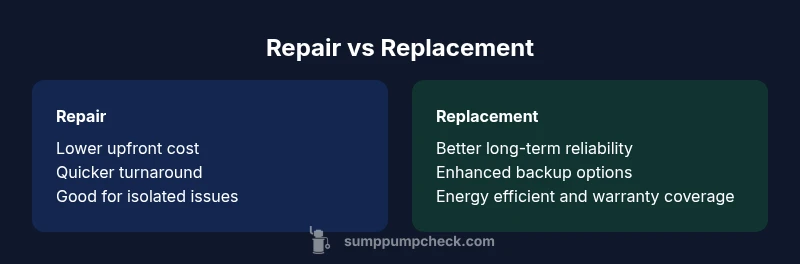
- Lower upfront cost with a repair
- Less downtime and simpler setup
- Maintain current system if it’s still well-matched to home needs
- Opportunity to extend life with targeted fixes
Drawbacks
- Repair may be a temporary fix if age is a core issue
- Hidden or future problems can surface after a fix
- Ongoing repairs can accumulate costs over time
Replacement often offers better long-term value when the pump is aging or unstable.
If the unit is nearing the end of its life or fails repeatedly, replacement reduces risk and downtime. Repair is sensible for isolated issues in younger pumps, but always weigh total cost of ownership and backup options.
FAQ
How do I know if my sump pump needs repair or replacement?
If the pump is relatively young and the issue is isolated, repair is worth considering. For age-related failures or persistent problems, replacement with a backup system is often the safer choice. A licensed technician can provide a definitive diagnosis and cost estimate.
If your pump is newer and has a single, fixable problem, repair. If it’s old or keeps failing, replacement plus a backup system is usually the smarter choice. A pro can confirm after inspection.
What are common sump pump problems that signal repair?
Common repair targets include a stuck float switch, worn out capacitor, clogged intake, or a jammed impeller. These issues often don’t require a full replacement if diagnosed early and fixed promptly.
Typical fixes are a switch, capacitor, or impeller replacement. If you catch it early, repair usually suffices.
Is replacement more expensive than repair in the long run?
Upfront, replacement costs more, but it can reduce ongoing repair expenses and flood risk. The decision depends on age, failure frequency, and the value you place on reliability and energy efficiency.
Replacement costs more upfront but can pay off with fewer fixes and better protection.
Can I repair a sump pump myself?
Some simple maintenance tasks are DIY-friendly, like cleaning debris and checking the switch. More complex electrical or motor work should be handled by a licensed professional to avoid safety hazards.
You can do basic maintenance, but leave electrical or motor work to pros.
What maintenance steps reduce future repairs?
Regular testing, cleaning the intake, inspecting the discharge line and check valve, and testing backups can dramatically reduce repair needs. Schedule annual or semi-annual checks to catch issues early.
Test, clean, and inspect regularly. Keep backups ready and test them.
How long do sump pump repairs or replacements take?
Repairs can often be completed in a few hours, depending on parts. Replacements may require half a day or a full day if plumbing or electrical work is involved.
Repairs usually take a few hours; replacements can take half a day.
Top Takeaways
- Assess age and failure pattern before deciding
- Compare upfront repair cost to long-term replacement value
- Prioritize backups for flood protection
- Request itemized quotes and warranties
- Maintain the system regularly to extend life