Wayne 3/4 Sump Pump: Installation, Use & Maintenance
Learn how to select, install, and care for a Wayne 3/4 sump pump. This analytical guide covers sizing, wiring, maintenance, troubleshooting, and cost considerations for residential basements.


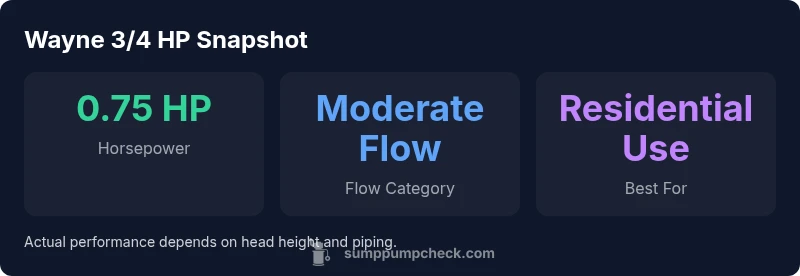
Definition: A Wayne 3/4 sump pump is a 0.75 horsepower unit designed for residential basements. It provides a balanced combination of flow and efficiency, making it a popular mid-range choice after smaller 1/2 HP models. This size pairs well with standard discharge piping, a check valve, and a reliable power supply for most homes.
What is a Wayne 3/4 Sump Pump?
According to Sump Pump Check, the Wayne 3/4 sump pump is a 0.75 HP unit designed for residential basements. It delivers reliable protection against basement flooding for homes with moderate water inflow. This model represents a common mid-range choice for homeowners upgrading from smaller pumps, offering a balance of flow, efficiency, and value. The Wayne brand is widely used in DIY and professional installations due to its dependable construction and available parts. A 3/4 HP pump is typically suitable for standard single-family homes with standard pit sizes and discharge routing, provided electrical and plumbing requirements are met.
- Power: 0.75 HP motor delivers more flow than smaller models while remaining manageable on a typical circuit.
- Design: Robust cast-iron or composite housings with thermal protection and reliable seals.
- Integration: Works with standard float switches, check valves, and discharge piping sized for residential use.
This section sets the stage for sizing and installation considerations that follow, focusing on how a Wayne 3/4 sump pump fits typical basements and why DIYers may choose it over smaller or larger options.
Sizing and Installation Basics
Sizing a Wayne 3/4 sump pump begins with basement square footage, expected water inflow during heavy rain, and the pump’s head height. For most homes, 0.75 HP strikes a balance between moving water efficiently and avoiding excessive power use. Start with the sump pit diameter and depth, ensuring the pit can accommodate the pump and float switch without risk of interference.
Key installation steps include:
- Verify a proper electrical supply (dedicated circuit recommended) and a grounded outlet near the pump.
- Install a discharge pipe with slope away from the house, ideally using a check valve to prevent backflow.
- Align the pump with the pit to prevent wobble and ensure the float activates smoothly.
- Use a reliable inlet screen to minimize debris entry.
A correctly installed Wayne 3/4 HP pump will perform better and last longer, particularly when paired with a reliable battery backup and annual maintenance checks.
Key Features of a Wayne 3/4 HP
Wayne’s 3/4 HP models commonly include several features that appeal to homeowners:
- Thermal overload protection to prevent motor burnouts under heavy loads.
- Durable casings (cast iron or reinforced plastics) for long life in damp environments.
- Integrated or compatible float switches designed to trigger at lower water levels for prompt response.
- Standardized outlet sizing and discharge options for easy integration with existing piping.
Understanding these features helps you compare directly against smaller or larger HP models and determine if the 0.75 HP unit aligns with your drainage needs.
When to Use a Wayne 3/4 HP
A Wayne 3/4 sump pump is well-suited for basements that see moderate water intrusion, such as those in homes with a standard sump pit and typical single-story layouts. If you’ve experienced frequent pumping events during heavy storms or live in an area with high groundwater, this size offers a favorable balance between flow and energy efficiency. It’s also a practical option if you’re upgrading from a 1/2 HP pump that struggles during peak inflows.
For homes with larger basements or higher inflow, a 1 HP model may be more appropriate, while a 1/2 HP unit may suffice in smaller spaces with light water intrusion.
Maintenance and Troubleshooting
Routine maintenance is key to extending the life of a Wayne 3/4 sump pump. Follow a simple yearly checklist:
- Clean the inlet screen and remove debris from the sump basin.
- Inspect the discharge line for blockages or kinks; ensure slope away from the home.
- Test the float switch by pouring water into the pit and observing the pump’s activation.
- Listen for unusual noises or vibrations indicating a loose mounting or impeller issue.
- Check electrical connections and replace worn power cords promptly.
Troubleshooting common issues includes addressing a pump that won’t start (check power, float position, and impeller obstruction) and a pump that runs continuously (verify switch alignment and potential water leakage in the seal).
Common Installation Pitfalls
Improper installation is a leading cause of premature pump failure. Avoid these mistakes:
- Inadequate sump pit size causing float interference or improper cycling.
- Skimping on backflow prevention or routing the discharge line uphill or through obstacles.
- Overlooking a dedicated circuit or surge protection, which can trip breakers during heavy rainfall.
- Skipping a check valve, which can cause short cycling and backflow.
A thorough setup, including correct pit sizing and robust electrical provisions, minimizes maintenance needs and maximizes performance.
Data-Driven Comparison: 3/4 HP vs Other Sizes
To help you decide, consider the following qualitative comparison:
- 1/2 HP: Lower cost and energy use, best for small basements with light inflow; may struggle during heavy rainfall.
- 3/4 HP: Balanced performance, suitable for typical basements with moderate inflow; good all-around option.
- 1 HP: Higher flow capacity and faster drainage, better for large basements or heavy inflow, but at higher price and power usage.
Choosing between these depends on your basement size, expected inflow, and willingness to optimize energy consumption.
Cost Considerations and Warranties
Pricing for Wayne 3/4 HP pumps varies by region, retailer, and included accessories. As a general guideline, total costs can include the unit itself, any necessary fittings, and potential installation labor. Warranties typically cover motor and certain components for several years, with terms varying by model and retailer. If you’re budgeting, plan for the pump plus installation without relying on a fixed price. Always verify warranty terms before purchase.
Quick Reference: Maintenance Schedule and Troubleshooting Flow
- Yearly: Clean intake screen, inspect seals, test float switch.
- Semi-annually: Check discharge line for blockages, inspect electrical connections.
- After a flood event: Inspect the basin for debris and inspect impeller for wear.
If the pump does not start, confirm power is connected, float is free to move, and there is no blockage in the impeller. If it runs continuously, verify the float or switch wiring and seal integrity.
Comparison of Wayne sump pump horsepower options
| Model Type | Horsepower | Typical Use | Pros | Cons |
|---|---|---|---|---|
| Wayne 3/4 HP | 0.75 HP | Residential basements, medium inflow | Balanced performance; reliable | Higher upfront cost vs 1/2 HP |
| Wayne 1/2 HP | 0.5 HP | Small basements, light inflow | Energy-efficient | Lower flow capacity |
| Wayne 1 HP | 1 HP | Large basements, heavy inflow | High flow; fast drainage | Higher power draw |
FAQ
What size Wayne sump pump is best for a standard basement?
For most standard basements, a Wayne 3/4 HP model is a popular middle-ground choice that balances flow and energy use. If your water inflow is light, a 1/2 HP may suffice; for very large basements or high inflow, a 1 HP unit could be more appropriate.
A 3/4 HP model is typically a good middle-ground for standard basements.
How does 3/4 HP compare to 1/2 HP and 1 HP?
A 3/4 HP pump offers more flow than a 1/2 HP without the higher power draw of a 1 HP unit. It is most suitable for mid-sized basements with moderate drainage needs.
It sits between 1/2 HP and 1 HP in both flow and power use.
Is a check valve necessary with a Wayne 3/4 sump pump?
Yes. A check valve prevents backflow and reduces the risk of short cycling, helping the pump maintain efficiency and longevity.
Yes, a check valve is recommended with this pump.
How hard is installation for Wayne 3/4 sump pump?
Installation is straightforward for someone with basic plumbing and electrical skills, but the exact ease depends on pit size, discharge routing, and wiring. In many cases, a professional install is the safer option to ensure code compliance.
It’s doable for DIYers with basic skills, but a pro ensures code-compliant setup.
What maintenance does a Wayne sump pump require?
Annual inspection of the intake screen, float switch, discharge pipe, and power connections minimizes failures. Clean debris, test the switch, and replace worn parts as needed.
Do a yearly check of the screen, switch, pipe, and wiring.
How long does a Wayne 3/4 sump pump last?
With proper installation and maintenance, a 3/4 HP Wayne sump pump typically lasts many years, often around a decade, though actual life varies with use and environmental conditions.
It can last many years with good care, often around ten years.
“The Wayne 3/4 sump pump offers a dependable middle ground for most residential basements, combining solid flow with reasonable energy use. Proper sizing and maintenance are key to long-term reliability.”
Top Takeaways
- Choose 0.75 HP for balanced performance in mid-sized basements
- Plan installation with a dedicated circuit and proper discharge piping
- Regular maintenance extends life and prevents failures
- Consider alternatives only if your inflow is consistently high
- Always verify warranty terms before purchase