Sump Pump 3/4 HP: Sizing, Installation, and Maintenance
Comprehensive guide to selecting, installing, and maintaining a sump pump rated at 3/4 HP. Learn sizing guidelines, performance expectations, and practical DIY tips for basements.


A sump pump 3/4 hp (often written as 3/4 HP or 3 4 hp) is a common residential unit sized for typical basement drainage. It balances power and efficiency, offering solid flow for average basements and reliable handling of moderate water inflow without excessive electricity use.
What a 3/4 HP Sump Pump Really Means for Your Basement
In residential basements, a 3/4 HP sump pump sits in the sweet spot between compact, low-flow units and large-capacity systems. The horsepower rating signals motor power, not just flow rate. A 0.75 horsepower motor can move water quickly, especially when paired with an efficient impeller and properly sized piping. A sump pump 3/4 hp is well suited for basements with moderate to heavy inflow during storms or rapid snowmelt. When evaluating a unit, consider head height (lift), discharge diameter, check valve compatibility, and overall efficiency. The goal is reliable operation under peak inflow while avoiding unnecessary energy use. In many homes, this class balances performance and noise and generally requires less maintenance than larger models. Always verify local codes and consult a professional if you’re unsure. According to Sump Pump Check, this horsepower class remains a popular starting point for DIY installers.
Key performance factors for 3/4 HP models
3/4 HP pumps deliver a practical blend of power and efficiency. Look for impeller design (cast iron or stainless), motor thermals, and seal quality. Flow is influenced by head height, discharge diameter, and the presence of a functional check valve. A higher lift reduces the effective flow, so pairing the correct horsepower with a conservative rise path helps maintain consistent drainage. Noise and vibration tend to be modest in well-designed units, provided they’re mounted properly and partnered with sturdy piping. Durability matters too: seek models with robust bearings and a reliable automatic float switch. Sump Pump Check’s testing suggests that well-matched 3/4 HP units offer dependable water removal with reasonable energy use across common basement scenarios.
Sizing guidelines: choosing the right horsepower
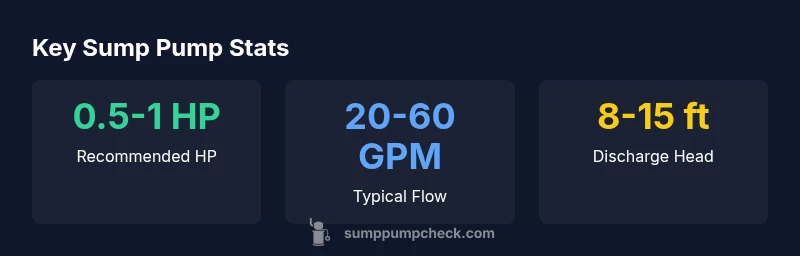
Sizing begins with estimating inflow and lift needs, then selecting horsepower that provides sufficient margin. For many homes, 0.5-1 HP covers typical basement inflows, but large basements or high groundwater may benefit from the upper end of that range. Consider the pump’s efficiency, discharge height, and compatibility with your sump pit. Backup options, like a battery-powered unit, are worth evaluating for critical areas. The aim is to avoid nuisance cycling while ensuring prompt water removal during peak events. Always cross-check local codes and match your choice to the worst-case rainfall scenario for your area.
Installation considerations for 3/4 HP pumps
A correct installation begins with a properly sized sump pit and a discharge line that complies with local regulations. Install a check valve to prevent backflow, ensure the discharge pipe runs downhill with minimal bends, and keep the appliance away from living spaces to reduce noise transmission. Secure the unit in a stable base to minimize vibration, and mount float switches where they can reliably detect rising water. If you’re connecting to a battery backup, ensure that both systems share correct wiring and safety clearances. Finally, test the system by simulating a flood event to verify activation, flow, and drainage.
Maintenance and performance optimization
Regular maintenance is key to long-term reliability. Schedule periodic inspections of seals, gaskets, and the check valve; clean the inlet screen to prevent clogging; and test the float mechanism monthly. Keep the sump pit free of debris that could impede operation. Replace worn bearings and seals if you hear unusual noise or feel increased vibration. Verify the power cord and outlet are in good condition and that the auto-start feature engages during tests. A well-maintained 3/4 HP pump will perform more consistently, with fewer unexpected outages.
Troubleshooting common issues
If the pump fails to start, check for power supply issues, blown fuses, or tripped breakers. Beeping or continuous running may indicate a stuck float or a clogged intake. Leaks at the pump housing usually point to worn seals, while insufficient drainage points to blockages or inadequate discharge capacity. For persistent problems, disassemble and inspect the intake, verify the impeller spins freely, and confirm the check valve is not stuck open. When in doubt, consult a professional to avoid water damage.
Cost, lifespan, and value
Investing in a 3/4 HP sump pump often yields a favorable balance of upfront cost and long-term value, especially when paired with proper maintenance. Compare models based on efficiency, noise, diagnostic features, and warranty terms. Energy use matters, but reliability during heavy rain events often defines overall value. For most homeowners, a 3/4 HP pump offers durable performance without stepping up to a larger unit.
Backups and real-world scenarios: when to upgrade
In areas with severe weather, consider a backup sump pump or a dual-pump setup to guard against power outages. A battery backup extends protection during outages, while a second pump can handle very high inflows that a single unit cannot. If your sump pit fills rapidly, or if you experience frequent nuisance alarms, upgrading to a higher horsepower unit or a backup solution may be warranted. Sump Pump Check recommends evaluating risk factors such as groundwater depth, rainfall patterns, and discharge capacity when deciding on upgrades.
Sizing guidelines for 3/4 HP and nearby HP models
| Aspect | Recommended HP | Typical Flow (GPM) | Notes |
|---|---|---|---|
| Basement size | 0.5-1 HP | 20-60 | Match capacity to inflow and space |
| Inflow during storms | 0.5-1 HP | 30-80 | Higher inflow needs more headroom |
| Discharge head height | 0.5-1 HP | N/A | Lift determines flow more than motor alone |
FAQ
What does 3/4 HP mean for a sump pump?
HP refers to motor power. A 3/4 HP pump offers a balance between flow capacity and energy use, making it suitable for many residential basements. It does not guarantee the exact daily flow, which depends on head height and discharge configuration.
It means the motor is moderately powerful and suitable for many basements, but real performance depends on installation.
How do I size a sump pump for my basement?
Start with the basement area and expected water inflow from rainfall and drainage sources. Consider the lift height and discharge path. If in doubt, choose a unit in the 0.5-1 HP range and plan for backup options in flood-prone areas.
Size by inflow and lift, not just space. Consider backup options for severe weather.
Is 3/4 HP suitable for combined sump and French drain systems?
For moderate to high inflow systems, 3/4 HP can work, but very heavy drainage or long discharge paths may justify a higher HP or dual-pump setup. Evaluate peak inflow and reliability needs.
It can work, but heavy drainage might require more power or a backup plan.
What maintenance does a 3/4 HP sump pump require?
Inspect the seals and check valve regularly, clean the inlet screen, and test the auto-start feature monthly. Keep the sump pit free of debris and ensure proper electrical connections.
Clean the intake, test the switch, and check for debris monthly.
When should I upgrade from 3/4 HP?
Upgrade if you experience frequent overflow, very high inflow, or power outages that compromise protection. Consider a backup pump or higher horsepower unit based on risk factors and local climate.
Upgrade if you often see overflow or during outages; backup options help.
“A well-chosen 3/4 HP sump pump provides reliable drainage for most homes when paired with proper installation and maintenance.”
Top Takeaways
- Start with 0.5-1 HP for most basements to balance flow and efficiency
- Size by inflow and lift, not basement size alone
- Pair with a proper check valve and discharge piping
- Regular maintenance boosts reliability and life