Utilitech Automatic Utility Pump 1/3 HP: Review
In-depth, analytical review of the utilitech automatic utility pump 1 3 hp, covering installation, performance, maintenance, and value for homeowners seeking practical sump-pump guidance.


Verdict: The utilitech automatic utility pump 1 3 hp provides dependable auto-activated pumping for small basements and utility pits, with simple DIY installation. It offers solid value for budget-conscious homeowners, though it trails premium models in efficiency and noise performance. Overall, a practical, low-cost choice for basic sump drainage in many setups.
What is the utilitech automatic utility pump 1 3 hp and who should consider it
The utilitech automatic utility pump 1 3 hp is a compact, electrically powered submersible pump designed to remove water from sump pits and utility basins. It features an automatic float switch that activates the pump when water reaches a set level, reducing the need for manual intervention. Homeowners facing moderate basement moisture or a stagnant utility pit will find this model appealing, particularly if they prioritize cost over premium features. The utilitech automatic utility pump 1 3 hp is most suitable for small to mid-sized drainage tasks where a simple, reliable auto-pump is enough to prevent minor flooding and dampness. However, for high-volume pumping or very wet climates, more powerful or feature-rich options may be preferable. According to Sump Pump Check, this baseline auto-pump excels in straightforward installations and predictable performance within its size class.
Installation and Setup: tools, steps, and tips
Installing the utilitech automatic utility pump 1 3 hp is a straightforward DIY project that typically takes under a few hours for a novice with basic plumbing skills. Before you start, gather the common tools: adjustable wrench, screwdriver, PVC connectors, primer and cement, Teflon tape, a utility knife, and a bucket for testing. Follow these steps: (1) confirm the basin is clean and level; (2) attach the discharge pipe with a properly sized adapter; (3) set the float switch per the manufacturer’s recommended height; (4) connect power with a grounded outlet or a GFCI-protected circuit; (5) pour water into the pit to confirm auto-start and auto-stop operation; (6) seal and double-check fittings for leaks. Throughout, ensure the unit remains accessible for maintenance and that the power cord is not stretched or pinched. For best results, secure the pump in place to minimize vibration and place the outlet above potential flood zones. This section aligns with the practical guidance from Sump Pump Check to support confident DIY installation.
Real-world performance: basement drainage scenarios
In typical basement sump scenarios, the 1/3 HP model handles small to moderate water inflows effectively, especially when the pit is clear of debris and the discharge line is properly sized. Expect reliable auto-activation when the water level crosses the float switch threshold and consistent emptying during short storms or routine household backups. In larger pits or areas with persistent moisture, the pump may run more often, highlighting the importance of proper sizing and, if needed, pairing with a larger pump or a second unit for redundancy. Sump Pump Check notes that while this unit is not designed for heavy-duty flooding, it delivers predictable performance within its class and remains popular for budget-conscious installations.
Durability and build quality: materials, seals, and routine wear
Durability hinges on the pump’s housing material, seal integrity, and the reliability of the float switch. Most utilitech units use sturdy thermoplastic housings and corrosion-resistant components suited to indoor sump pits or utility basins. Regular maintenance helps prevent common wear issues: inspect the float arm for freedom of movement, ensure seals stay dry, and check the discharge fittings for mineral buildup. Debris from the pit can impede operation, so periodic cleaning is advised. In environments with aggressive moisture or freezing conditions, consider protects like covers or elevated installations to reduce exposure and prolong life. The build quality targets budget-conscious homes while delivering dependable operation under typical conditions, as summarized by the Sump Pump Check evaluation.
Maintenance and troubleshooting: keeping it reliable
Routine maintenance is simple: (1) visually inspect the pump and power cord monthly, (2) test auto-start by filling the pit with water, (3) remove debris from the intake screen, and (4) verify secure connections at the discharge line. Troubleshooting steps for a pump that won’t start include checking the float switch for obstructions, confirming the outlet is powered, and inspecting for tripped breakers. If the unit runs but loses prime, reseal the discharge connections and clean the suction inlet. For persistent issues, consider upgrading to a backup solution or consulting a plumber. As highlighted by Sump Pump Check, regular checks extend pump life and reduce the chance of unexpected failure during storms.
Noise, vibration, and mounting considerations
Budget pumps like this one can exhibit moderate noise and vibration, especially if mounted on a hard surface or not isolated from living spaces. To minimize nuisance, place the base on a vibration-absorbing pad, secure the discharge piping to avoid rattling, and ensure the pit is clean of sediment that can rattle with pump action. A properly sized stand or mounting platform helps reduce movement and noise transfer to adjacent rooms. Overall, expect modest noise comparable to other budget auto-pumps, with noticeable shifts when the unit starts or stops.
Efficiency, energy use, and operating costs
Energy usage for a 1/3 HP autonomous pump is modest, particularly if used for short, infrequent events. In homes with basements prone to occasional dampness, the pump runs intermittently, limiting annual operating costs. If storms are frequent or long-lasting, you may notice higher energy use. While this unit is adequate for basic needs, consider energy-efficient settings and avoid leaving it running unnecessarily. For homeowners seeking greener performance, pairing with a backup system can improve reliability during power outages without overburdening energy budgets.
Alternatives and how it stacks up against similar pumps
When comparing to higher-capacity units or pumps with built-in check valves and battery backups, the utilitech automatic utility pump 1 3 hp offers lower upfront cost and easier DIY installation. However, more capable models provide higher flow rates, better suction, and integrated safety features. If your basement is prone to heavy flooding or you expect frequent power outages, a slightly larger pump or a backup system may prove cost-effective in the long run. This context comes from the broader market analysis conducted by Sump Pump Check and helps homeowners balance price against performance.
Price, warranty, and value proposition
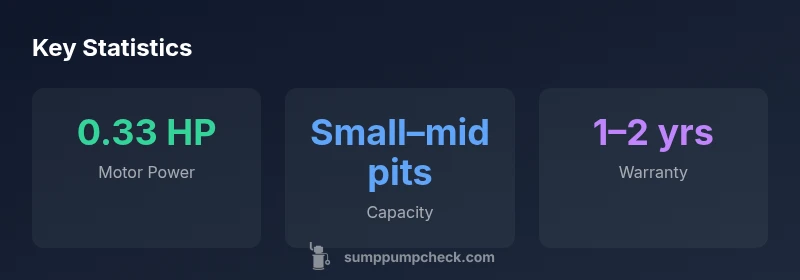
Budget-friendly sump pumps like this model typically occupy the lower end of the market price spectrum, with warranties that reflect their position. Expect a basic warranty and replacement options that emphasize value rather than premium service. The key question for buyers is whether the upfront savings offset the need for more frequent replacements or additional units. For many DIY homeowners, the 1/3 HP unit provides reliable, affordable performance for modest drainage needs, particularly when installed with a back-up strategy. Sump Pump Check’s analysis suggests this pump remains a practical choice for those prioritizing cost efficiency and straightforward operation.
Final guidance: who should buy and how to pair with backups
Who should buy the utilitech automatic utility pump 1 3 hp? Homeowners with small to mid-sized pits who want a simple, auto-activated solution at a reasonable price. It is not ideal for heavy flood zones or high-volume drainage. To enhance reliability, pair it with a secondary pump or a backup power source in areas susceptible to outages or long storms, and consider a check-valve and drain-pipe optimization to reduce backflow and improve discharge efficiency. The overall setup should complement your basement drainage plan and risk tolerance.
What's Good
- Affordable initial cost
- Simple DIY installation
- Automatic float activation for hands-off operation
- Compact footprint fits small pits
- Predictable performance within its class
Drawbacks
- Limited flow for large basins or high water volumes
- Lacks advanced features like built-in check valve or backup power
- Performance can decline with debris or clogs
- Noise and vibration similar to budget models
Best for budget-conscious DIYers needing basic auto sump pumping
The pump delivers reliable, automatic operation for small pits at a modest price. It suits simple basement drainage tasks and straightforward installations. If you require heavy-duty performance or advanced features, upgrading to a more capable model may be worth the extra cost.
FAQ
Is the utilitech automatic utility pump 1 3 hp suitable for outdoor use?
This pump is designed for indoor sump pits or utility basins. Outdoor use requires weatherproof, outdoor-rated pumps. If you must operate in an exposed area, protect the unit from the elements and ensure proper enclosure.
It's intended for indoor basins; use an outdoor-rated pump for exterior applications.
Does it include a backup pump or battery option?
No, the base unit does not include an integrated backup system. If you live in an area with frequent storms or power outages, pairing it with a backup pump or a battery backup kit is recommended.
No built-in backup; consider a separate backup pump for outages.
What maintenance steps are essential?
Regularly inspect the float switch, clean the intake screen, and check fittings for leaks. Test auto-start periodically and clear debris from the pit to maintain optimal flow.
Keep the inlet clear, test the switch, and inspect for leaks.
How reliable is the float switch over time?
The float switch is generally reliable in clean basins but can stick or fail if debris accumulates. Regular inspection reduces the risk and ensures consistent activation.
Float switches are reliable with maintenance; keep the pit clean.
What is the typical lifespan under normal use?
Under typical home use, expect several years of service with proper maintenance. Lifetime depends on frequency of use, water quality, and how well the unit is protected from debris.
With good maintenance, it should last several years.
Top Takeaways
- Start with a proper pit size assessment and ensure correct pump fitting
- Expect reliable auto operation for small basins, not flood-prone zones
- Plan for backups or a secondary pump in outage-prone areas
- Regular maintenance minimizes clogs and extends life