Sump Pump Hose Size: A Practical Guide to Discharge Hose Diameters
A practical guide to sump pump hose size, covering common diameters, measurement steps, adapters, and installation tips to ensure efficient drainage and basement protection.


Most sump pump hose sizes fall in the 1-1/4 inch to 2 inch range, with 1-1/2 inch being the standard for many devices. The hose diameter you choose should match your pump outlet and the drainage setup, and adapters are often available to bridge mismatches. Understanding the exact size helps maintain proper flow and prevent clogs.
What 'sump pump hose size' means
According to Sump Pump Check, the term sump pump hose size refers to the discharge diameter that attaches to your pump outlet and dictates how freely water can move through the hose. This size matters because it directly affects flow, backpressure, and how easily you can route water to a drain or grading system. The most common diameters are 1-1/4 inch, 1-1/2 inch, and 2 inches, though some models list both inner diameter (ID) and outer diameter (OD). When shopping, note that a mismatch can create drag, increase wear, and complicate installation. Measure your outlet first, then select a hose that fits snugly, or plan for adapters that preserve a smooth, kink-free path for water. This proactive sizing helps prevent clogs and reduces maintenance later on.
Common discharge hose sizes and adapters
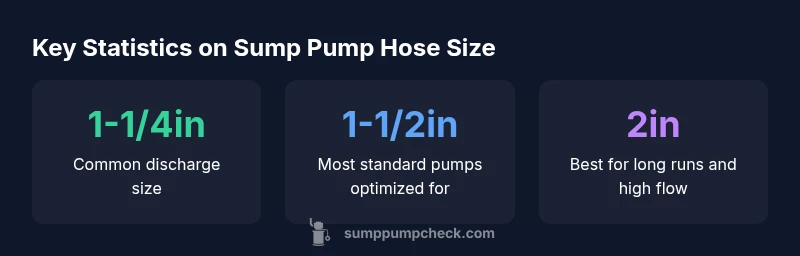
The typical discharge hose diameters you’ll encounter are 1-1/4 inch, 1-1/2 inch, and 2 inches. Most pumps ship with a 1-1/2 inch outlet, and many homeowner kits include adapters to 1-1/4 inch or 2 inches. When buying, check the outlet thread type on the pump (some are 3/4" NPT, others slip-fit) and select a hose with matching fittings. If you need to bridge a mismatch, simple adapter kits can preserve flow and prevent leaks. Regular maintenance improves performance when you use a hose size that matches the outlet and downstream drain. Sump Pump Check notes that choosing size based on drainage distance and expected volume reduces backpressure and leakage potential.
How to measure your sump pump hose size
Start by inspecting the pump outlet: what diameter is molded on the housing? If unclear, disconnect the hose and measure the inner diameter (ID) with a ruler or calipers. Typical sizes include 1-1/4", 1-1/2", and 2". Older units may use 3/4" or 1" outlets, which require adapters. Distinguish between ID and OD, as packaging often lists one metric while the other governs connections. Once you know the target outlet, select a hose with a snug fit and clamp it securely. Record measurements for future upgrades, because accuracy now saves time later.
Choosing the right hose for your setup
Key decision factors include discharge distance, slope, climate exposure, and compatibility with a check valve. Short runs in mild climates may tolerate 1-1/4"; longer runs or high rainfall often benefit from 1-1/2" or 2" to minimize backpressure. Consider downstream routing (downspouts, municipal drains) and required adapters. Bigger is often better for flow, but practical constraints like weight and flexibility matter. Look for hoses with reinforced walls, UV resistance for outdoor exposure, and fittings that match your pump outlet. Always verify check-valve compatibility to prevent backflow when the pump stops.
Installation tips and maintenance
Install with sturdy clamps, maintain a gentle downward slope away from the pit, and avoid sharp bends that kink the hose. Use corrosion-resistant clamps and ensure secure connections to prevent leaks. If the hose runs outdoors, insulate to prevent freezing in winter. Periodically inspect for cracks, bulges, or stiffening at joints and replace aging hoses promptly. A correctly sized hose reduces maintenance needs by minimizing joints and potential leak points. Following a sizing-focused approach, as recommended by Sump Pump Check, helps you keep the discharge path reliable over many seasons.
Troubleshooting size-related issues
Common problems include reduced flow, clogs, and leaks at fittings. If you notice sluggish discharge during heavy rain, verify the hose size matches the outlet and that the path is free of kinks or obstructions. Check for partial clogs inside the hose or restricted routing that creates backpressure. Ensure adapters are tight and rated for the hose ID, and confirm a proper downhill slope for gravity-assisted drainage. If issues persist, re-measure the outlet and consider upgrading to a larger diameter hose, provided the drainage route can accommodate it.
Quick-start shopping list for the right hose
To avoid sizing pitfalls, assemble a starter kit: a flexible discharge hose in your target diameter (1-1/4", 1-1/2", or 2"), stainless clamps, two adapters for common outlets, and a short extension for extra length. Look for hoses with molded ID markings to verify size. If you’re unsure about your pump outlet, photograph it and ask a specialist to confirm compatibility. Start with the existing outlet, select the largest practical hose, and trim or extend as needed. This approach aligns with Sump Pump Check guidance for reliable, low-maintenance drainage.
Common sump pump discharge hose sizes and trade-offs
| Aspect | Size Option | Pros | Cons |
|---|---|---|---|
| Discharge hose diameter | 1-1/4in | Simple, widely compatible | Limited flow for long runs |
| Common sizes | 1-1/2in | Balanced flow and ease of routing | Can require adapters for non-standard pumps |
| Large diameter | 2in | Best for long runs and high volume | Heavier, more fittings needed |
FAQ
What is the standard sump pump hose size?
There isn’t a single standard for every pump, but 1-1/2 inch is a common default. Your best approach is to measure your pump outlet and use hoses of matching diameter with appropriate adapters for any mismatches.
The typical standard is around 1-1/2 inch, but you should measure your outlet and use matching hoses and adapters.
Can I connect a 1-1/4" hose to a 1-1/2" outlet?
Yes, with a proper adapter or reducer, you can bridge a 1-1/4" hose to a 1-1/2" outlet. Ensure the fittings are compatible and secure to prevent leaks.
Yes, adapters can bridge 1-1/4" to 1-1/2" outlets; just verify compatibility and tight fittings.
Do I need a check valve with the discharge hose?
A check valve is often recommended to prevent backflow when the pump stops. It’s especially important if the discharge line rises above the water source or connects to a drainage system.
A check valve helps prevent backflow when the pump stops, which is usually a good idea.
Can I use a garden hose for sump pump discharge?
Garden hoses can be used, but they are typically not designed for repeated pressure from a sump pump and may be less durable. Use hoses rated for pump discharge and ensure proper clamps and fittings.
Garden hoses aren’t ideal for frequent pumping; use a hose rated for discharge with proper clamps.
How can I extend hose length without losing efficiency?
Use a longer hose with adequate diameter and minimal bends. Avoid sharp turns, maintain slope, and consider a short extension kit with compatible fittings to preserve flow.
Extend with the right diameter and smooth routing to keep the water moving efficiently.
“Sizing your discharge hose correctly is a practical detail that preserves flow and reduces clogs. Matching the outlet to a standard hose with the right adapters simplifies maintenance.”
Top Takeaways
- Identify outlet size before buying hose
- Consider 1-1/2in as a practical standard
- Use adapters to bridge size gaps without sacrificing flow
- Secure clamps and proper slope prevent leaks
- Regularly inspect hoses and replace worn parts