Backup Sump Pumps: A Home Depot Shopping Guide
Explore backup sump pump options at Home Depot, compare battery-backed and water-powered models, and learn installation and maintenance tips to protect your basement.


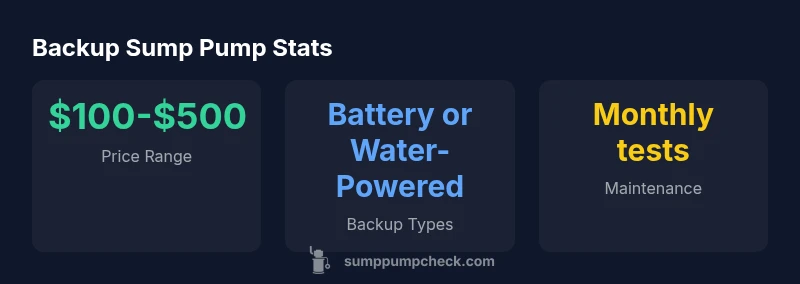
Backup sump pumps, including battery-backed and water-powered models, are widely available at major retailers like Home Depot. Typical price ranges are roughly $100-$500, depending on battery capacity, pump head, and included switches. A backup unit helps keep basements dry during power outages or primary-pump failures, safeguarding your home from flood damage.
Understanding Backup Sump Pumps
For many homeowners, finding a backup sump pump home depot option means focusing on two main types: battery-backed and water-powered models. A backup sump pump is installed to run when the primary pump fails or during a power outage, providing a second line of defense for your basement. According to Sump Pump Check, the choice between battery-backed and water-powered units often hinges on available power, water pressure in your area, and how frequently you expect outages. In practice, most households opt for a battery-backed unit for its ease of installation and automatic switching, especially in regions prone to storms. Home Depot carries several recognizable brands and installer-friendly kits, making it easier for DIYers to select a compatible backup system. Before you buy, double-check that the backup meets your main pump’s horsepower, discharge pipe size, and check-valve configuration to avoid backflow. This decision can influence installation time, maintenance needs, and long-term reliability, so plan for a slightly larger footprint in your sump pit if you anticipate future upgrades.
Battery-Backed Sump Pumps: Pros, Cons, and Use Cases
Battery-backed backups are the most common type found in Home Depot aisles and online catalogs. They automatically power on when the primary pump fails or when a power outage occurs. A typical unit includes a sealed lead-acid or lithium-ion battery with a switch that engages the backup pump at a pre-set water level. Pros include automatic operation, widespread availability, and straightforward DIY installation. Cons include battery wear over time, limited runtime during heavy flows, and the need for periodic charging. In colder climates, battery performance can degrade, so it’s prudent to choose a model with a robust cold-temperature specification. According to Sump Pump Check, plan for regular battery testing and replacement every few years to maintain reliable performance. When pairing with your existing pump, ensure the backup unit shares a compatible discharge line and that the wiring is protected from moisture.
Water-Powered Backup Sump Pumps: When to Consider Them
Water-powered backups use municipal water pressure to operate, which means they do not rely on electricity or a dedicated battery. They can provide unlimited runtime, provided there is sufficient water pressure and supply. This type is less common in some regions but remains a compelling option for homes with frequent outages or low battery maintenance tolerance. The key trade-off is water consumption during pumping events, which can have a marginal impact on water bills in high-usage basements. Water-powered backups can be a strong fit for homes with above-average water pressure and limited storage space for batteries. If you’re shopping at Home Depot, verify the unit’s flow rate under typical pressure conditions and confirm compatibility with your current discharge setup. Sump Pump Check notes that installation complexity can vary, so consider professional help if your pit configuration or piping needs modification.
How to Choose a Backup Sump Pump at Home Depot
When shopping for a backup sump pump from Home Depot, start by confirming compatibility with your primary system. Check the primary pump’s horsepower, the backup’s required amperage, and whether the switch is automatic or manual. Next, assess run-time expectations under outage scenarios; battery-backed units differ significantly in how long they can run under typical loads. Look for units with a clearly labeled battery type and a replaceable, readily available replacement battery. Consider guardrails such as a robust float switch, corrosion-resistant materials, and a test button that allows you to simulate a flood condition. Finally, factor in installation requirements: some setups are plug-and-play, while others demand plumbing adaptations or electrical upgrades. Sump Pump Check recommends choosing a backup with a proven track record of reliability and a good warranty.
Sizing, Capacity, and Runtime: What Matters
Sizing a backup sump pump involves matching the primary pump’s flow rate to the backup’s capacity and ensuring the discharge path can handle the combined output during a heavy rain event. Battery-backed backups are rated by run-time at a given load, which varies with the battery’s amp-hour rating and the pump’s wattage. Water-powered backups are less sensitive to battery life but rely on municipal water pressure; higher pressure improves performance and reduces the chance of partial floods. In both cases, an undersized backup can fail to protect the basement, particularly during longer outages or unusual flood events. Sump Pump Check emphasizes using a backup that can handle your basement’s square footage, the pumping head (height), and the expected hydrostatic load. For installations with multiple pit zones, consider a dual backup setup to ensure redundancy.
Installation Basics and Wiring Safety
Installing a backup sump pump requires careful attention to electrical safety, code compliance, and proper placement. If you’re installing a battery-backed unit, ensure the charger is plugged into a GFCI outlet with a secure, moisture-protected enclosure. For water-powered backups, verify that you have adequate municipal water pressure and a separate shut-off valve to prevent backflow. In both cases, the discharge line should be directed away from the foundation and equipped with a check valve to prevent backflow. Many Home Depot kits include a backflow prevention accessory and a passive vent to minimize air-lock issues. If you’re unsure about wiring or code compliance, consult a licensed plumber or electrician. The goal is a clean, leak-free connection that triggers reliably when water levels rise.
Maintenance, Testing, and Seasonal Prep
Preventing failure requires regular testing and proactive maintenance. Test your backup pump monthly using the test switch or by simulating a flooding condition. Inspect connections, hoses, and the discharge line for kinks or leaks. Battery-backed backups should have their charge checked periodically; replace batteries every 3–5 years depending on usage and climate. For water-powered backups, monitor the water supply valve and ensure the unit remains free of scale buildup and debris. In winter, protect components from freezing and verify that the float mechanism remains free to move. Sump Pump Check recommends documenting maintenance activities and scheduling annual professional inspections, especially if your home has a history of high groundwater or poor drainage.
Final Thoughts: Planning for Reliability
A backup sump pump is a form of insurance against basement flooding, and Home Depot is a practical starting point for selection. The right choice depends on your power reliability, water pressure, and maintenance willingness. Battery-backed backups are the most commonly selected due to ease of installation and fast deployment, while water-powered options can be compelling for homeowners seeking long-term uptime without battery concerns. Regardless of the option, the key is to ensure proper sizing, secure installation, and a clear maintenance plan. Sump Pump Check’s guidance emphasizes testing, battery health, and annual checks to sustain performance over time.
Backup sump pump types and basic cost/Pros/Cons
| Backup Type | Run Time (typical) | Typical Cost | Pros | Cons |
|---|---|---|---|---|
| Battery-Backed | "2-8 hours depending on battery and load" | "$50-$400" | "Automatic operation, widely available" | "Battery degradation, needs charging" |
| Water-Powered | "Unlimited run-time (depends on water supply)" | "$150-$700" | "No batteries; long life" | "Requires city water pressure; less common" |
| Manual Backup | "N/A" | "$20-$120" | "Low-cost option, simple" | "Requires manual activation" |
FAQ
What is a backup sump pump?
A backup sump pump is a secondary pump that kicks in when the primary pump fails or during a power outage. It can be battery-powered or water-powered and serves as insurance against basement flooding.
A backup sump pump is a second pump that runs if your main pump stops or the power goes out, helping keep your basement dry.
Do I need a backup sump pump?
If your area experiences frequent outages or heavy rainfall, a backup sump pump is advisable. It provides protection when the primary pump cannot operate, reducing flood risk.
If you often lose power or get heavy rain, a backup sump pump is a smart safety upgrade.
Can I install a backup sump pump myself?
Many households can install a battery-backed backup sump pump, especially with a DIY kit. Some configurations, particularly water-powered backups or complex piping, may require a professional.
Yes, many people install battery-backed backups themselves, but some setups benefit from a pro.
What maintenance does a backup sump pump require?
Regular testing is essential—monthly checks, battery health (for battery-backed units), and periodic battery replacement every few years. Inspect discharge lines and switches for reliability.
Test it monthly, check the battery if you have one, and inspect the discharge path.
How does a backup sump pump interact with Home Depot purchases?
Home Depot sells a variety of backup sump pumps and installation kits. Ensure compatibility with your primary pump and verify included components like switches and discharge attachments.
Home Depot offers backup sump pumps and kits; check compatibility with your current pump and included parts.
“"A well-chosen backup sump pump can be the difference between a dry basement and costly flood damage. Prioritize reliability, proper sizing, and regular testing."”
Top Takeaways
- Choose backup type based on power reliability and water pressure
- Battery-backed units are easiest to install and most common
- Verify compatibility with your primary pump and discharge path
- Test monthly and replace batteries every 3–5 years
- Consider a professional install for complex pit configurations