Sump Pump Battery Backup Nearby: A Practical Guide for Homeowners
Discover how to find, install, and maintain a sump pump battery backup nearby to keep basements dry during outages. Practical steps, cost ranges, and maintenance tips from Sump Pump Check.


For homeowners, a sump pump battery backup nearby is a critical safeguard that keeps your drainage system working when the power grid fails. In practical terms, a good backup setup can provide minutes to hours of pump runtime, depending on battery size and pump draw, ensuring basement protection during heavy rain or flood events.
Why a sump pump battery backup nearby matters
In regions prone to heavy rainfall or basement flooding, a sump pump is a key line of defense. Having a sump pump battery backup nearby ensures your system continues to operate during power outages, which are exactly when you need protection most. According to Sump Pump Check, homeowners who plan for outage scenarios significantly reduce the risk of costly water damage. A backup battery does not replace mains power, but it provides crucial runtime so you can either restore power or manage water until help arrives. When choosing a backup, consider local climate, sump pit size, and the pump’s horsepower. A common rule of thumb is to match battery capacity to the expected outage duration in your region and your flood risk. With a nearby backup, you gain time to implement protective steps like diverting water away from the foundation or sealing vulnerable entry points.
To keep the goal tangible, think of proximity to service and parts as part of your decision: a nearby installer can assess your setup, ensure correct wiring, and offer timely maintenance reminders.
How battery backups work with sump pumps
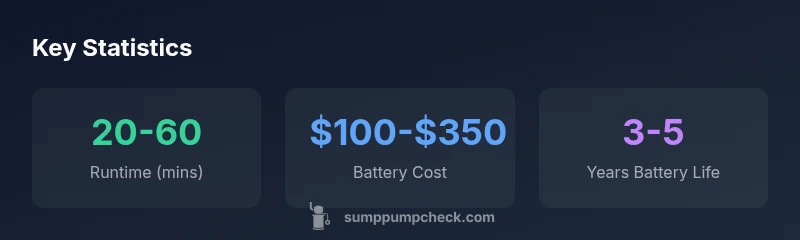
Most residential backup systems use a dedicated battery connected to the sump pump. These backups come in lead-acid, AGM, and lithium chemistries, each with different cycle life, weight, and charging profiles. The backup powers the pump either directly or through an automatic transfer switch that engages when the main power cuts out. Runtime depends on battery capacity (measured in amp-hours) and the pump’s current draw. A typical household unit might run a small submersible pump for 20–60 minutes under full load, while higher-capacity configurations can extend runtime. Regular charging and proper maintenance are essential to prevent a dead battery when you need it most. Consider the expected outage length in your area and choose a system that provides a comfortable safety margin.
How to choose a backup nearby
When shopping for a sump pump battery backup, prioritize availability of local support. A backup system purchased near you often translates to faster installation, easier warranty service, and quicker replacements if you need to swap a battery. Look for installers who can assess your current pump, verify compatibility, and size the battery to your sump’s electrical demands. Check for clear warranty terms and a classifier of the battery chemistry that matches your climate and maintenance tolerance. If you already have a brand you trust, ask about nearby authorized dealers and service centers to minimize downtime during installation or service visits. Proximity matters for emergency response and ongoing upkeep.
Installation considerations for a local backup
Before you install, verify that your sump pump and existing electrical panel can accommodate a backup battery setup. Many systems require a dedicated circuit or a transfer switch, and some municipalities require a licensed electrician for electrical connections. Plan for battery placement that is accessible for testing and maintenance, while keeping the unit away from extreme heat or damp basements. Ensure battery leads are properly sized and protected from physical damage. Ground fault circuit protection (GFCI) in the sump area is also important. Finally, document your setup and store a simple maintenance log on a nearby board for quick reference during storms.
Maintenance and testing routines
Maintenance is the long-term safety net for a sump pump battery backup nearby. Test the system monthly by simulating a power outage and confirming the pump activates smoothly. Check the battery voltage with a multimeter and ensure connectors are clean and tight. Replace batteries according to manufacturer guidance—typically every 3–5 years for lead-acid and 5–10 years for lithium chemistries, depending on usage. Keep the area around the backup clean and dry, and periodically inspect the transfer switch, fuses, and wiring for wear. A proactive maintenance habit reduces the chance of failure when you need it most.
Cost considerations and value for money
Investment in a battery backup varies with chemistry, capacity, and installation factors. You can expect a wide range of prices depending on battery size, brand, and whether professional installation is included. In many markets, the total cost—unit plus installation—falls within a broad range designed to fit typical homeowner budgets while delivering essential protection. When evaluating value, compare runtime guarantees, warranty terms, and the availability of local service. A nearby backup that’s easy to service can save you money over the system’s life by reducing downtime and repair costs after outages.
Quick-start checklist for finding a nearby installer
- Identify your current sump pump model and power needs.
- Search for nearby qualified installers with experience in sump-pump battery backups.
- Confirm compatibility and get a sizing recommendation tailored to your climate and flood risk.
- Request clear pricing, including battery type, controller, transfer switch, and labor.
- Schedule a professional inspection and a follow-up maintenance plan.
- Verify warranty terms and keep contact information for service visits.
A nearby provider can often arrange quick installation and ensure the unit integrates with your existing safety systems.
Common pitfalls and troubleshooting
Common issues include a battery that won’t hold a charge, beeping alarms, or failure to start during a test. Check the battery date, ensure it’s properly connected, and test the system with a controlled outage. If the backup won’t engage, there may be wiring or switch problems that require a licensed technician. Avoid relying on a backup that hasn’t been tested recently. Regular checks ensure when you need it, the system performs as intended.
Real-world scenarios and why proximity matters
Imagine a heavy rain event that overwhelms your main sewer or drainage system. If your sump pump battery backup nearby is ready to go, the pump can run during the outage, buying time to implement protective steps and minimize water intrusion. In practice, homeowners who coordinate with a local installer report shorter downtime, easier battery replacements, and faster repairs when needed. The reliability of a nearby backup often translates into real basement protection when storms are most intense.
Backup battery performance basics
| Aspect | Typical range | Notes |
|---|---|---|
| Battery type | Lead-acid/AGM/Lithium | Varies by model and space |
| Run time on backup | 20-60 minutes | Depends on pump wattage and battery capacity |
| Battery life | 3-5 years | With regular maintenance |
| Maintenance interval | 6-12 months | Inspect and test regularly |
FAQ
How long can a backup pump run during a power outage?
Runtime depends on battery capacity and pump draw. Typical systems offer minutes to hours of operation. A professional sizing assessment helps guarantee adequate protection for your home.
Runtime depends on your battery and pump. A quick sizing check helps ensure you’re covered during outages.
What is the typical lifespan of a sump pump battery backup?
Most backups last several years with proper maintenance. Lead-acid options tend toward shorter cycles than some lithium chemistries, but performance varies by usage and climate.
Most backups last several years with regular care; lithium batteries often outlast lead-acid in many setups.
Can I install a battery backup near my existing sump pump?
Yes, proximity is beneficial for wiring, testing, and service. Ensure the chosen backup is compatible with your pump and follows local code requirements.
Yes, place it close to your sump pump for easier wiring and testing, while following local codes.
Does a battery backup require professional wiring?
Many jurisdictions require a licensed electrician for electrical connections, especially when new circuits or transfer switches are involved. A professional installation ensures safety and code compliance.
Often yes. A licensed electrician can ensure safety and code compliance.
Are lithium batteries safer than lead-acid for backups?
Lithium options are lighter and longer-lasting but typically cost more upfront. Lead-acid is reliable and affordable but heavier and shorter-lived with high cycling demands.
Lithium backups are lighter and longer-lasting but pricier; lead-acid is cheaper but heavier and shorter-lived.
“A reliable backup system minimizes basement risk during outages; pair it with regular maintenance and a reputable installer.”
Top Takeaways
- Choose a nearby backup to shorten service time
- Regular testing prevents outage surprises
- Match battery capacity to expected outages
- Plan for battery maintenance and replacement
- Verify local installation support and warranty