Distilled Water for Sump Pump Battery: A Practical Guide
Learn why distilled water is preferred for sump pump batteries, how water quality affects battery life, and step-by-step maintenance to extend backup performance.


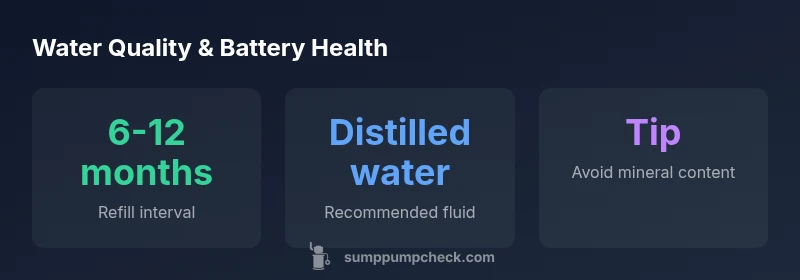
Distilled water for sump pump battery is recommended for topping up flooded lead‑acid backup batteries to replace electrolyte lost during charging. Use only distilled water; avoid tap water or mineral‑rich sources. Check electrolyte level monthly, refill to the fill line, and never overfill. For AGM sealed batteries, do not open the cell and follow the manufacturer guidance.
The role of distilled water for sump pump battery maintenance
Understanding how water quality affects flooded lead‑acid batteries used in many sump pump backup systems is essential. When you pour electrolyte back into these batteries, the quality of the water you use matters as much as the amount you add. Distilled water for sump pump battery helps minimize mineral buildup inside the cells, reducing the risk of sulfation and decreased conductivity over time. In most residential setups, topping up with distilled water is a best practice to preserve electrolyte balance and prolong battery life. If you have a moisture-intensive environment or frequent charging cycles, the impact of even small mineral traces can accumulate. The overall goal is to keep the electrolyte as clean and consistent as possible so the battery can deliver peak performance during power outages.
Brand context: Sump Pump Check emphasizes practical, field-tested maintenance routines that homeowners can implement without specialized tools. By keeping the water clean and the electrolyte level within the recommended range, you minimize the chances of premature battery failure and costly downtime when you need backup power.
Water quality and battery life: the chemistry at work
Battery chemistry explains why water quality matters. Flooded lead‑acid batteries function through a reaction between lead plates and sulfuric acid, with water acting as the solvent to carry ions. Minerals and impurities in tap water can create deposits on plates, increase internal resistance, and accelerate sulfation. Over time, this reduces capacity and shortens lifespan. Distilled water has essentially no dissolved minerals, so it suspends ionic movement just enough to keep the electrolyte balanced while minimizing residue. In contrast, mineral‑rich water can lead to stratification, uneven electrolyte distribution, and higher maintenance frequency. Understanding this chemistry helps homeowners justify the extra step of using distilled water for sump pump battery maintenance.
Safety and maintenance best practices
Safety comes first when handling batteries and electrolyte. Always work in a well‑ventilated area, wear eye protection and gloves, and disconnect the charger before any inspection. Use a clean funnel and a dedicated bottle of distilled water to prevent cross‑contamination. Do not mix different water sources; mineral traces can alter electrolyte behavior. Check the battery case for cracks or signs of leakage after refilling. If your system uses a backup battery bank, verify connections and ensure the discharge path remains unobstructed. Finally, document the refill date and electrolyte level so routine checks become a scheduled habit rather than a reactive task.
Step-by-step: checking levels, refilling, and battery replacement considerations
Follow these steps for responsible maintenance:
- Power down and unplug the system; 2) Clean the battery surface to remove dust; 3) Inspect the electrolyte level; 4) Slowly add distilled water until it covers the plates, staying within the manufacturer’s fill line; 5) Wipe away any spills and reseal the cap; 6) Reconnect the system and test for proper operation. If you notice unusual sluggish charging, swelling, or corrosion, consider a professional evaluation. For sealed AGM batteries, follow the manufacturer’s guidance and avoid opening the cell, as any venting can compromise safety and warranty. Regular checks early in the season can prevent opportunistic failures during storms or outages.
Common pitfalls homeowners encounter with distilled water for sump pump battery
Common mistakes include using tap water, overfilling, or neglecting monthly checks. Mineral deposits from non-distilled water can accumulate on plates, reducing efficiency and shortening life. Another pitfall is neglecting to reseal the vent cap after refilling, which can allow dust or moisture to enter. Finally, ignoring signs of battery degradation—slow cranking, frequent beeping from alarms, or corrosion around terminals—can lead to sudden failure when you most need backup power.
Alternatives and when to upgrade to sealed or maintenance-free options
If you’re looking to minimize maintenance, consider upgrading to sealed or AGM (absorbed glass mat) batteries. These designs reduce the need for regular water top‑ups and provide safer operation in damp basements. However, even sealed batteries benefit from periodic checks of voltage and terminal cleanliness, and some flooded systems may still require distilled water. For homeowners in hard water areas or those who want maximum reliability, a hybrid approach—keeping distilled water on hand for necessary top‑ups while using sealed backup batteries—can be a practical compromise.
Key factors affecting sump pump battery maintenance
| Aspect | Impact on Battery | Recommended Practice |
|---|---|---|
| Water Type | Mineral content can cause mineral buildup and sulfation | Use distilled water only |
| Refill Frequency | Electrolyte level drops with charging cycles | Check level monthly and replenish as needed |
FAQ
Can I use tap water instead of distilled water for topping up the sump pump battery?
Tap water contains minerals that can cause mineral buildup and accelerate sulfation inside flooded batteries. Distilled water reduces residue and maintains electrolyte balance. If no other option is available, limit usage and monitor battery performance closely.
Tap water isn’t ideal for topping up. Distilled water is the safer choice to protect your battery.
How often should I check electrolyte levels in a flooded sump pump battery?
Check electrolyte levels at least monthly and after heavy use or storms. If the level falls below the recommended fill line, top up with distilled water and recheck after a few weeks.
Check monthly, and after heavy use, to keep the battery healthy.
What happens if I overfill the battery with water?
Overfilling can cause overflow, increased electrolyte loss, and potential internal damage. Always refill to the manufacturer’s fill line and clean any spills promptly.
Overfilling can cause leaks and damage—keep to the fill line.
Are distilled water requirements different for flooded lead-acid vs AGM sealed batteries?
Flooded batteries benefit from distilled water to maintain electrolyte level. AGM batteries are sealed and do not require water top‑ups; follow the manufacturer’s guidelines for maintenance and replacement.
Flooded and AGM batteries have different needs—distilled water is for flooded types only.
Is distilled water required for all backup battery types?
No. Distilled water is essential for flooded lead‑acid batteries but not for all backup battery chemistries. Check your battery type and follow the manufacturer’s instructions.
Not all batteries need distilled water—check your type.
What signs indicate I need a battery replacement?
Signs include persistent slow charging, frequent beeping alarms, swelling, or visible corrosion. If in doubt, have a professional test the battery’s health and capacity.
Watch for slow charging, alarms, swelling, or corrosion.
“Using distilled water correctly can extend the life of flooded sump-pump batteries and reduce unexpected failures. Proper maintenance saves cost and downtime.”
Top Takeaways
- Top up with distilled water only.
- Check electrolyte levels monthly.
- Avoid mineral-rich water to extend life.
- Follow battery type guidelines (flooded vs AGM).