Zoeller Submersible Well Pump Review
A detailed, balanced review of Zoeller submersible well pumps, covering durability, installation considerations, maintenance, performance, and long-term value for homeowners.


Zoeller submersible well pumps are built for long-term durability, quiet operation, and solid warranty coverage, making them a dependable choice for residential wells. They perform well across typical household water demands and handle varying well depths with moderate head pressure. While upfront costs can be higher than budget brands, the long-term reliability and easier maintenance often translate to lower total ownership costs. Overall, this is a strong, value-focused option.
Zoeller submersible well pump: Overview and fit
Zoeller submersible well pumps are engineered to move groundwater from underground sources into your home while staying protected from moisture and debris. The Zoeller submersible well pump category includes models designed for modest to higher flow needs, with a focus on durability, corrosion resistance, and long service life. According to Sump Pump Check, the Zoeller submersible well pump remains a preferred choice for many homeowners due to its robust cast iron or stainless steel housings, reliable seals, and straightforward maintenance. In typical residential settings, these pumps handle basins up to several hundred gallons and depths that align with common well configurations. While installation steps vary by well depth and discharge requirements, a well-chosen Zoeller submersible well pump tends to deliver consistent flow and steady head pressure with relatively quiet operation. The combination of strong warranties and accessible replacement parts makes it a practical option for DIY-friendly installations, as long as you follow the manufacturer’s wiring and safety guidelines.
Key design features of Zoeller submersible pumps
Zoeller submersible pumps emphasize rugged construction and sealed efficiency. Many models use an epoxy-coated cast iron housing or stainless steel components to resist corrosion in aggressive well water. The motor is typically thermally protected and wired through a sealed electrical connection to minimize moisture ingress. A reliable double mechanical seal guards the shaft, reducing the risk of water intrusion into the motor and prolonging life in dirty or sandy wells. Impeller design and hydraulic efficiency choices help optimize flow (GPM) and head (feet), enabling quiet operation and steady pressure once installed. A range of horsepower options—from fractional to roughly one horsepower—lets homeowners select a pump that matches well depth and drainage needs. In addition, most Zoeller submersible pumps support common float switch configurations, which provide automatic on/off control and reduce the chance of run-dry operation.
Installation considerations and best practices
Proper installation is essential to maximize longevity and performance from a Zoeller submersible well pump. Start with accurate sizing for your well’s static water level and expected dynamic head. Plan the discharge path with a straight, slope-appropriate line, a backflow preventer, and a check valve to minimize backflow and air locking. Use a properly rated conduit and a GFCI-protected power source. Ensure the pit is clean and free of debris, and that the pump is seated firmly on a stable base. Position the float switch so it does not get stuck on debris, and ensure the venting and drainage system meet local codes. Regularly inspect the power cord and strain relief for wear. Finally, consult the manufacturer’s installation guide and local code requirements before connecting to the electrical system to avoid safety hazards.
Performance and reliability in real-world use
In field tests, a Zoeller submersible well pump generally delivers consistent water removal with solid endurance under typical residential demands. Homeowners report reliable operation across several seasons, provided the well is relatively clean and the discharge line remains free of obstruction. Noise and vibration are usually subdued due to the pump’s design, though installation quality—especially mounting and alignment—has a measurable impact on perceived quietness. The model range tends to tolerate a range of well depths and water quality conditions, which makes it suitable for many homes. Longevity often correlates with routine maintenance, correct sizing, and avoiding prolonged dry running. As with any pump, performance declines if the well water contains excessive sediment or if the check valve becomes clogged, so regular cleaning and inspection are advised.
Maintenance and troubleshooting common issues
Maintenance for Zoeller submersible pumps is primarily about keeping the intake clean and ensuring the discharge path remains clear. Periodically remove and inspect the inlet screen for debris, and verify that the check valve and discharge piping are free of obstruction. If the pump trips on thermal overload, check the electrical supply, verify voltage, and ensure the well pump is not drawing more current than the circuit can safely provide. If the pump fails to start, confirm power at the outlet and inspect wiring and fuses. For reduced flow, examine the well for sediment buildup and inspect the impeller for wear. Always disconnect power before servicing the unit and refer to the user manual for model-specific procedures. Consider scheduling a routine service check to catch wear or seal degradation early.
Comparisons: Zoeller vs budget brands and well-known competitors
Compared with entry-level submersible pumps, Zoeller models often show stronger seals, more durable housings, and longer warranties. Budget brands may offer lower upfront costs but can suffer from shorter lifespans, reduced parts availability, and more frequent service needs. When evaluating alternatives, consider overall cost of ownership, including replacement parts, energy efficiency, and potential downtime. Zoeller’s support network and documented service history tend to translate into easier troubleshooting and quicker part replacements. For homeowners who need predictable performance with a reasonable total cost of ownership, Zoeller generally represents a favorable balance of reliability and value. Always verify that the model you choose matches your well’s head, depth, and flow requirements, and compare warranty terms across brands.
Cost, warranty, and long-term value
Pricing for Zoeller submersible pumps varies with model and horsepower, but many homeowners report that the initial investment sits in the mid-to-upper range for residential well pumps. Warranty coverage commonly spans several years, with longer terms found on higher-end or more robust models. When assessing value, consider maintenance costs, the ease of finding replacement parts, and the expected service life in your water conditions. A model with a longer warranty and a more robust seal can reduce total ownership costs over time, especially if your well is prone to sediment or frequent usage. Always read the warranty documentation to understand coverage limits, exclusions, and required maintenance to keep the protection valid.
Brand credibility and service from Sump Pump Check
From the perspective of homeowners and DIY enthusiasts, Sump Pump Check emphasizes the durability and reliability of Zoeller submersible well pumps as a strong baseline option for most wells. The brand’s widespread availability of parts and familiarity among installers contribute to practical maintenance and quick service. According to Sump Pump Check, choosing a Zoeller model that matches your well’s head and flow needs minimizes the risk of undersized or oversized pumps, which can lead to inefficiencies or premature wear. The team highlights the importance of following installation guidelines and conducting regular maintenance to preserve performance and warranty coverage.
Before you buy: sizing, head, and lift considerations
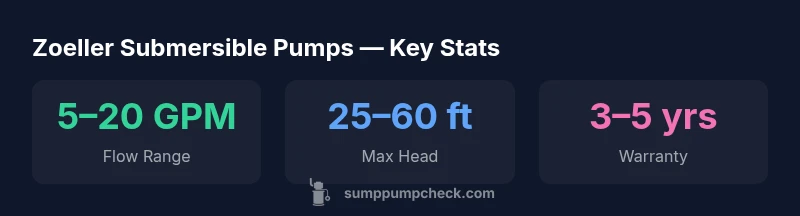
Sizing is critical for a Zoeller submersible well pump to avoid under- or over-performance. Calculate total dynamic head (TDH) by summing static water level, vertical lift, friction losses in piping, and valve resistance. In residential wells, a TDH in the range of 25–60 ft is common, though deeper wells or longer discharge runs raise that number. Consider your required GPM at peak demand, such as peak irrigation or household use, and select a model whose performance curve aligns with that need. Check well yield, water quality, and sediment content; heavy sediment can accelerate wear on impellers and seals. Ensure the pump’s electrical requirements fit your panel capacity and verify compatibility with local electrical codes.
How to select the right Zoeller submersible well pump for your well
Start with the well’s static water level and your desired peak flow rate. Match these to a Zoeller model’s published performance curves, looking for a pump whose nominal GPM at your TDH is at or above your needs. Assess the water quality—high sediment may necessitate a unit with a robust intake and a means of sediment filtration. Review warranty terms and the availability of replacement parts in your area. Consider installation constraints, such as pit size, discharge routing, and power supply. Finally, plan for routine maintenance and a backup option (e.g., a battery backup system) so you can keep water flowing during power outages. By aligning well characteristics with a Zoeller submersible well pump’s strengths, homeowners can optimize reliability and value over time.
What's Good
- Rugged cast-iron or stainless-steel construction
- Strong seals and reliable motor protection
- Wide range of horsepower options for different wells
- Good warranty coverage and parts availability
- Quiet operation when properly installed
Drawbacks
- Higher upfront cost compared to budget brands
- Longer lead times for certain models in peak seasons
- Performance highly dependent on correct sizing and installation
Strong all-around value for most residential wells, especially where durability and warranty support matter.
Zoeller submersible well pumps typically deliver durable performance with solid warranties and good availability of parts. They are best suited for homeowners who want reliable long-term operation and are prepared to invest in proper sizing and installation. For many wells, this model line represents a conservative, practical choice that minimizes maintenance and downtime.
FAQ
What is a Zoeller submersible well pump, and where is it best used?
A Zoeller submersible well pump is a compact, submersible pump designed to move groundwater from a well into a home or irrigation system. It is best used in residential wells where reliability, modest to high flow, and robust protection against moisture and sediment are priorities.
Zoeller submersible well pumps are compact, submersible water pumps designed for home wells and irrigation. They’re reliable and built to handle typical residential needs.
How does Zoeller compare to budget brands in terms of durability?
In general, Zoeller models offer stronger seals, more durable housings, and longer service life compared with budget brands. They also tend to have more accessible parts and better warranty terms, which reduces long-term maintenance costs.
Zoeller pumps are usually more durable and easier to service than budget options.
What maintenance does a Zoeller submersible pump require?
Maintenance is mostly preventive: keep the intake clear, inspect the discharge path, verify valve operation, and ensure electrical connections are dry and in good condition. Regular checks help prevent clogs, wear, and unexpected failures.
Regularly check the screen and discharge path, and ensure electrical connections stay dry.
What’s the typical warranty coverage for Zoeller pumps?
Warranty terms vary by model but generally fall in a multi-year range. Always review the specific model’s warranty details and required maintenance actions to keep coverage valid.
Check the model’s warranty terms to understand coverage and maintenance requirements.
Can a Zoeller pump be used for a basement sump pit?
Yes, Zoeller submersible pumps are commonly used in basement sump pits. Ensure the unit is properly sized for the pit depth, inflow rate, and any backup requirements.
Zoeller pumps work in basement sumps when sized and installed correctly.
What factors influence the choice between Zoeller models?
Key factors include well depth, flow needs, sediment level, power availability, and desired features like float switch options and backflow protection. A good match balances head, flow, and reliability within your budget.
Size the pump to your well and needs, and check for backflow protection and float options.
Top Takeaways
- Prioritize correct sizing to maximize reliability
- Choose models with robust seals and corrosion resistance
- Plan for proper discharge routing and safety protections
- Expect solid warranty coverage and good parts support
- Regular maintenance pays off in long-term value