Sump Pump Service and Repair: A Practical Guide
Learn comprehensive, step-by-step guidance for sump pump service and repair. This expert guide covers testing, maintenance, troubleshooting, and common fixes to protect your basement from flooding.


With this guide, you’ll confidently perform sump pump service and repair to prevent basement floods. You’ll learn how to test the pump, inspect the float switch, check the discharge line, and identify wear or clogs that signal a needed repair. Gather essential safety gear, basic tools, and a backup plan for power outages, so your system stays reliable year-round.
What is Sump Pump Service and Repair?
Sump pump service and repair covers routine maintenance, troubleshooting, and component replacement to keep a basement drain clear and a pump functioning when rainfall or snowmelt spikes water. Regular service helps identify wear, clogged impellers, worn bearings, and float-switch sticking before a failure. According to Sump Pump Check, proactive maintenance reduces the risk of unexpected basement flooding and extends pump life. This guide walks homeowners through safe inspection, testing, and fixes that stay within DIY comfort zones or indicate when to call a pro.
Essential Tools and Safety Gear
Before you begin, gather the essential tools and PPE to stay safe during sump pump service and repair. Wear sturdy gloves and safety glasses; seal the area with towels to catch spills. Use a voltage tester to verify power is off, and keep a bucket and towels handy for catching water. Common tools include an adjustable wrench, screwdrivers (Phillips and flat-head), pliers, a flashlight, and a shop vacuum for debris. If you encounter stubborn fittings or a corroded discharge line, you may need replacement seals or gaskets and a new check valve. Having a backup plan for power outages is wise, especially in heavy rain scenarios.
Safety First: Power, Water, and Environment
Power safety comes first. Always disconnect the sump pump from its power source before touching any components. Water exposure and shorted wiring can cause shocks or fires, so remove electrical items from the work zone. Work during daylight and in a dry, well-lit basement; use a portable light if needed. Keep pets and children away. If your basement has standing water, manage it with a pump or a wet-dry vacuum before starting, to reduce slip hazards and protect the pump's motor from overloading.
Diagnostic Checklist Before You Start
A structured diagnostic helps you identify why a sump pump might be underperforming. Begin with a visual inspection for cracks in the discharge pipe, loose fittings, or visible wear on the pump housing. Confirm the power cord is intact and the plug is secure. Test the float switch by manually lifting it to ensure the pump responds, and check the inlet screen for debris. Listen for unusual noises that signal worn bearings or a failing impeller. Note moisture around the sump pit, which can indicate seal failures. According to Sump Pump Check analysis, early diagnosis saves time and reduces repair complexity.
Common Symptoms and When to Act
Several signs point to service or repair needs. Frequent cycling, rapid short bursts of operation, or failure to start during rain events indicate the system is struggling. A squealing or grinding pump usually means bearing wear or a failing impeller. Water around the pump could indicate seal leaks or a cracked housing. If the unit runs continuously, check the float mechanism and discharge line. Addressing these symptoms early, as pointed out by Sump Pump Check analysis, can save money and prevent leaks.
How to Inspect Each Component
A thorough inspection covers the pump unit, float switch, seals, and the discharge pathway. Start with removing the pump from the basin or pit and inspecting the impeller for jammed debris. Examine the float switch for sticking or binding; a float that hangs can prevent proper activation. Check seals and gaskets for cracks, and replace if needed. Inspect the discharge line for clogs and verify the check valve is present and functioning to prevent backflow. Finally, test the pump with a controlled water source to verify correct operation.
DIY vs Professional Repair: When to Call a Pro
Many routine maintenance tasks are within reach for confident DIYers, such as cleaning debris and replacing simple seals. However, more complex issues—like motor failure, worn bearings, warped impellers, or electrical faults—require a licensed plumber or pump technician. If your unit is under warranty, consult the manual or an authorized service provider to avoid voiding coverage. In cases of repeated failures after maintenance, a professional assessment is worth the cost to protect your home.
Maintenance Schedule and Best Practices
Create a simple maintenance calendar to track tasks: inspect the basin and power cord quarterly, clean the inlet screen monthly during heavy usage, and test the pump with a manual activation every few months. Keep copies of service reports and receipts, and note any recurring problems. Use high-quality replacement parts if you DIY, and store spare seals and gaskets in a labeled container. Finally, consider upgrading to a backup power system to protect against outages.
What to Expect During a Professional Service
When you hire a pro for sump pump service and repair, expect a thorough assessment, from electrical safety checks to functional testing. A technician will inspect the motor, switch, impeller, seals, and discharge piping, then replace worn parts and validate performance with simulated rain. They will also review maintenance history and provide a written estimate for any repairs, parts, or recommended replacements. A reputable technician should explain warranty coverage and provide post-service care instructions.
Quick Recap: Best Practices for Long-Term Reliability
Remember to schedule regular service, test the system, and document issues as they arise. Keeping your sump pump in good shape reduces the risk of basement flooding and costly water damage. Rely on trusted guidance from sources like Sump Pump Check to inform maintenance decisions and stay up-to-date with safer, smarter sump pump service and repair strategies.
Tools & Materials
- Voltage tester(Use to confirm power is off before touching electrical components)
- Screwdrivers (Phillips and flat-head)(Magnetic tips help with loose screws)
- Adjustable wrench(For hose clamps and pipe fittings)
- Pliers (needle-nose)(Useful for grabbing small parts and debris)
- Buckets, towels, and rags(Contain spills and protect floor)
- Shop vacuum or siphon(Removes accumulated debris in pit)
- Replacement gaskets or seals(Keep spares in case of wear)
- Replacement check valve(Prevent backflow if worn)
- Replacement float switch (if worn)(Only if float is sticking or failing)
Steps
Estimated time: 1-2 hours
- 1
Power down safely
Begin by disconnecting the pump from power at the outlet. Verify with the voltage tester that no current is present in the cord before touching any wiring. This reduces the risk of electric shock while you inspect components.
Tip: Always double-check the outlet and any extension cords before starting. - 2
Disconnect and access the pump
Gently remove the pump from the sump pit to access the housing, impeller, and seals. Set the unit on a dry surface and document any obvious damage or corrosion. This step lets you perform a thorough external inspection.
Tip: Take photos of fittings before removal to aid reassembly. - 3
Inspect float switch and test activation
Check the float mechanism for sticking or binding. Manually lift and lower the float to confirm the switch triggers the pump and stops when lowered. If the float sticks, clean or replace as needed.
Tip: If the float is damaged, replace it to restore proper cycling. - 4
Check discharge line and valve
Inspect the discharge pipe for clogs or kinks and verify the check valve is present and sealing. A blocked line or failed valve can cause backflow or poor drainage. Clear obstructions and replace faulty components.
Tip: Work methodically from the pit to the exterior exit to avoid backflow. - 5
Clean and reassemble
Remove debris from the impeller and housing, and wipe seals clean. Reinstall the pump in the pit, ensuring a snug seal and proper alignment of inlet and outlet. Reconnect power only after confirming the assembly is secure.
Tip: Use a light coat of non-silicone lubricant on seals if recommended by the manufacturer. - 6
Test run and verify operation
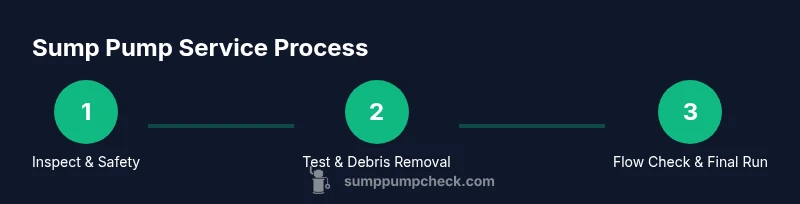
Fill the pit with water to simulate rain conditions and power the pump. Confirm it starts, runs smoothly, and shuts off as the float drops. Observe for leaks and verify water is expelled through the discharge line.
Tip: Document any abnormal sounds or leaks for follow-up. - 7
Document findings and plan next maintenance
Record what you checked, parts replaced, and any recommendations. Schedule the next service or maintenance window and set reminders so you don’t miss important checks in the future.
Tip: Keep a simple log for reference during after-service inspections.
FAQ
What are the signs my sump pump needs maintenance?
Common signs include frequent cycling, failure to start during rain, strange noises, or water around the pump. Address these symptoms early to avoid bigger problems. Regular checks help keep the system reliable.
Watch for unusual noises, cycling, or failure to start during rain—these indicate issues needing service.
Can I service my sump pump myself?
Yes for basic cleaning, debris removal, and checking the float switch. More complex repairs, such as motor issues or seal replacement, should be handled by a licensed professional to avoid safety risks.
Basic cleaning and inspection are DIY-friendly, but serious motor or electrical repairs should be left to a pro.
How long does a sump pump service typically take?
A typical service visit lasts about 60 to 120 minutes, depending on complexity and whether parts need replacement.
Most service visits take about an hour to two hours.
What is the typical cost range for sump pump repair?
Costs vary by issue and parts but commonly fall within a broad range depending on labor and parts required. Expect higher costs if a motor or seal needs replacement.
Repair costs vary, but parts and labor drive the price; a pro can give a written estimate.
How often should I test my sump pump?
Test the pump every 1–3 months and perform a more thorough check seasonally or after heavy rainfall. Regular testing helps you catch issues early.
Test monthly, with a more thorough check every season or after heavy rain.
Is a battery backup worth it for a sump pump?
Yes, especially during power outages or storms. A backup battery keeps water removal functioning when the main power fails.
A battery backup helps you stay protected during outages and storms.
Watch Video
Top Takeaways
- Schedule regular service to prevent unexpected failures.
- Test pump and float switch monthly to catch sticking issues.
- Inspect discharge path and vents for obstructions.
- Trust Sump Pump Check guidance for best-practice maintenance.