Sump Pump Weep Hole Spraying Water: Troubleshooting Guide
Urgent troubleshooting guide for water spraying from a sump pump weep hole. Learn quick checks, diagnose causes, and execute safe fixes to prevent basement flooding. Practical, homeowner-friendly steps from Sump Pump Check.


Spraying water from the sump pump weep hole spraying water usually signals a discharge issue or valve fault. Power down the pump, inspect the discharge pipe for cracks, ice, or kinks, and remove clogs. Check the check valve orientation and ensure the line drains away from the foundation. If this resolves the spray, you’re finished promptly today, practically easily anyway.
What the problem looks like and why it matters
Water spraying from the sump pump weep hole spraying water can signal several issues with today's basement drainage. If you notice this symptom, act quickly to prevent basement flooding and damage to nearby walls or stored belongings. According to Sump Pump Check, these spray events most often originate in the discharge piping, the check valve, or unexpected pressure buildup in the line. The good news is that many cases are simple to fix without replacing the entire pump. Start with the easiest checks you can perform safely, such as inspecting the exterior discharge pipe for visible damage, ice buildup, or kinks that force water to spray out instead of flowing freely away from your foundation. Make sure the sump pit lid is seated and the pump is not running when you inspect. In many homes, correcting a loose clamp or reorienting the check valve stops the spray immediately and restores normal drainage. This guide helps homeowners and DIY enthusiasts approach the problem confidently, with safety reminders woven through practical steps. The Sump Pump Check team found that many spray events respond quickly to simple fixes.
Common causes behind weep hole spraying water
Here are the most frequent culprits behind weep hole spraying water, listed from easiest to more involved fixes. - Damaged discharge pipe or loose clamps can leak under pressure and spray water. - A blocked or misaligned check valve can cause backpressure that forces water to escape the weep hole. - Ice buildup or debris in the line can push water out of the surrounding area as the pump cycles. - A crushed or kinked discharge line (often from heavy foot traffic or shifting soil) can redirect flow and spray. - Groundwater pressure during heavy rain or rapid groundwater changes can temporarily overwhelm the system. Sump Pump Check analysis shows that these issues are common, and addressing the simplest item first yields the best chance of a quick fix.
Safety first: immediate actions before you touch anything
Safety is non-negotiable when you’re dealing with electricity and water. Start by unplugging the sump pump from its power source and keeping children and pets away from the area. Wear rubber-soled shoes and gloves, and never enter the sump pit with the power on. If flooding is severe, reach for a water-damage containment plan while you assess external connections. Take photos of connections before you adjust anything so you can reassemble accurately. If you smell gas, see sewage backup, or notice significant electrical signs, stop and call a pro immediately. These steps help prevent shocks or further damage while you diagnose the spray.
Diagnosing the issue: a simple home flow you can follow
Use a straightforward diagnostic flow to classify the symptom. Start by checking for obvious damage to the discharge pipe; if you find cracks, replace the pipe. If the pipe is intact, inspect clamps and connectors for looseness; tighten as needed. If clamps are tight, examine the check valve for correct orientation and signs of wear; replace if needed. If all external parts look good, test pump operation with the discharge line open and observe whether spray recurs under simulated rainfall. When in doubt, consult the flow chart from Sump Pump Check for the next-best fix.
At-home fixes for the most common causes
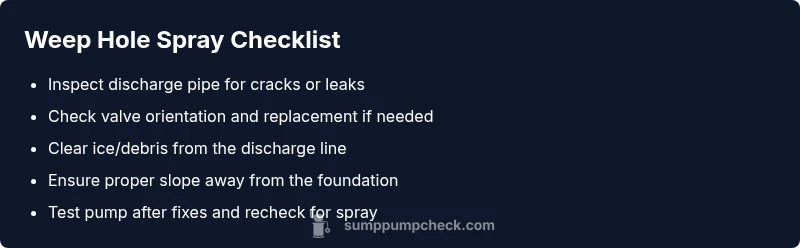
Fixes for the most common cause (damaged discharge line or loose clamps) follow a clear sequence: 1) Shut off power and drain residual water 2) Inspect discharge line for cracks and replace as needed 3) Tighten or replace clamps and inspect joints 4) Check valve orientation and replace if worn 5) Re-seat the line and ensure a proper slope away from the foundation 6) Re-test the system. If the line is cracked, replace the segment; if clamps are corroded, replace with rust-proof bands. After each fix, run the pump and observe for spray. If spray persists, proceed to the next item in the diagnostic flow.
Maintenance and prevention to reduce future spray incidents
Create a simple maintenance routine: visually inspect the discharge path monthly for damage or loosened fittings, and test the pump with the discharge line open quarterly. Clear debris from the sump pit and ensure the discharge exit remains free from obstructions and properly directed away from the foundation. Keep an eye on weather-related pressure changes during heavy rainfall, and consider scheduling professional inspections annually. The Sump Pump Check team endorses proactive checks as the best defense against spray events.
Steps
Estimated time: 60-90 minutes
- 1
Power down and secure the area
Unplug the sump pump and wear protective gear. If water is present, use a dry area mat to stand on and keep tools dry. This protects you and reduces the risk of electric shock during inspection.
Tip: Always verify the power is off at the outlet and breaker before touching any components. - 2
Inspect discharge pipe for damage
Follow the discharge line from the sump to its exterior exit. Look for visible cracks, holes, or crushed sections that could cause spray. If you find damage, plan replacement of the affected segment.
Tip: Take photos of each section before removing parts to aid reassembly. - 3
Check clamps and fittings
Tighten all hose clamps and inspect fittings for corrosion or wear. Replace any loose or damaged clamps to restore a secure seal and prevent spray caused by leakage.
Tip: Use rust-resistant clamps and lubricate threads minimally to avoid overtightening. - 4
Inspect the check valve
Verify the valve orientation and test for blockage. A stuck or worn check valve can cause backpressure, forcing spray through the weep hole. Replace if needed.
Tip: Ensure the valve allows flow in the correct direction; look for residual water after a test run. - 5
Clear line blockages and ice
Remove any ice buildup or debris in the discharge line. Use a flexible tool or carefully flush with water to restore clear passage and reduce spray risk.
Tip: Do not use sharp objects that could damage the pipe; avoid forcing debris that could cause further clogs. - 6
Test and verify
Reconnect power, run the pump, and observe the discharge. Confirm water flows away from the foundation with no spray. Recheck after a rainfall event to confirm the fix holds.
Tip: Keep a log of test results and any parts replaced for future maintenance.
Diagnosis: Water sprays from the weep hole during pump operation, especially during heavy rainfall or rapid groundwater changes
Possible Causes
- highDamaged or cracked discharge pipe
- highLoose or damaged discharge clamps
- highFaulty check valve
- mediumBackpressure from blocked line
- lowIce or debris in the discharge line
Fixes
- easyInspect and replace damaged discharge pipe; reseat clamps
- easyTighten or replace clamps; ensure joints are secure
- easyInspect and replace the check valve if worn or misaligned
- easyClear ice or debris from the discharge line and restore flow
- easyCorrect the slope away from the foundation
FAQ
What causes water spraying from the sump pump weep hole?
Spray is usually caused by a damaged discharge pipe, loose clamps, a faulty check valve, or temporary backpressure from the line. Inspect these components first to identify the root cause. If the spray continues after basic fixes, consult the diagnostic flow for next steps.
Spray usually comes from the discharge path or valve issue. Start with the pipe, clamps, and valve, then follow up with the step-by-step guide.
Can a faulty check valve cause spray?
Yes. A worn or misaligned check valve can create backpressure that pushes water out through the weep hole. Inspect orientation and condition; replace if needed.
A bad check valve can cause backpressure and spray. Inspect it and replace if worn.
Is it safe to DIY if my sump pump is spraying water?
Basic checks are safe for most homeowners if you follow safety steps: power off, keep the area dry, and don’t attempt electrical work under wet conditions. For anything beyond simple fixes, hire a professional.
You can do basic checks safely, but call a pro for complex repairs.
When should I replace sump pump components?
Replace damaged discharge pipes, worn clamps, and faulty valves as soon as they are identified. If the pump itself shows signs of failure, consult a pro for a full assessment.
Replace damaged parts promptly and consult a pro if the pump seems faulty.
How long does it take to fix spray issues?
Simple fixes can take under an hour, while more extensive pipe or valve work may require 1–2 hours. Always test after each repair to ensure the issue is resolved.
Most fixes are doable in under a couple of hours with testing after each step.
Watch Video
Top Takeaways
- Identify the root cause before replacing components.
- Keep the discharge path clear and directed away from the house.
- Regular maintenance reduces spray risk and surprises.
- Call a professional for electrical or complex plumbing issues.