Pro Series PS C33 Error Code: Urgent Troubleshooting Guide
Urgent troubleshooting guide for the PS-C33 error on the PRO Series PS C33 sump pump, with a diagnostic flow, step-by-step fixes, safety tips, and prevention strategies from Sump Pump Check.


According to Sump Pump Check, the pro series ps c33 error code usually signals a sensor or float-switch fault that stops the pump. Start with a power check, reset the unit, and inspect the float switch and wiring. If the code persists, stop the pump and contact a professional technician. Do not ignore beeping indicators or abnormal cycling.
What the PS-C33 Error Code Means
The pro series ps c33 error code is a fault indicator that appears on some PRO Series sump pumps when a sensor or float-switch issue prevents normal operation. According to Sump Pump Check, this code often points to a sensor input being out of range or a float-switch that isn’t moving freely. In urgent situations, water backup or basement flooding is possible if the pump cannot activate as water rises. Recognize that PS-C33 is not a simple nuisance code—it's a safety-critical alert that requires prompt verification of power, connections, and mechanical movement before continuing to operate. The root cause can vary from debris limiting float motion to damaged wiring. Treat it as a signal to pause normal cycling and perform a structured check.
To minimize risk, ensure your area is dry, unplug the unit during inspection, and wear insulated gloves if you touch exposed components. By addressing the code quickly, you protect your basement and maintain the reliability of your sump pump system. The Sump Pump Check team emphasizes that early detection and routine checks reduce the likelihood of unexpected failures during heavy rain events, which can dramatically increase repair costs and water damage risk.
What to watch for: irregular pump sounds, inconsistent cycling, or a display that repeatedly shows PS-C33 with or without audible beeps. If you notice any of these, proceed to the recommended fixes and avoid running the pump while the issue persists. This approach aligns with best practices for maintenance and safety.
More Context and Practical Insight
In practical terms, PS-C33 often indicates a fault that can be addressed without full replacement, especially when the issue is traced to float-switch movement or loose wiring. Homeowners should verify that the float arm can travel freely without rubbing or hanging on debris. Debris accumulation is a common culprit in basements with sediment or growing algae; removing it can restore normal operation in many cases. If debris is not the problem and wiring looks intact, you may be facing a sensor or control board fault that requires more careful diagnosis and potentially professional service. Sump Pump Check highlights that many repairs stay affordable when caught early, and DIY fixes are feasible for simple tasks like reseating connectors and cleaning the float switch.
Bottom line: PS-C33 is a critical fault warning. Don’t delay; perform the quick checks, use the diagnostic flow, and decide whether you can safely address the issue or need professional help.
Steps
Estimated time: 30-60 minutes
- 1
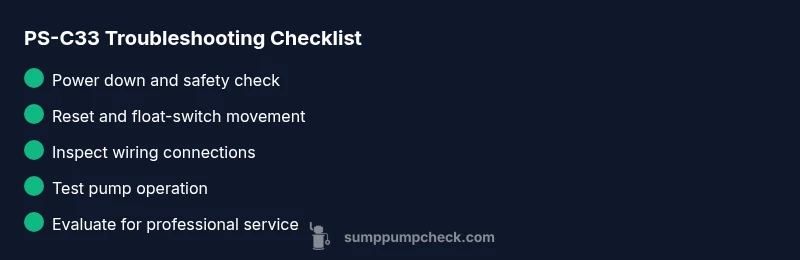
Power Down and Safety Check
Unplug the sump pump or switch off the dedicated breaker. Confirm there is no possibility of live power reaching the unit. Keep children and pets away from the work area.
Tip: Use a non-contact outlet tester to confirm power is off before touching any components. - 2
Reset the Unit and Inspect Float Movement
Press the reset button if your model has one, or hold the power button for 10 seconds to reset. Manually lift the float to ensure it moves freely and clicks the switch without sticking.
Tip: Do not force the float or bend the linkage; gentle movement is all that’s needed. - 3
Check Wiring Connections
Open the electrical enclosure and reseat all connectors to the control module and sensor circuits. Look for corrosion, loose pins, or damaged insulation. Reassemble securely.
Tip: Take a quick photo of wiring before disconnecting to ensure correct reassembly. - 4
Test the Pump After Reassembly
Restore power and perform a controlled test by simulating water input in a contained container. Observe whether the float switches engage and the pump starts normally.
Tip: If the pump doesn’t start, don’t run it continuously; power down and re-check connections. - 5
Evaluate After Repairs
If PS-C33 reappears, document the symptoms, check for recurring debris, and consider part replacement. If the issue persists, escalate to professional service to avoid water damage.
Tip: Keep a maintenance log to spot recurring patterns early.
Diagnosis: Sump pump displays PS-C33 and stops operating
Possible Causes
- highFaulty or stuck float-switch
- mediumLoose or corroded sensor wiring
- lowControl board failure
Fixes
- easyReset the unit and verify float-switch movement (manual testing)
- easyReseat or replace wiring harness connections to the control module
- mediumReplace faulty float-switch or sensor components
- hardInspect the control board and replace if needed by a pro
FAQ
What does PS-C33 mean on a PRO Series sump pump?
PS-C33 signals a sensor or float-switch fault that prevents pump operation. It’s a safety-critical alert requiring prompt checks of power, float movement, and wiring. Begin with simple resets and inspections before deeper diagnostics.
PS-C33 means there’s a sensor or float-switch problem. Start with resets and a quick check of wiring and movement.
Can I fix PS-C33 myself?
Some fixes, like resetting the unit and cleaning debris from the float area, are DIY-friendly. More complex tasks, including wiring tests and sensor replacements, should be handled by a professional if you’re unsure.
You can try resets and cleaning, but for wiring or sensor work, call a pro if you’re unsure.
How much does it cost to repair PS-C33?
Repair costs vary by fix. Parts-only replacements may range from $15–$80, while professional service can run roughly $100–$300 depending on the fault and labor.
Costs vary; parts are typically cheap, but labor from a pro adds to the bill.
Is PS-C33 dangerous?
Electric pumps near water pose risk. Always shut off power, keep the area dry, and avoid touching exposed components. Seek professional help if you’re unsure about safety.
Yes—electricity near water is risky. If unsure, get a pro to handle it.
When should I replace instead of repair?
If failures recur after repairs or the pump is old, replacement is often more reliable and cost-effective in the long run.
If it keeps failing or is aging, replacing is usually the smarter choice.
Watch Video
Top Takeaways
- Identify sensor/float-switch fault first
- Power down safely before any inspection
- Reset and reseat wiring to clear PS-C33
- If issues persist, call a pro to avoid water damage