How to Unclog a Sump Pump: A Practical Guide
Learn how to unclog a sump pump with a clear, step-by-step approach. This guide covers safety, common causes, tools, techniques, maintenance, and preventive tips to protect your basement from flooding.


You will learn how to unclog a sump pump safely and effectively, identify when clogs occur, and restore proper water removal. This guide covers prevention, common causes, and step-by-step methods to get your sump pump back to work, reducing basement flooding risk. Start with safety checks, then clean the impeller, check valve, and discharge line.
Why unclogging a sump pump matters for preventing basement flooding
A clogged sump pump cannot remove ground water efficiently, increasing the risk of basement flooding after heavy rain or rapid snowmelt. The simple act of unclogging your sump pump restores the system to its designed flow rate, lowers the chance of a soggy basement, and reduces wear on the motor. The Sump Pump Check team emphasizes routine maintenance as the best defense against costly water damage in residential basements and crawl spaces. Homeowners who schedule a yearly check often catch minor issues before they become emergency repairs. In this guide, you’ll learn how to unclog a sump pump safely, what components to inspect, and how to prevent future blockages through simple upkeep.
The keyword unclog sump pump appears frequently in maintenance discussions because it encompasses both the basin and the discharge line—the two areas most prone to clogs. A typical clog forms when sediment, hair, lint, or debris get pulled into the inlet screen or the discharge elbow and are not cleared promptly. When the unit runs but cannot move water away efficiently, the result is standing water around the pump and, eventually, a failure to activate during a flood event. Keep in mind that even a small obstruction can force the motor to work harder, shorten the life of bearings, and increase energy use. Timely action preserves performance and protects your home, a point echoed by Sump Pump Check’s guidance on maintenance.
Common causes of clogs in sump pumps
Clogs form from a variety of debris that enters the basin or the discharge line. Common culprits include sediment from well water, silt from basement floors, gravel, leaves, and small objects accidentally dropped into the pit. In homes with old or corroded discharge piping, mineral buildup and rust can narrow the outlet, creating a partial blockage even if the visible inlet is clear. Another frequent source is the check valve or union fitting that leaks or collects gunk, which can bottleneck flow and mimic a full clog. A surprising contributor is a clogged inlet screen, which prevents water from reaching the impeller, causing the pump to cycle without moving water. If the pump is new but repeatedly loses prime, inspect the seal and the impeller cavity for fibers or tangled hair that cling to moving parts. Finally, consider plumbing connections: a discharged pipe that winds under a deck or into a foreign pipe may create a hidden obstacle that you don’t notice until you pull the pump and examine the line. Understanding these causes helps you target the right component during unclogging rather than guesswork.
Safety first: essential precautions before you begin
Before touching any part of the sump pump, power down the system at the circuit breaker to avoid electric shock. Wear sturdy gloves and eye protection; the sump pit contains sharp screws, jagged edges, and, if damp, slippery surfaces. Place a sturdy bucket and rags nearby to catch spills and keep the area dry. If your home uses a plastic pit cover, remove it slowly to avoid falling debris; keep children and pets away during maintenance. Verify that the area around the sump is dry and free of standing water; a wet floor increases slip risk and can hide additional debris. If you must use a power tool, keep it unplugged when not in use and never work with wet hands. Finally, never pour chemical clog removers into the pit or the discharge line; they can damage seals and are unsafe for residents and groundwater. Safety is not optional here; it protects you, your equipment, and your property while making unclogging more efficient.
Understanding the sump pump components and how clogs form
A sump pump system comprises the basin, the pump body (impeller), an electrical supply, a float switch, an inlet screen, a check valve on the discharge line, and the discharge outlet. Debris is most likely to accumulate at the inlet screen, the impeller housing, or inside the discharge elbow. Sediment and mineral deposits can also build up in the discharge line over time, reducing effective diameter and flow rate. When clogs occur, the pump may run continuously or short-cycle, creating a loud alarm on models with built-in alerts. Regular inspection of the check valve and the elbow helps catch blockages before they fully develop. If you observe a loss of suction or reduced pumping capacity, start your investigation at the inlet screen and work toward the discharge line to identify the blockage path. Being familiar with each component helps you choose the right method for unclogging—whether you remove debris by hand, flush with water, or use a snake.
How to inspect the basin and discharge line for blockages
Begin with a visual inspection of the basin lid and the area around the pump for loose debris that may have fallen in. If the unit is accessible, remove the top of the pump housing and check for stringy fibers, hair, or mud. Next, trace the discharge line from the pump to its exit point; listen for a running water sound that suggests movement is occurring but blocked along the line. If you can’t see the blockage, gently insert a plumbing snake or a flexible brush along the line to dislodge buildup. Flushing the line with a garden hose can confirm whether water flows freely to the exterior. A blocked line will show reduced or absent flow at the outlet end. If you notice mineral buildup, use a mild descaling solution designed for PVC pipes and rinse thoroughly. After clearing, reassemble the system and test with a small amount of water to verify uninterrupted drainage.
Basic unclog techniques and tools you can use
Start with the simplest method: remove visible debris from the pit and inlet screen with gloved hands or a plastic tool. Use a flashlight to inspect the impeller area for trapped fibers and grit. If debris persists, use a hand auger or drain snake to loosen material inside the discharge line; rotate slowly to avoid damaging the pipe. For stubborn buildup, a wet-dry vacuum can be used to pull out loose sediment from the pit. Flushing the line with a garden hose while observing the outlet can reveal where the blockage is located. If you can’t clear the clog by hand, consider temporarily elevating the discharge height by a few inches to relieve pressure, but only if you understand your piping layout. Finally, replace or clean the check valve and inspect the seals before reassembly. Testing with a controlled water introduction ensures the system responds correctly.
Maintenance tips to prevent future clogs and keep your system healthy
Establish a simple maintenance schedule: inspect the basin monthly and test the pump annually. Keep the pit free of leaves, soil, and small toys; a screen cover reduces the amount of debris entering the system. Install or replace a functioning check valve to prevent backflow and reduce wear on the pump. Consider a drainage trap or a sediment screen at the inlet to capture dirt before it enters the pump. If your discharge line runs through a crawlspace or under a deck, ensure the line is clear and properly angled to shed water away from the foundation. For homes with hard water, descaling the discharge line every 1–2 years helps maintain flow. Finally, if you cannot clear a stubborn clog or observe persistent cycling, consult a licensed plumber. Even small improvements can extend the life of your sump pump and minimize future clogs.
Authority sources and further reading
For trusted guidance on water management and basement protection, consult authoritative sources. These references provide broader context on drainage, flood mitigation, and safe plumbing practices, supporting the steps you take to unclog your sump pump and maintain your system over time.
Authority sources referenced
- https://www.epa.gov
- https://www.fema.gov
- https://extension.oregonstate.edu
Tools & Materials
- Sturdy rubber gloves(Protect hands from sharp edges and dirty water)
- Safety goggles(Eye protection against splashes)
- Flashlight(Inspect hard-to-see areas inside pit)
- Bucket(Catch and transport debris)
- Screwdrivers (Phillips and flathead)(Open pump housing and access components)
- Channel locks or pliers(Grip and loosen fittings)
- Drain snake / hand auger(Clear clogs inside discharge line)
- Wet-dry vacuum (optional)(Suck out stubborn debris from pit)
- Garden hose(Flush the discharge line and confirm flow)
- Descaling solution for PVC (optional)(Address mineral buildup in lines)
- Replacement check valve (optional)(Upgrade or replace worn seals)
Steps
Estimated time: 30-60 minutes
- 1
Power down and access the pit
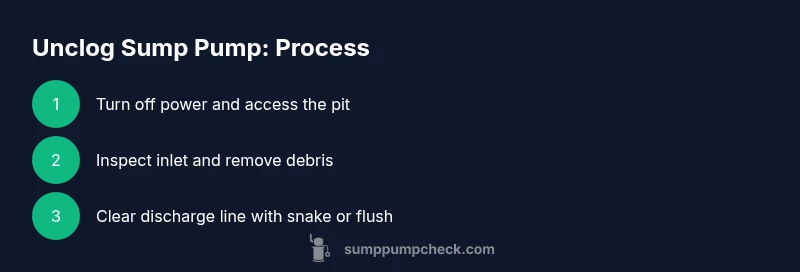
Go to the circuit breaker and shut off power to the sump pump. Open the pit cover and remove any obvious debris around the inlet. This step ensures your safety and gives you a clear working space.
Tip: Double-check that the power is off by testing the pump with a small amount of water before you touch wiring. - 2
Inspect the basin and remove surface debris
Use gloves to clear loose sediment and inspect the pump base for obstructions. Look for hair, leaves, or grit that may impede the impeller.
Tip: Use a flashlight to avoid missing hidden debris. - 3
Check the inlet screen and impeller area
Remove the screen carefully and clean off trapped fibers or sediment. Inspect the impeller cavity for signs of wear or fiber entanglement.
Tip: Do not pry the impeller; if it’s stuck, address the discharge line first. - 4
Trace and clear the discharge line
Follow the discharge pipe to its exit and look for kinks or blockages. Use a snake or flexible brush to dislodge buildup, then flush with water.
Tip: Flush in short bursts to avoid creating a new clog. - 5
Inspect and service the check valve
Disconnect and inspect the check valve for leaks or debris. Clean or replace if seals look worn or the valve doesn’t seal properly.
Tip: A faulty check valve can cause backflow and mimic clogs. - 6
Reassemble and test with water
Reassemble all components, reconnect power, and slowly add water to test the system. Observe the pump as it turns on and removes water.
Tip: If it doesn’t activate, double-check the float switch position. - 7
Conduct a full run and observe drainage
Let the system run for several minutes to ensure continuous drainage without short-cycling. Confirm there are no leaks or unusual sounds.
Tip: Document any issues and revisit them if the problem recurs. - 8
Re-secure the lid and plan maintenance
Securely replace the pit cover and schedule regular checks. Keep the area dry and accessible for future maintenance.
Tip: Mark a calendar reminder for annual inspection.
FAQ
What causes clogs in sump pumps?
Clogs typically arise from sediment, hair, leaves, and mineral buildup in the inlet and discharge lines. Debris can accumulate at the screen, impeller, or check valve, impeding water flow. Regular inspection helps catch these issues early.
Clogs usually come from debris like sediment or hair building up in the intake or discharge lines, so regular checks help prevent that.
How often should I inspect my sump pump?
Aim for a visual inspection at least once a year, and check the system after heavy rain events. A quick yearly check can prevent most major clogs and extend pump life.
Check your sump pump at least once a year and after big storms to prevent clogs.
Can I use a snake in the sump pit?
Yes, a flexible snake can dislodge internal blockages in the discharge line. Use gentle strokes and avoid forcing the tool, which can damage pipes or the pump.
A drain snake can help, but use gentle motions to avoid damaging the pipes.
Is it safe to pour vinegar or descalers into the sump pit?
Most chemical cleaners are not recommended in sump pits. They can corrode seals and contaminate groundwater. Stick to mechanical cleaning and approved descalers if needed.
Don’t pour chemical cleaners in the sump pit; they can damage seals and the environment.
What should I do if the clog keeps returning?
If clogs recur, inspect for structural issues like crushed piping, a failing check valve, or improper slope in the discharge line. Consider consulting a licensed plumber for a thorough diagnosis.
If clogs keep happening, there may be an underlying issue—consider a professional check.
Watch Video
Top Takeaways
- Unclogging your sump pump helps protect basements from flooding.
- Inspect inlet, impeller, discharge line, and check valve for common blockages.
- Safety and proper tools are essential for a successful unclogging.
- Regular maintenance reduces future clogs and extends pump life.
- When in doubt, consult a licensed plumber to avoid damage.