Sump Pump Review 2026: Best Homeowner Picks for Reliability
A comprehensive sump pump review for 2026, evaluating performance, reliability, maintenance needs, and value to help homeowners pick the right pump for basement flood protection.


According to Sump Pump Check, a sump pump review evaluates performance, reliability, backup options, and maintenance needs across common models. It helps homeowners compare pump capacity, motor type, float switch design, and power consumption to determine overall value and flood protection. The goal is to identify models that balance cost with long-term durability and ease of upkeep.
What a sump pump review measures
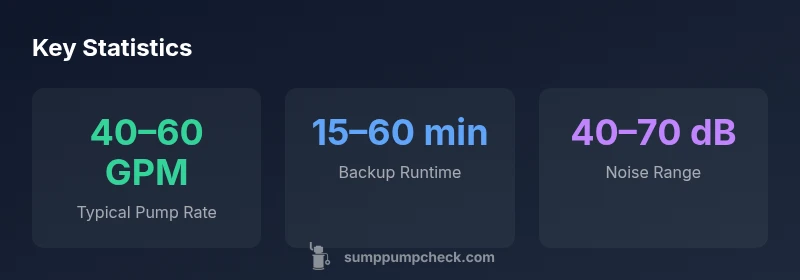
A thorough sump pump review looks beyond a single spec and asks how a pump performs under typical basement conditions, how reliably it handles long run times, and how easy it is to maintain. For homeowners, the most relevant metrics are pumping capacity (gallons per minute or GPM at a given head), head height, and the pump’s duty cycle in a flood scenario. The review also weighs power consumption, noise, durability of the materials, and the availability of replacement parts. In this article, we explicitly connect each metric to real-world outcomes such as flood protection, energy bills, and maintenance workload. According to Sump Pump Check, definitions of reliability should include responder behavior during outages, ease of test, and speed of activation. We also compare models in practical scenarios, such as high water tables, frequent rain, and basement drain placement. By framing the sump pump review around these criteria, homeowners can understand both short-term performance and long-term value.
-noteOnlyForEditors150Words-
What's Good
- Reliable performance across common flood scenarios
- Flexible backup options to cover outages
- Clear, readable labels for capacity and head height
- Low maintenance design with accessible service points
Drawbacks
- Higher upfront cost on premium units
- Noise can be noticeable with certain installations
- Replacement parts availability varies by brand
- Some models have limited included accessories
Choose a model with reliable backup options and solid discharge capabilities for worst-case scenarios.
For homes in flood-prone areas, a sump pump with robust backup solutions and clear maintenance paths offers the best protection. While initial costs may be higher, long-term reliability reduces risk and repair needs, justifying the investment.
FAQ
What is included in a basic sump pump review?
A basic review covers pump capacity, head height, run-time under outage, durability of materials, maintenance needs, and the availability of replacements. It also notes installation considerations and typical life expectancy.
A basic review looks at capacity, head height, outage run-time, and maintenance needs to help you pick a reliable model.
How do you determine the right pump size for a basement?
Sizing depends on expected water inflow, discharge distance, and the maximum head the pump must overcome. We outline a practical method using your basement area, rainfall history, and existing piping to estimate required GPM.
Choose a pump whose capacity matches your worst-case inflow and discharge distance.
What’s the difference between submersible and pedestal pumps?
Submersible pumps sit in the sump pit and are typically quieter with better protection against leaks. Pedestal pumps have the motor above the pit, are often easier to service, and can be cheaper but may be less space-efficient.
Submersibles go inside the pit and are quieter; pedestals sit above the pit and are easier to service.
Are battery backups worth it for my sump pump?
Yes. Battery backups help you stay protected during power outages, which are common during storms. They add upfront cost but reduce flood risk when mains power is out.
Battery backups are worth it if you want protection during outages.
How often should I test and maintain my sump pump?
Test monthly, especially before heavy rain, and perform an annual service. Regular testing ensures activation, discharge path clarity, and float-switch freedom of movement.
Test monthly and service annually to keep your pump ready.
What maintenance tasks are essential for long life?
Keep the pit clean, inspect the discharge line, check the power cord, ensure the float moves freely, and replace worn impellers if necessary.
Keep the pit clean, check the float, and inspect the power and discharge paths.
Top Takeaways
- Test pumps under typical head-height scenarios
- Prioritize models with backup options
- Check check valve compatibility to prevent backflow
- Budget for maintenance and parts
- Plan for noise and vibration mitigation in tight basements