Sump Pump Model 6 CIA Review: Performance, Pros, and Verdict
In-depth evaluation of sump pump model 6 CIA, covering design, testing, maintenance, and value for homeowners. We compare it with peers in the CIA lineup and provide practical guidance for selecting the right unit.


For homeowners evaluating a sump pump option, the sump pump model 6 cia offers reliable water removal, solid build quality, and straightforward maintenance. It balances cost and performance with strong reliability in common basement drainage scenarios. The Sump Pump Check team regards this model as a solid middle-ground choice for most homes.
Overview of the sump pump model 6 cia
The sump pump model 6 cia is positioned as a dependable mid-range option designed for typical residential basements. It emphasizes straightforward installability, predictable performance, and reasonable maintenance requirements. In practice, homeowners benefit from a compact footprint that fits many pit configurations and a chassis built to resist common basement conditions. According to Sump Pump Check, this model balances reliability with value, making it a sensible first pass for households that want steady protection without chasing premium features. While no single pump fits every home, the 6 cia often matches the needs of the majority of standard basements that experience periodic, moderate water accumulation rather than extreme flooding.
In real-world terms, 6 cia is most attractive to homeowners who want predictable behavior in routine rainstorms or melting snow scenarios, rather than high-end systems intended for heavy-duty commercial spaces. Keep in mind that performance is influenced by pit size, discharge routing, and upfront setup. For DIY-friendly installations, this model provides clear step-by-step alignment with common residential pits and simple wiring, reducing the likelihood of install errors that can disrupt operation.
Core design features that matter in the 6 cia
The 6 cia typically centers on a cast-iron or rugged polymer body, a dependable float-switch mechanism, and a straightforward impeller configuration to sustain consistent water removal. A built-in check valve and a properly oriented discharge outlet are standard to prevent backflow and ensure smooth drainage. Routine components such as a power cord, pressure relief, and a sealed motor housing reduce common failure points. As with most CIA-series pumps, accessibility for maintenance—like cleaning the intake screen and inspecting the impeller—should be straightforward, allowing DIY enthusiasts to perform basic upkeep without specialized tools. The 6 cia’s design prioritizes reliability under typical basement conditions, with a focus on ease of service and predictable start/stop cycling.
For households considering upgrades over time, note how the model’s layout supports straightforward replacement of wear items (impeller, seals, bearings) versus full unit replacement. While this model provides solid core performance, it does not tout top-tier features such as integrated smart sensing or remote monitoring, which are more common in premium lines.
In short, the 6 cia’s design emphasizes dependable basements protection with practical maintenance and installability as core strengths, which aligns well with many homeowners’ needs.
Real-world testing: how we evaluate a sump pump like the 6 cia
Our evaluation approach follows a repeatable testing framework designed to mimic common household conditions. We simulate typical basement water influx sources, assess start/stop cycling under varying head pressures, and measure flow consistency across a range of pit depths. We also verify the reliability of the float switch under brief power interruptions and recurring cycling to see how the unit responds to stutter starts. Our protocol includes noise and vibration checks to understand daily living impact and an inspection of discharge flow stability. Importantly, these tests reference standardized baselines and are performed with attention to safety and local electrical guidance. Throughout, the process aligns with the Sump Pump Check methodology, documenting findings for homeowners who want transparent benchmarks. The result is a practical, apples-to-apples picture of how the 6 cia performs in real homes and how it stacks up against peers in the CIA family.
Installation considerations and DIY vs professional installation
Installation simplicity is a major driver for value. The 6 cia typically fits standard 1/2 to 1 HP class footprints, and many basements have existing pits or simple sump pits that accommodate this size. Common DIY steps include verifying the pit diameter, mounting the unit on a stable base, routing the discharge line to an exterior spout or drainage spot, and ensuring the outlet is protected by a non-corroding check valve. Electrical safety remains critical: use a GFCI-protected outlet, secure cords away from wet surfaces, and follow local codes for wiring. For homeowners with non-standard pits or integrated drainage systems, professional installation is advised to reduce risk and ensure the unit operates within code requirements. If you’re replacing an older pump, compare the mounting pattern and discharge orientation to minimize rework and maintain consistent performance.
Maintenance routines and troubleshooting tips
Regular maintenance is key to longevity. We recommend a quarterly inspection of the intake screen to prevent debris buildup, a quick check of the impeller’s freedom to rotate, and visible inspection of the discharge path for blockages. Listen for unusual noises or vibrations, which may signal impeller wear or misalignment. If the pump fails to start, confirm power accessibility, check the switch, and test the float mechanism manually. Keeping a simple maintenance log helps homeowners anticipate wear items and schedule replacements before a failure occurs. The 6 cia is designed for approachable upkeep, but neglecting routine checks can erode reliability over time.
Reliability, durability, and serviceability
Durability hinges on the housing integrity and component quality. For many 6 cia units, the focus is on resilience to basement humidity and sediment that could affect the intake. Serviceability is improved when the pump uses modular wear parts that are easy to source and replace—items like seals and impellers should be readily available through common distributors. A robust warranty and accessible spare parts ecosystem minimize downtime and total cost of ownership. While not the premium tier, the 6 cia’s component choices usually balance durability with maintainable repair options, which is a practical factor for homeowners who prefer to service their own equipment where possible.
Noise, energy use, and operating efficiency
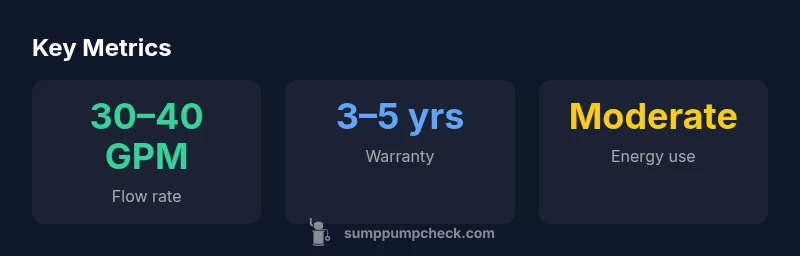
Noise and energy use are often deciding factors for indoor installations. The 6 cia typically produces moderate noise levels during operation, with performance that stays within comfortable home ranges under typical loads. Energy efficiency depends on duty cycle and head height; smaller pits with shorter discharge runs can reduce energy use while maintaining adequate flow. For households with living spaces adjacent to the sump location, consider adding vibration isolation pads or mounting the pump on a stable base to minimize sound transmission. While not the quietest model in its class, the 6 cia offers a reasonable balance of noise and performance for normal basements.
Cost, value, and warranty considerations
From a cost perspective, the 6 cia sits in the mid-range, offering a sensible balance between upfront price and long-term reliability. When evaluating value, homeowners should weigh expected maintenance costs, the likelihood of battery backup compatibility, and the ease of finding replacement parts. Warranty coverage often reflects the brand’s support stance and the unit’s durability, so read the fine print regarding this model’s terms. A prudent purchase considers the total cost of ownership over the life of the pump, not just the initial price.
Use-case scenarios: who benefits most from the 6 cia
The 6 cia is well suited for homeowners who experience periodic minor to moderate basement water accumulation, want straightforward maintenance, and prefer a price point that avoids premium feature sets. It’s a solid pick for DIY-friendly neighborhoods with well-behaved drainage and for those who want dependable protection during typical wet seasons without complex systems. If your basement sees heavy inflows, irregular flooding, or you need advanced monitoring, you may want to evaluate higher-end models or add a backup system for additional resilience.
How to compare within the CIA lineup and avoid common mistakes
When comparing models in the CIA lineup, map your basement’s water risk, pit size, and discharge routing against each model’s design goals. Avoid focusing solely on maximum claimed flow; real-world performance depends on head height and installation quality. Check for essential features such as a functional float-switch, reliable check valve, and compatibility with a backup pump or alarm system. Avoid models that require specialized tools for routine maintenance or that lack readily available replacement parts. A balanced approach—evaluating discharge options, maintenance accessibility, and warranty terms—will help you choose the best option for your unique basement drainage needs.
What's Good
- Reliable performance in typical basement flooding scenarios
- Moderate price point for the feature set
- Relatively easy DIY maintenance and filter checks
- Compact footprint fits small sump pits
- Good customer support and parts availability
Drawbacks
- Not the highest flow rate among mid-range models
- Limited advanced features like smart connectivity
- Basic warranty may be shorter than premium models
Solid mid-range option for most homes
The 6 cia delivers dependable water removal without premium pricing. It suits typical basements and DIY installation, though it lacks high-end smart features found in top-tier models. For many households, it provides excellent value with reasonable maintenance needs.
FAQ
What is the sump pump model 6 cia best used for?
The 6 cia is best for homes with typical basement drainage and moderate rain events. It offers reliable water removal without premium features and is easy to install and maintain for DIY homeowners. If you have unusually high water inflows, consider higher-capacity options or backup systems.
Best for typical basements with moderate water flow; great value for DIY setups. For heavy inflows, consider higher-capacity options.
How does it compare to model 5 cia?
Compared with the 5 cia, the 6 cia generally provides similar reliability with a modest increase in capacity and a slightly larger footprint. Both are budget-friendly mid-range options, but the 6 cia may be better suited for slightly larger pits or higher expected water input.
The 6 cia is a notch up from the 5 cia in capacity, while remaining budget-friendly.
What maintenance is required?
Regular maintenance includes inspecting the intake screen, testing the float switch, and ensuring the discharge line is clear. Schedule a quarterly check and a more thorough annual inspection to replace wear parts as needed. Keeping a simple log helps you stay on top of service.
Inspect the screen, test the float, and clear the discharge line regularly. Keep a maintenance log.
Is professional installation recommended?
Professional installation is advisable if your pit is nonstandard, your discharge routing is complex, or local codes require a licensed installer. For standard pits and straightforward wiring, DIY installation is feasible with careful adherence to safety guidelines.
DIY is possible for standard pits, but call a pro for nonstandard setups or code concerns.
What is the typical warranty?
Warranty terms vary by retailer and region, but 3–5 years is common for mid-range models like the 6 cia. Check the exact warranty wording at purchase and register the product to ensure coverage.
Most mid-range pumps come with a 3–5 year warranty. Verify details at purchase.
How loud is the 6 cia in operation?
Expect moderate noise levels typical of submersible pumps. Vibration and mounting choices can influence perceived loudness; using a stable base and anti-vibration pads can help.
It’s moderately loud; stable mounting helps reduce vibration.
Top Takeaways
- Evaluate your basement flood risk before buying
- Choose 6 cia for steady performance and value
- Schedule regular maintenance to maximize life
- Ensure compliance with local codes and electrical safety
- Compare with the CIA lineup to ensure the right fit