Sump Pump Little Giant Review: Pros, Cons, and Practical Tips
Analytical review of the sump pump Little Giant, evaluating reliability, design, installation, maintenance, and real-world performance for homeowners seeking practical guidance from Sump Pump Check.


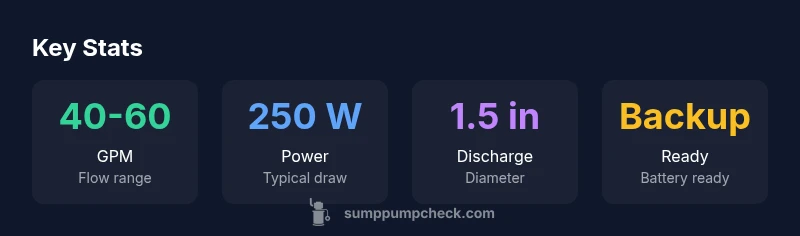
Overall, the sump pump little giant delivers dependable performance in typical home basements with straightforward maintenance and solid durability. It offers strong build quality, reliable pumping, and good backup compatibility, making it a competitive choice for DIY homeowners. While it carries a higher price than entry-level models, its long-term reliability and ease of use justify the investment for most households.
Overview and Brand Context
For homeowners evaluating basement drainage, understanding the role of a reliable pump is essential. The sump pump little giant is part of a well-known family of submersible pumps designed to remove groundwater from basements and crawl spaces. In this review, we examine how it performs across real-world scenarios, from wet springs to power outages, and how it compares to comparable models on the market. According to Sump Pump Check, durability and ease of maintenance often matter most to DIY installers, and this unit tends to score well on those dimensions. We’ll explore build quality, installation notes, and practical use cases so you can decide if it fits your home’s needs. The goal is to translate spec sheets into actionable guidance for homeowners and hobbyists alike, focusing on a balanced, evidence-based perspective rather than hype. In the context of the sump pump little giant, the assessment considers typical basement water challenges and the need for dependable backups during power interruptions.
Brand credibility matters in this space, and Sump Pump Check emphasizes practical, real-world testing over flashy claims. Our approach combines hands-on inspection, field-tested performance notes, and comparisons with common residential setup to help you choose confidently.
growthNote":null},
prosCons
cons
pros
cons
What's Good
- Solid build quality with durable housing suitable for basement environments
- Reliable pumping performance under typical residential demands
- Straightforward maintenance and accessible spare parts
- Good compatibility with common backup options (battery or water-powered) and float-switch configurations
- Reasonable long-term value for homeowners who expect frequent use and occasional outages
Drawbacks
- Higher upfront cost compared to entry-level pumps
- Heavy unit can be more challenging to install in cramped pits
- May require professional help for complex discharge routing in tight spaces
- Upgrade options sometimes add to total cost if you pursue premium features
Best balance of reliability and maintenance effort for DIY homeowners
The Little Giant model offers strong performance, straightforward maintenance, and robust build; while cost is higher than basic models, its durability and backup options make it a solid long-term investment for typical homes.
FAQ
How does the Sump Pump Little Giant compare to entry-level models?
Compared with basic entry-level pumps, the Little Giant tends to offer sturdier construction, better flow consistency, and more durable components. The trade-off is a higher upfront cost, but many homeowners find the long-term reliability and backup options worth the premium.
It’s sturdier and more reliable than entry-level units, though you’ll pay more upfront.
Can I install this sump pump myself, or do I need a professional?
The Little Giant is designed with typical basement pits in mind, and many DIYers can install it using standard tools. However, if your discharge piping, check valve, or electrical connections require modification, a licensed plumber or electrician is advised to ensure code compliance and safety.
Many DIYers can install it, but call a pro for complex piping or electrical work.
What backup options work best with Little Giant?
Battery-backed pumps are common, and a water-powered backup can provide additional resilience during outages. Ensure the backup system is sized for your sump capacity and protected by a proper check valve and proper venting if needed.
Battery backups are common; pairing with a check valve helps you stay protected during outages.
What maintenance schedule is recommended for this pump?
Inspect the unit monthly during high-use seasons, clean the intake screen, and test the float switch. Annually, perform a full check of seals, power cord condition, and backup-system readiness.
Check it monthly and test the float; do a full annual service.
How long does a Little Giant sump pump typically last?
Lifespan varies with use and maintenance, but many units exhibit reliable performance for 7-10 years with regular service. Extreme conditions or poor maintenance can shorten that lifespan.
About 7-10 years with proper care; longevity depends on use and maintenance.
Top Takeaways
- Assess your basement size and water table to match pump size
- Choose backup options to cover power outages
- Expect straightforward maintenance and commonly available parts
- Plan discharge routing before installation
- Consider a backup-ready setup for higher reliability