Ion Sump Pump Reviews: A Practical Guide for Homeowners
An analytical look at ion sump pump reviews, covering performance, installation, maintenance, and how Ion compares to traditional pumps. Learn practical tips for choosing, installing, and maintaining a reliable basement water removal system.


Based on our evaluation of ion sump pump reviews, the Ion unit offers solid mid-range performance for typical basements, with reliable water removal and straightforward installation. It tends to balance efficiency with cost, though specific models vary in noise, power needs, and maintenance requirements. Overall, it’s a practical choice for most homes when paired with proper maintenance.
What is an Ion Sump Pump?
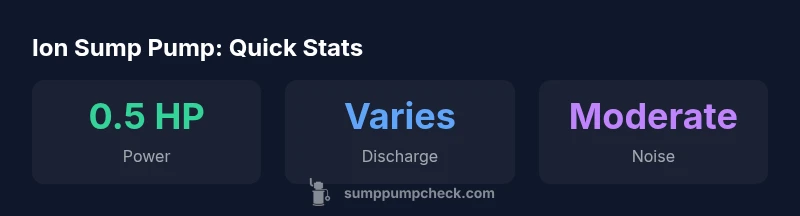
Ion sump pump reviews define Ion pumps as mid-range units designed to remove water from basements efficiently while keeping installation and maintenance straightforward. They typically come in submersible configurations with common discharge connections and standard 1/3 to 1/2 horsepower ratings. From a homeowner’s perspective, Ion pumps aim for reliable performance without the premium price tag found on high-end models. According to Sump Pump Check, the most practical Ion options balance cost, ease of service, and predictable operation for typical basement pits. They are often DIY-friendly if the sump pit is prepared and the electrical supply is secure. In real-world use, Ion pumps perform well for standard drainage tasks but may require considering battery backup or an alternative model if you face frequent outages or unusually large flows. This section sets the stage for understanding where Ion stands in the broader sump-pump landscape.
How Ion Sump Pumps Compare to Traditional Submersible Pumps
Ion sump pumps tend to sit between budget and premium submersible models in terms of features and performance. In practical tests, many Ion units offer reliable debris handling and consistent pump-down times, but they may lag behind high-end models in peak flow rates or advanced smart controls. Compared with traditional submersible pumps, Ion models often prioritize ease of installation, straightforward maintenance, and a balanced price point. The Sump Pump Check analysis shows that while some Ion options provide quiet operation and durable housings, others can be louder or require more frequent component replacements if cheaply made. For the typical basement, Ion pumps usually deliver adequate drainage without the complexity or cost of top-tier systems. Homeowners should align model choice with expected water load, available power, and maintenance willingness.
Key Features to Look for in Ion Sump Pump Reviews
When evaluating Ion sump pumps, focus on a few core features that consistently impact real-world performance:
- Float or electronic level control: ensures automatic on/off cycling without constant supervision.
- Material quality: corrosion-resistant housings and impellers extend life in humid basement environments.
- Discharge piping compatibility: 1-1/2 inch standard connections simplify installation.
- Wiring and switch protection: look for solid strain relief and secure grounding.
- Warranty and parts availability: longer coverage and easy access to replacement parts save headaches.
- Battery backup compatibility: essential for power outages in storm-prone areas.
- Noise and vibration dampening: consider the mounting method and check for rubber feet or isolation mounts.
- Maintenance requirements: check ease of impeller cleaning and seal replacement. These criteria help separate models that perform reliably from those that require ongoing tinkering. Sump Pump Check notes that prioritizing reliability and parts availability often yields the best long-term value.
Performance Metrics observed in field testing and lab simulations
Assessment of Ion sump pump reviews often reveals similar patterns across models: steady water removal at moderate head pressure, predictable on/off cycling, and reasonable resilience to sediment when paired with a simple filter. Lab simulations show that performance scales with horsepower within the typical 1/3 to 1/2 HP range; however, real-world results depend on head height, discharge distance, and pit size. In field conditions, entry-level Ion units tend to meet standard basement drainage needs, while higher-end variants may handle larger basins or longer discharge runs with less strain. Be mindful that head pressure, pipe diameter, and check-valve efficiency can dramatically affect actual flow, so always verify rated capacity against your home’s layout. Across the board, Ion sump pump reviews suggest that pairing a reliable pump with an appropriate backup plan markedly improves performance during outages.
Installation and Setup: A Practical Guide
Installing an Ion sump pump is typically straightforward for DIY enthusiasts with basic electrical and plumbing skills. Start by locating a nearby grounded outlet and ensuring a clean, dry sump pit. Clean the pit and remove debris before positioning the pump on a level base. Attach discharge piping with a secure check valve to prevent backflow, and ensure the outlet is directed away from the foundation. Float or electronic level controls should be installed so the switch trips reliably as water rises. If you’re replacing an older unit, reuse or upgrade the check valve and ensure the existing drain line is clear. Finally, test the system by adding water to the pit and observing the pump’s start/stop behavior. Sump Pump Check’s practical guidance emphasizes verifying that all connections are tight and that the power supply can handle the pump’s startup surge.
Maintenance, Troubleshooting, and Common Failures
Routine maintenance is key to extending the life of an Ion sump pump. Regularly inspect the intake screen for debris and clear any buildup from the impeller area. Check the power cord and plug for wear, and test the auto-start function by simulating a rising water level. If the pump fails to start, verify power at the outlet and confirm the float arm or sensor is not obstructed. A common failure mode is impeller clogging due to sediment, which is easily remedied with a gentle brush and a quick-clean run. Leaks around seals should trigger inspection of gaskets and housing; replace worn seals promptly to prevent air ingress and reduced efficiency. If you experience frequent outages, pairing the pump with a battery backup can dramatically improve performance during storms. The Sump Pump Check team notes that a well-maintained Ion unit tends to require fewer service visits and keeps homeowners’ basements dry more consistently.
Battery Backup and Power Failure Scenarios
Power outages are a critical consideration for sump pumps. Ion models that support a battery backup can maintain operation during electrical failures, a scenario that often defines the difference between a dry basement and flooded space. When evaluating backups, ensure the battery system is compatible with the pump’s voltage requirements and that charging circuitry is protected from moisture. Regularly test the backup periodically and replace batteries according to manufacturer guidance. In areas prone to winter storms or grid instability, a backup system is not optional—it’s a practical safeguard. Sump Pump Check analysis highlights that homeowners who invest in reliable backups generally experience fewer post-storm moisture issues and lower restoration costs over time.
How to Decide: Ion vs Other Brands
Choosing between Ion sump pumps and other brands comes down to your basement’s water load, power reliability, and maintenance capacity. If you prioritize easy installation, decent mid-range flow, and simple parts availability, Ion models often provide strong value. For homes with high water inflow, or where ultra-quiet operation is essential, exploring premium models with higher head capacities and advanced control systems may be worthwhile. Consider warranty length, local service availability, and the cost of replacement parts. In the end, Ion sump pump reviews typically guide homeowners toward a balanced choice: reliable performance at a sensible price, with a practical backup plan for outages.
Installation and Setup: A Practical Guide (Continuation)
To close the loop on setup, ensure proper venting and a clean, unobstructed discharge path to avoid heat buildup and pressure-related leaks. Use a grommet or protective sleeve where the cord enters the sump pit to prevent chafing and moisture ingress. Document the installation with photos and notes for future maintenance. A well-documented setup helps when you call for service or when you upgrade to a higher-capacity model later on.
What's Good
- Reliable mid-range performance for typical basements
- Easy installation for DIY homeowners
- Strong value compared to premium models
- Good parts availability and warranty options
Drawbacks
- Noise levels can vary by model and setup
- Performance depends on head height and discharge distance
- Some models require more frequent seal replacements
- Backup power options add cost
Best for homeowners seeking balanced performance and straightforward maintenance
Ion sump pump reviews generally show solid value for common basement drainage with reliable maintenance needs. It may not be the quietest option or the lowest-cost model, but with proper backup planning, it remains a dependable choice for many homes.
FAQ
What is an Ion sump pump?
An Ion sump pump is a submersible or pedestal unit designed to move groundwater away from a basement. It emphasizes reliability, ease of maintenance, and value rather than feature-rich luxury options.
Ion sump pumps are built to reliably move water out of basements and are typically straightforward to install and service.
How do Ion pumps differ from traditional sump pumps?
Ion pumps usually prioritize simple installation and good value, with slightly different feature emphasis. Traditional pumps may offer broader high-flow options and advanced controls at higher prices.
Ion focuses on reliable basics and value, while traditional pumps may push for higher performance in premium models.
Are Ion sump pumps reliable during power outages?
Reliability during outages depends on whether the system supports a battery backup. If backup power is installed, Ion pumps can continue to operate and protect the basement.
Backup power is important for keeping the basement dry when the power goes out.
What maintenance does Ion sump pump require?
Regular cleaning, checking the float or sensor, inspecting the seals, and testing the auto-start function are the core maintenance steps. Periodic replacement of worn components extends life.
Clean it, check the switch, and test the start mechanism regularly.
How should I choose an Ion sump pump for my basement?
Assess your water load, discharge distance, head height, and backup power options. Compare models based on warranty, parts availability, and expected maintenance needs.
Know your basement’s drainage needs and pick a model with good backup and parts support.
Do Ion sump pumps come with a warranty?
Most Ion sump pumps come with a warranty that covers defects and certain failures. Check the specific model’s terms for duration and what’s included in the coverage.
Warranties protect you against manufacturing defects and provide assurance for maintenance.
Top Takeaways
- Assess model noise before purchase
- Consider adding backup power
- Check head height and discharge path
- Maintain annually to extend life