Sump Pump Basin Sizes: How to Choose the Right Fit
Learn how sump pump basin sizes affect performance and installation. This guide covers round vs rectangular basins, sizing factors, measurement steps, and practical tips for homeowners.


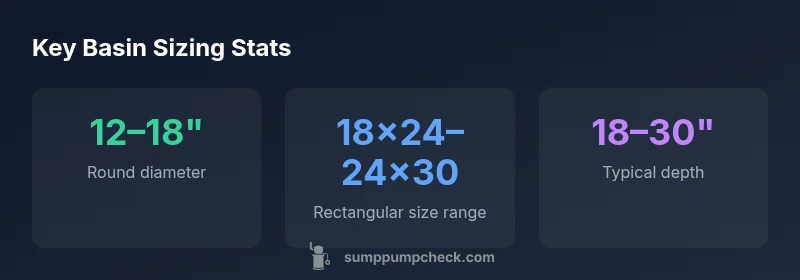
Most residential basins come in two main shapes: round and rectangular. Round pits commonly range from 12 to 18 inches in diameter; rectangular pits typically measure 18x24 inches to 24x30 inches. The right size depends on pump capacity, space, and local codes.
Understanding Basin Size Basics
According to Sump Pump Check, the basin is not just a container—it is a critical component that determines how much water can collect and how quickly the pump can respond during a flood event. The keyword sump pump basin sizes describes the range of options owners face when selecting a new system or upgrading an existing one. In practice, basin size matters because it directly affects pump performance, maintenance intervals, and the likelihood of nuisance backups. The basin must be large enough to hold water temporarily without overflowing but compact enough to fit in the available space, avoid interfering with nearby utilities, and support an efficient discharge path. Hydraulics aside, the physical footprint of the basin also influences lid clearance, access for service, and the integration with backup or alarm features. Understanding these dynamics helps homeowners plan for reliable drainage across seasons.
Round vs Rectangular Basins: Pros and Cons
Round basins are popular for tight spaces because their curved wall yields maximum internal volume relative to a given footprint, making them a practical choice in small crawlspaces. Rectangular basins, by contrast, often offer more usable space for larger submersible pumps and longer discharge lines, which can simplify piping. The sump pump basin sizes you choose will depend on your space geometry and the pump’s inlet diameter. In addition, some installers favor rectangular basins for easier step-by-step maintenance access. Regardless of shape, ensure the lid fits securely, and that the unit sits level to avoid tilt and seal issues. Both shapes have legitimate roles in residential basements, depending on the constraints of the concrete pit or preformed plastic basin.
How Pump Size Dictates Basin Size
The pump’s capacity, typically measured in gallons per hour (GPH) or gallons per minute (GPM), influences the required basin volume. A pump with a higher flow rate needs a basin that can accommodate rapid inflow without overflowing between cycles. If the basin is undersized, you will encounter short cycling, increased wear on impellers, and a higher risk of backflow into the basement. The rule of thumb is to match the basin’s net volume to the pump’s duty cycle, while leaving room for a mechanical float switch and any backup battery system. Sump pump basin sizes are rarely set in stone because local conditions—like soil grade, drainage efficiency, and rainfall intensity—often dictate adjustments.
Typical Ranges for Residential Sump Basins
For many homes, round basins commonly range from 12 to 18 inches in diameter, while rectangular basins typically measure 18x24 inches up to 24x30 inches. Depths commonly fall in the 18- to 30-inch range, though some pits may be deeper to handle higher volumes. These ranges provide a practical starting point, but the right choice depends on the pump’s inlet diameter, the available vertical space, and the height of the discharge route. A larger basin can improve performance during heavy rains, but it also adds material costs and may complicate lid access. If space is extremely tight, consider a compact basin paired with a smaller pump that still meets drainage needs.
How to Measure for Your Space
To determine the optimal sump pump basin sizes, begin with a precise measurement of the existing pit or the planned pit location. Measure the width, length, and depth, then verify clearance around the top for a secure lid. For circular pits, measure the inner diameter; for rectangular pits, measure the inside width and length. Next, confirm the pump’s inlet diameter and ensure the pit supports this footprint with a little wiggle room. Finally, consider future upgrades—if you anticipate needing a higher-capacity pump, plan a basin that can accommodate a larger unit or leave space for an expansion lid. These steps help homeowners avoid underestimating space or overfitting a bulky basin.
Installation Considerations that Affect Basin Size
In tight basements, installation geometry can push you toward smaller basins, while additional clearances around the pump, check valve, and discharge pipe may require larger footprints. The basin must allow room for the discharge line to slope properly, a stable base, and, if present, a backup battery system. Additionally, access for routine maintenance should be preserved; a lid with quick-release latches and an integrated float switch simplifies service. When possible, plan pathways that minimize bending radii in pipe runs to reduce friction losses and backpressure. Remember that optimal sump pump basin sizes enable smoother operation and simpler upkeep.
Code, Safety, and Maintenance Impacts
Local codes may specify minimum pit dimensions or require certain lid features to minimize the risk of entrapment or odors. Always verify that your basin complies with local drainage codes and setback requirements, and ensure that any backflow prevention devices are properly installed. Maintenance schedules should reflect the basin’s volume and the pump’s running cycles. Periodic cleaning, inspection of the lid seals, and testing the float switch help prevent alarm nuisance and ensure reliable operation during heavy rainfall. Safety considerations also include keeping electrical connections dry and using GFCI outlets as required by code.
Choosing the Right Basin Size: A Step-by-Step Guide
Step 1: Inventory your pump’s capacity and inlet size. Step 2: Measure the pit area and available clearance. Step 3: Compare your available space to common basin sizes (round 12–18 inches; rectangular 18x24 to 24x30). Step 4: Check lid design, float switch access, and potential backup options. Step 5: Confirm local codes and plan for future upgrades. Step 6: If in doubt, discuss options with a qualified installer who can tailor a basin size to your space and climate.
Common Mistakes to Avoid with Basin Sizing
Common mistakes include assuming a larger basin always means better performance, underestimating space for the lid, ignoring discharge routing, and skipping code checks. Another misstep is selecting a basin that cannot accommodate the pump’s inlet or backup battery system. Finally, failure to consider seasonal changes in water table or rainfall may leave you with a basin that is too small for peak demand. Planning ahead reduces the risk of overflow, nuisance alarms, and costly retrofits.
Comparison of common sump basin types and sizes
| Basin Type | Typical Size Range | Key Considerations |
|---|---|---|
| Round | 12–18 inches diameter | Compact spaces; good volume efficiency |
| Rectangular | 18x24 to 24x30 inches | Easier maintenance; supports larger pumps |
| Other | Varies by model | Check lid compatibility and discharge path |
FAQ
What is the most common sump basin size for residential installations?
There isn't a single standard. Most homes use round basins in the 12–18 inch diameter range or rectangular basins around 18x24 to 24x30 inches, chosen to fit the space and pump inlet.
Most homes use round or rectangular basins in the 12 to 18 inch diameter or 18 by 24 inch to 24 by 30 inch ranges, depending on space and pump size.
How do I decide between a round or rectangular basin?
If you have a compact space, a round basin may maximize volume per footprint; for better access and larger pumps, a rectangular basin is typically preferable.
Round for tight spaces, rectangular for easier maintenance and bigger pumps.
Can I upgrade my basin size later?
Upgrading may require replacing the basin and pump, so plan for a unit that accommodates future needs or consult a professional about expandable basins.
You can, but it’s easier to plan for future needs now with a compatible basin and pump.
Are there safety codes that affect basin size?
Yes, local codes may specify pit dimensions or require certain lid features. Always check with your local authority or extension service before installation.
Local codes often specify pit size and lid safety; verify before install.
What should I consider for lid clearance?
Ensure enough space around the lid for removal and maintenance, and allow room for vibration insulation and trap-free discharge.
Leave enough room around the lid for maintenance and discharge routing.
“Sizing your sump basin correctly isn't cosmetic—it's foundational to reliable drainage and long-term performance.”
Top Takeaways
- Know your space and pump capacity before choosing basin size
- Round basins suit tight spaces, rectangular basins fit larger pumps
- Verify lid clearance and discharge routing to avoid installation issues
- Follow local codes for pit dimensions and safety features
- Plan for future upgrades when sizing the basin