How Many Sump Pumps Does a House Need
Learn how many sump pumps your home needs, factors affecting the count, and practical configurations for reliable basement drainage. Practical steps, maintenance tips, and back-up options from Sump Pump Check.


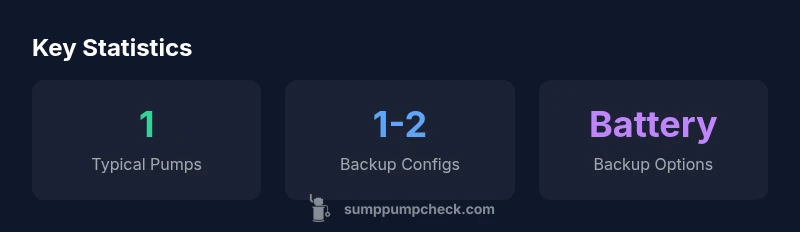
The typical guidance is one primary sump pump for most houses, with a second backup recommended in flood-prone areas or where power reliability is a concern. In larger basements or highly saturated soils, two primary pumps with one standby can be appropriate. Always assess your soil, drainage design, and local flood risk to decide the right setup.
How many sump pumps does a house need?
According to Sump Pump Check, sizing a sump pump setup should reflect risk, not just house size. For most homes with a standard basement, a single primary pump is sufficient under normal conditions. A second, backup pump is strongly advised in flood-prone regions or where power outages are common. In larger basements or areas with high groundwater, two primary pumps with a standby unit can offer robust protection. Your decision should balance upfront cost with the potential cost of flood damage, mold remediation, and downtime. Local soil conditions, drainage design, and climate history are all critical factors—consult a pro if you’re unsure which configuration best fits your property.
Factors that influence the number of pumps
Several variables determine how many pumps you need. Basements with large footprints or multiple sump pits may justify more than one primary pump to ensure continuous operation if one unit fails. Groundwater depth, soil permeability, and rainfall intensity influence water inflow rates; higher inflow can necessitate additional capacity. Power reliability matters too—homes in areas with frequent outages should consider battery backup or a generator. Finally, local codes and installation practices can steer you toward certain configurations, so verify with local authorities or a licensed installer.
Common configurations: single, dual, and backup systems
The most common setups include (a) one primary sump pump with a battery backup, (b) two pumps sharing the workload in a larger basement, or (c) two primary pumps with a third as a standby. In many cases, a single pump with a high-quality check valve and proper discharge piping is adequate. For higher risk scenarios, a dual-pump arrangement provides redundancy and reduces the chance of total failure during heavy rains or power outages. Consider the service life and maintenance needs of each pump when sizing the system.
Sizing, placement, and code considerations
Sizing starts with anticipated water inflow and desired pump cycle time. Place the primary pump at the lowest point of the pit, ensuring adequate clearance for impellers and a reliable float switch. Discharge piping should route away from foundations and toward a storm drain or exterior drainage area, with check valves to prevent backflow. Use a compatible power source and ensure GFCI protection where required. Always follow local building codes, which may demand dual-pump setups or specific electrical requirements for backups.
Special cases: flood zones, power outages, and longevity
In flood-prone zones, a backup system is not a luxury—it's a necessity. Battery backups are popular for their resilience during outages, while generators provide longer-term protection but require fuel management. Water-powered backups exist in some markets, but reliability varies. Regular testing, cleaning, and sensor inspection extend pump life and prevent nuisance beeping. Plan for eventual pump replacement by budgeting for both parts and installation costs, as these systems have finite lifespans.
Planning a multi-pump installation: a practical approach
To plan effectively, start with a needs assessment: map the basement area, identify potential inflow points, and evaluate power access. Step 1: define your risk profile (high/medium/low). Step 2: decide on primary vs backup roles. Step 3: select compatible pumps with matching discharge capabilities. Step 4: design a clean discharge path with check valves. Step 5: coordinate with licensed professionals to ensure electrical and plumbing code compliance. Step 6: schedule regular maintenance so the system remains ready when needed.
Overview of common sump pump configurations by home scenario
| Scenario | Recommended Pumps | Backup Options |
|---|---|---|
| Standard home | 1 primary | Battery backup recommended |
| Large basement/high groundwater | 2 primary | One backup/standby or two primaries with standby |
| Power-constrained location | 1 primary + backup | Battery backup or generator |
FAQ
How many sump pumps should a one-story home have?
For many one-story homes, one primary sump pump with a backup is sufficient. If your area experiences frequent power outages or heavy rainfall, consider adding a second pump to reduce the risk of flooding.
Most one-story homes do fine with a single primary pump plus a backup, especially where power is reliable. In high-risk areas, a second pump adds protection.
Is it better to install two pumps side-by-side or a primary with a standby?
Two pumps side-by-side provide redundancy and equal load sharing, which is beneficial in very large basements. A primary plus standby arrangement is often enough for mid-sized homes and keeps costs down.
Two pumps can offer true redundancy, but a primary plus a standby is a common, practical choice for many homes.
Do I need a battery backup for my sump pump?
A battery backup is highly recommended in most homes, especially where outages are common. It keeps your system working during power failures and reduces flood risk.
Yes, a battery backup is a smart, common choice for keeping pumps running when power fails.
What factors influence the number of pumps I need?
Factors include basement size, soil and groundwater conditions, local flood history, and power reliability. Larger basements or higher inflow rates often justify additional pumps.
Basement size, groundwater, flood history, and power reliability all matter when sizing pumps.
What are the typical costs to add a second pump?
Costs vary by pump type, quality, and installation. Expect to account for the pump, controls, discharge piping, and electrical work, plus any permits.
Costs depend on pump type and installation complexity; plan for parts and labor.
“For most homes, one well-chosen primary pump with a reliable backup offers the best balance of cost and protection.”
Top Takeaways
- Assess your risk and layout before sizing pumps.
- Default to one primary pump with a backup in risky zones.
- Add battery or generator backup for power outages.
- Place discharge away from foundations with proper check valves.
- Check local code requirements before installation.