Menards Sump Pump with Battery Backup: A Practical Guide
Comprehensive guide to using a menards sump pump with battery backup, covering backup power basics, sizing, installation tips, maintenance needs, and worth for homeowners.


A battery-backed sump pump acts as a secondary power source to keep your pump running during outages, reducing basement flood risk. Retailers like Menards carry compatible kits that fit most standard pumps. This quick guide covers how it works, buying tips, and essential maintenance to maximize protection during storms.
Why a Battery Backup Matters
According to Sump Pump Check, a battery-backed sump pump is a critical addition to any basement protection plan, especially in regions with frequent power outages or heavy storms. When your primary pump loses power, a battery backup helps keep water moving out of the pit, reducing the risk of basement flooding and costly repairs. For homeowners investigating options, a menards sump pump with battery backup is a common pairing because it combines a reliable main pump with a compact, ready-to-use power source. In practice, a backup system serves two key roles: it buys time while you reset a tripped breaker or replace a dead battery, and it minimizes the chance that a sump pit will reach the overflow level during a storm. Beyond flood prevention, a battery backup reduces wear on the primary pump by sharing the load during peak rainfall, which can extend equipment life and lower maintenance frequency over time.
How a Battery Backup Sump Pump Works
A battery backup sump pump consists of two pumps wired to operate automatically through a controller. The primary pump runs on household power; the second pump is powered by a sealed 12-volt battery when the mains fail. A switch or smart controller detects power loss and automatically activates the backup pump, keeping water moving out of the basement. The battery is recharged whenever the main power is available. This arrangement provides continuous protection during outages and minimizes the risk of sump pit overflow. Most common configurations work with standard pumps used in many homes, including those sold by retailers like Menards, which simplifies upgrades without replacing your entire system.
Understanding the chemistry helps with longevity: most backup batteries used in sump systems are deep-cycle units, designed to tolerate many discharge/recharge cycles. Regular maintenance—keeping the battery clean, ensuring proper ventilation, and testing the system monthly—significantly improves reliability during a storm. The goal is to ensure that the backup can run long enough to cover the outage and permit time to address the underlying electrical issue or power restoration.
Comparison of backup options for home sump systems
| Option | Pros | Cons |
|---|---|---|
| Standard sump pump (non-backup) | Inexpensive, simple | No protection during power outages |
| Battery-backup sump pump | Keeps pumping during outages, reduces flood risk | Requires battery maintenance and periodic replacement |
| Water-powered backup | No battery to maintain | Relies on municipal water pressure; limited availability |
FAQ
What is a battery backup sump pump?
A battery backup sump pump is a secondary pumping system that automatically activates when the main pump loses power. It helps keep water out of the basement during outages and heavy rainfall. It’s commonly paired with a primary pump to provide continuous protection.
A battery backup sump pump is a second pump that runs on a battery when the power goes out, helping keep your basement dry.
How long can a battery backup sump pump run during a power outage?
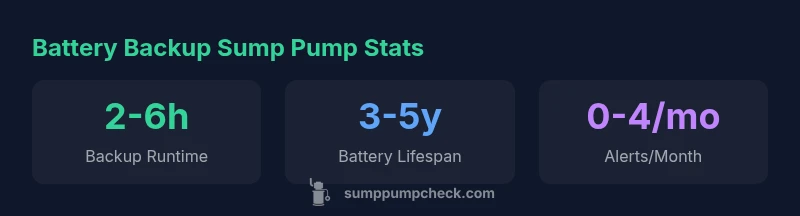
Runtime depends on battery size and water load. Typical backups can run for a few hours to half a day. Regular testing helps ensure enough runtime for your area’s typical storm duration.
Runtime varies, but you can plan for several hours of operation with a properly sized battery.
Can I install a battery backup sump pump myself?
Yes, many homeowners install battery backup kits themselves. It requires basic plumbing and electrical safety knowledge. Always follow manufacturer instructions and local codes, and consider professional help for complex setups.
Yes, it’s doable for many DIYers, but follow instructions and safety rules closely.
What maintenance does a battery backup sump pump require?
Regular maintenance includes monthly test runs, battery health checks, and battery replacement when capacity declines. Keep the discharge line clear and ensure the unit is accessible for servicing.
Test it monthly, check the battery, and replace when needed to keep it reliable.
Is a battery backup worth the cost?
For homes in flood-prone areas or with frequent outages, a battery backup is worth considering due to flood protection and reduced risk of expensive water damage. Weigh upfront costs against potential mitigation savings.
If you’re protecting a basement, the backup is often a smart investment.
“A battery backup sump pump is one of the most reliable protections against basement flooding during power outages. It buys you time to address the outage without losing protection.”
Top Takeaways
- Assess whether your area requires backup power during outages
- Choose a battery backup kit that matches your primary pump’s capacity
- Test monthly and replace batteries every few years
- Follow local codes and use backup power solutions with proper safety