Battery Operated Sump Pumps at Lowe's: A Practical Guide
Explore battery operated sump pumps at Lowe's. Learn how to choose, install, and maintain backup units with data-driven guidance from Sump Pump Check.


Battery operated sump pumps available at Lowe's provide essential protection during power outages by delivering back-up water removal when mains power fails. This quick answer highlights what to look for, including battery type, run-time, auto-start features, and compatibility with your basement drainage setup. For homeowners, choosing a model with a robust battery and reliable switch reduces the risk of flooding.
Why Battery-Powered Backups Are Essential for Sump Pumps
When storms roll in and power lines snap, a basement can flood within minutes if your primary sump pump loses power. A battery operated sump pump lowes can bridge that critical gap, keeping water from rising while you wait out the outage. According to Sump Pump Check, a reliable backup extends protection beyond your main pump by providing autonomous operation when electricity is interrupted. Homeowners should view backup capability as an integral part of a complete drainage strategy, not an afterthought. In practice, choosing a backup unit means balancing run-time, pumping capacity, and the charger’s reliability with the overall layout of your pit and discharge path. A well-chosen backup pump operates quietly, starts automatically when water is detected, and switches off when the basement drain is clear.
Key takeaways: assess your basement’s flood risk, collect battery options, and select a model that aligns with your sump pit dimensions and discharge route. The goal is continuous protection during outages, not just a temporary boost to your existing system.
How Battery Types Affect Performance
Battery chemistry defines how long a backup pump can run and how many times you can cycle it before recharging. Lead-acid batteries are durable and affordable, but they can be heavier and slower to recover after deep discharge. Lithium-ion cells, by contrast, offer higher energy density, lighter weight, and faster recharge, which translates into longer available run-time in a compact form factor. Some models use sealed AGM (a type of lead-acid) to strike a balance between cost and performance. When evaluating options, consider the battery’s cycle life, recharge time, and whether the unit supports easy replacement without specialized tools. Remember that the worst time to discover a failing battery is during a storm, so reliability matters as much as initial cost.
For best results, choose a model that allows you to upgrade the battery capacity in the future, and confirm compatibility with the existing float switch and discharge plumbing.
Choosing a battery operated sump pump lowes: What to look for
If you search for a battery operated sump pump lowes, you’ll encounter models with varying features. Start with compatibility: ensure the pump can sit in your current sump pit and connect to the same discharge line. Next, review battery type and capacity, aiming for units that can sustain pumping during extended outages. Auto-start capability is essential for hands-free operation; you want the pump to sense rising water and begin pumping without manual intervention. Check enclosure seals for moisture resistance, as a damp environment can degrade batteries and electronics over time. Finally, verify warranty terms and customer support availability, because a reliable warranty reduces long-term ownership risk. A well-chosen model balances upfront cost, backup duration, and ease of maintenance.
Compatibility and Sizing with Lowe's Options
Sizing a backup pump requires matching the pump’s performance to your home’s needs. Consider the pump’s head pressure, which is the vertical height water must be pushed to reach the discharge point. In shallow basements or tight pits, compact designs with efficient motors can outperform bulkier units in real-world scenarios. Lowe’s inventory typically includes pumps with different impeller designs and float-switch configurations; some units are compatible with existing alarms or protectors, which can be a bonus during storms. To optimize selection, measure your sump pit diameter, note the available space around the unit, and confirm clearance for any water hoses or containment devices. A properly sized backup pump will engage promptly, operate smoothly, and avoid nuisance tripping.
Installation Best Practices for Backup Pumps
Installation quality determines the backup system’s longevity and reliability. Begin by ensuring the sump pit is clean and dry, with a stable base for the pump. Install the float switch so that rising water triggers the pump without false starts. Connect the discharge line to a clearly defined path that won’t cause backflow or flooding in near areas. Use a check valve to prevent water from returning into the pit, and where possible, position the backup battery in a cool, dry location with adequate ventilation. If you’re converting an existing system, verify wiring compatibility and confirm that the battery charging circuit will automatically replenish power after each cycle. A cautious approach, with attention to weatherproof enclosures and proper cable management, minimizes maintenance needs and improves reliability.
Maintenance, Testing, and Safety
Routine testing is the foundation of a dependable backup. Periodically run the pump to verify the battery holds a charge, inspect the battery for swelling or corrosion, and clean any dust or debris from air vents. Battery health can be assessed with simple load tests or charger indicators; if a unit fails to start during a test, replace the battery promptly. Safety first: switch off the main power before handling batteries, and store spares in a fire-resistant container away from heat sources. Remember to replace batteries in line with the manufacturer’s recommended intervals; timely replacements preserve performance and prevent sudden outages during emergencies. Finally, document your maintenance schedule so a family member or neighbor can identify issues if you’re not home during heavy rain.
Troubleshooting Common Issues
Power outages can reveal common fault points. If the backup pump won’t start, check the battery connection for loose cables, verify the float switch isn’t stuck, and confirm there is no debris obstructing the impeller. If run-time seems short, test the battery’s charge level and consider upgrading to a higher-capacity unit. A buzzing relay or unusual noises often indicate a motor bearing issue or an electrical fault; in such cases, consult the warranty or contact customer support for guidance. If your discharge line is blocked, clear the path and reseat the check valve. Regular testing, clean lines, and timely battery changes are the best protection against preventable failures.
Real-World Scenarios: When a Backup Is a Must
Backup pumps are particularly valuable in areas with frequent power outages or poor utility reliability. During spring floods or ice storms, a backup pump can be the difference between a dry basement and expensive water damage. If you have a sump pit close to living spaces or important storage, a backup unit provides an essential safety margin. For residences with finished basements, a quiet, compact backup pump is ideal to avoid disrupting daily life while still delivering reliable protection. Always pair the pump with a proven alarm or notification system so you’re alerted to issues early and can take action before water damages appear.
Budgeting and Value: Trade-Offs of Battery-Backed Systems
Budgeting for a battery-backed sump pump involves weighing initial cost against long-term reliability. A more expensive unit may come with a higher-capacity battery, longer warranty, and better materials, all of which reduce total ownership costs over time. Consider also the cost of replacement batteries, which can be a recurring expense. While budget models may save money upfront, they often require more frequent maintenance and may not perform as well during extended outages. The right balance depends on your risk tolerance, climate, and how much water you expect to move during a storm. In many homes, the best value is found in a mid-range unit with upgrade paths for the battery and a robust float mechanism.
Comparison of common Lowe's battery-backed sump pumps
| Model Type | Battery Type | Backup Time (range) | Auto-Start | Price Range |
|---|---|---|---|---|
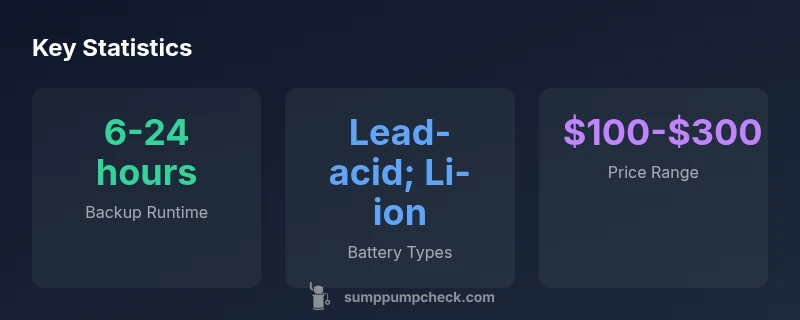
| Battery-Backup Submersible | Lead-acid; Li-ion | 6-24 hours | Yes | 100-250 |
| Utility-Grade Pump with Battery | Li-ion | 8-36 hours | Yes | 150-300 |
FAQ
What is a battery operated sump pump and why do I need one?
A battery operated sump pump is a backup pump that runs on a stored battery when the main power fails. You need one if your area experiences outages during heavy rainfall or snowmelt, to prevent basement flooding and protect valuables.
A backup pump runs on a battery when the power goes out, helping keep your basement dry during storms.
What battery types are common in these pumps?
Common types include lead-acid, AGM, and lithium-ion. Each has trade-offs between cost, weight, cycle life, and recharge time. Lithium-ion typically offers higher energy density and lighter weight, which can improve run-time in compact units.
Most models use lead-acid or lithium-ion batteries; lithium-ion usually lasts longer per charge.
How long will a back-up battery last during a power outage?
Run-time depends on battery size, pump size, and the water volume to be moved. In typical setups, expect several hours of operation during moderate flows, with longer runtimes possible on higher-capacity batteries.
Runtime varies with battery size and how much water you need to move.
Can I run a battery pump from a car battery?
Some models allow external battery connections, but car batteries behave differently and may cause safety concerns. Use purpose-built backup batteries and follow manufacturer guidance to avoid electrical hazards.
Only use recommended backup batteries, not a car battery, unless the model explicitly supports it.
What maintenance is required for battery backup pumps?
Regularly test the unit, inspect connections, clean debris from the impeller, and check battery health. Replace batteries as recommended by the manufacturer to maintain reliability.
Test it regularly, clean it, and replace the battery when needed.
Is a battery backup worth the cost for a small basement?
Even small basements benefit from backup protection, particularly in areas with frequent outages. The value lies in preventing water damage, which can be costly and disruptive.
Yes, especially where outages are common and water damage would be costly.
What warranty coverage should I expect?
Look for a warranty that covers the pump and battery for at least a couple of years. A solid warranty reduces risk and shows confidence in the product.
A strong warranty on both pump and battery is a wise choice.
“Backup power is not optional when you have a basement that could flood during an outage. A well-chosen battery-backed sump pump provides predictable protection and peace of mind.”
Top Takeaways
- Understand your risk: outages determine backup needs
- Choose the right battery type for longevity and reliability
- Prioritize auto-start and a solid discharge path
- Regular testing prevents true surprises during storms
- Budget for ongoing battery maintenance and replacements